The best exercise bike for seniors in the UK is the one whose published features match your needs, because no maker compared here describes a step-through or senior-specific design. Compare seat adjustment, user weight, upright or recumbent layout and size, and ask a GP or physiotherapist what suits you.
This guide uses makers' specifications and general NHS guidance only. It is not medical advice, and nothing here is based on testing a bike.
How much activity does the NHS recommend for adults aged 65 and over?
The NHS says older adults should be active every day, even if light, do strength, balance and flexibility activities on at least two days a week, and aim for 150 minutes of moderate activity a week (or 75 minutes of vigorous activity if already active).
The NHS guidelines for adults aged 65 and over list riding a bike as moderate activity and riding fast or on hills as vigorous. They also say to reduce time spent sitting or lying down, and that strength and balance activities can help if you have fallen or worry about falling. The NHS advises speaking to a GP first if you have not exercised for some time or have medical conditions or concerns. A bike mainly adds aerobic activity; the strength and balance part is separate and a stationary bike does not replace it.
Should an older adult choose an upright or recumbent bike?
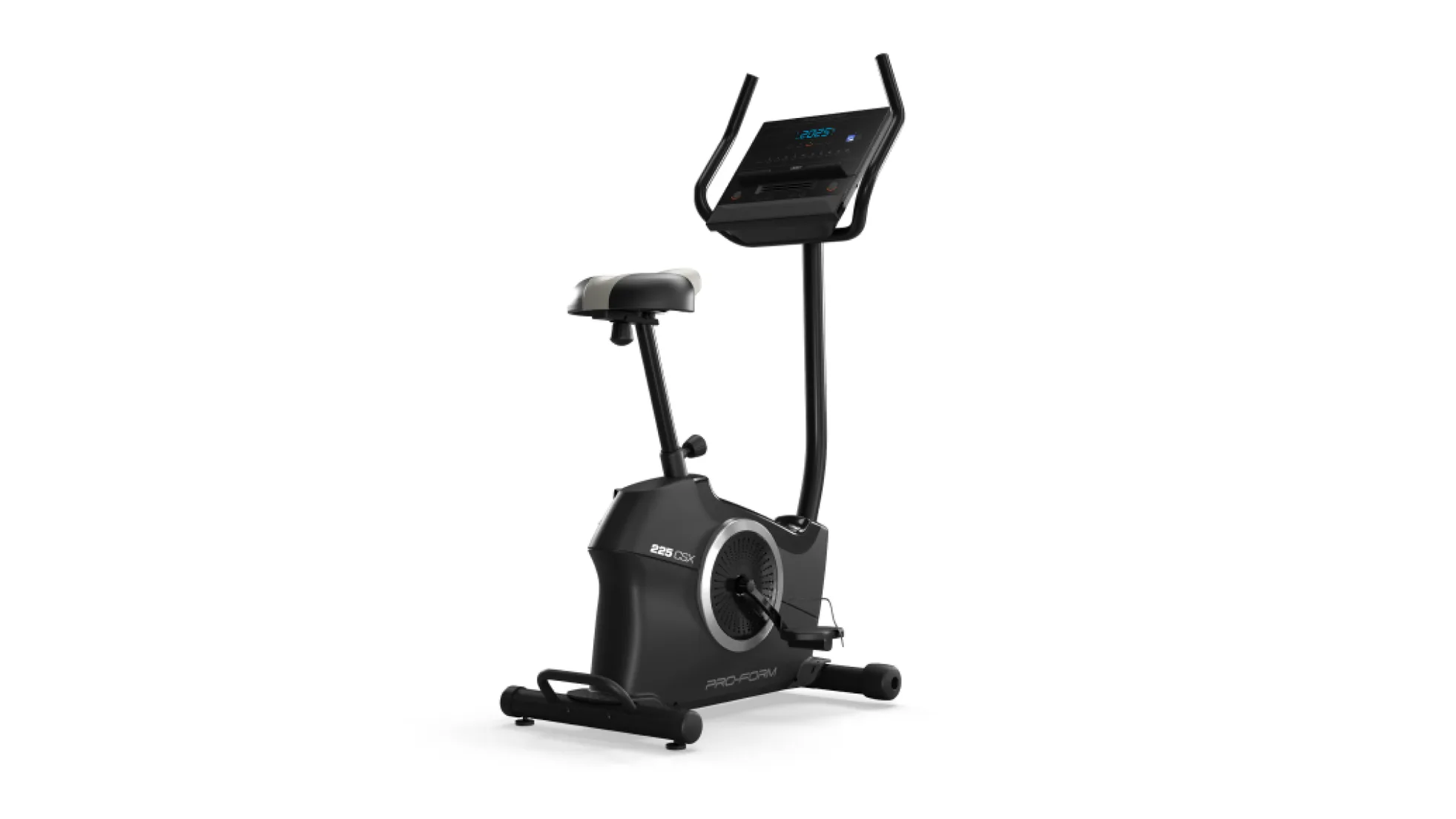
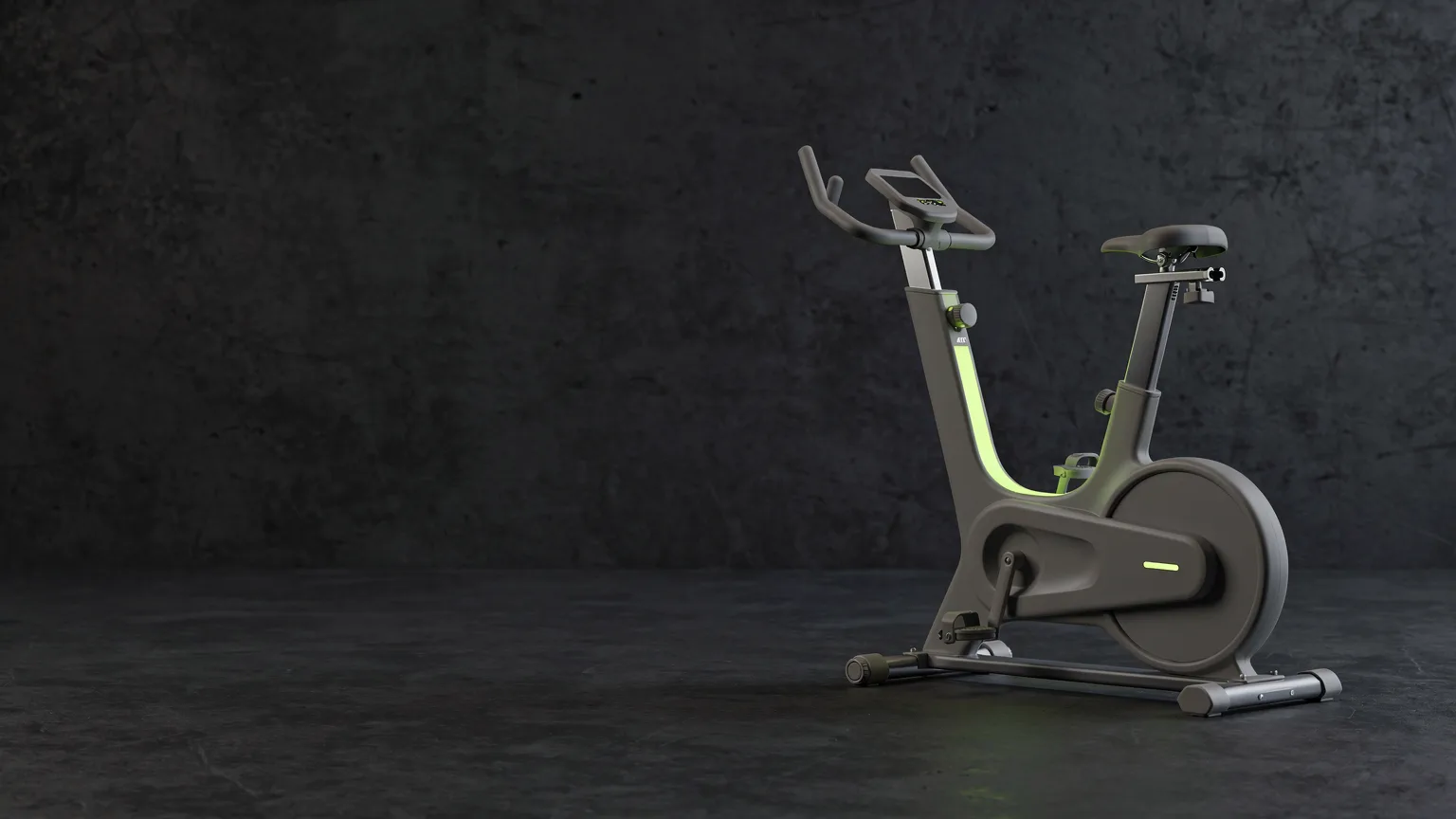
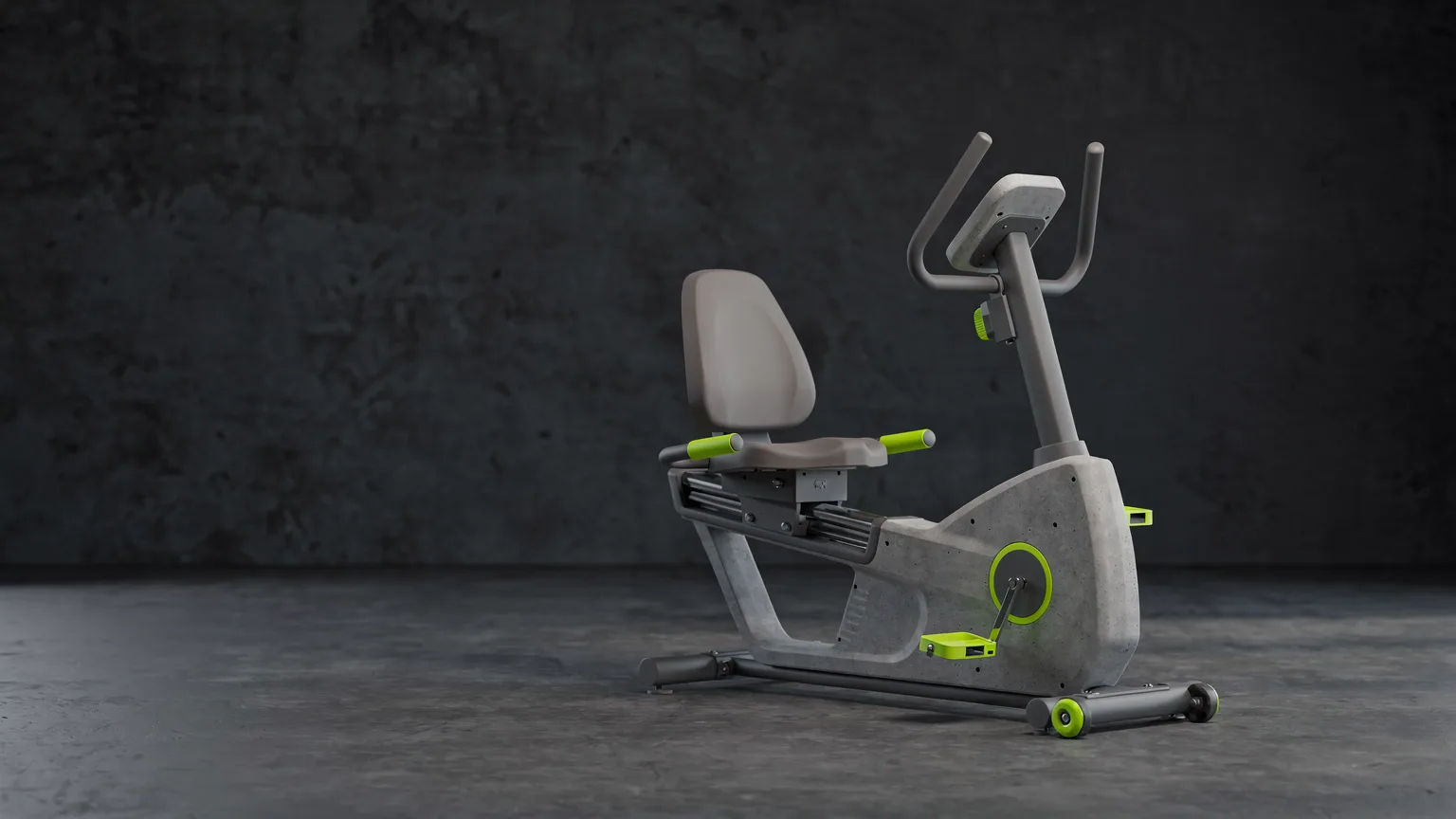
It depends on the person, so ask a GP or physiotherapist. An upright bike has a saddle and forward handlebars, while a recumbent bike has a reclined seat with a backrest, and all four bikes linked here are upright or indoor cycling style.
ProForm's page, for example, lists the 225 CSX as an upright bike and the 325 CSX as a recumbent bike with 22 resistance levels. No maker's page opened for this guide publishes a comfort or posture claim that could be compared across the four bikes, so the useful step is to ask a professional which posture is appropriate and then look for a model that offers it.
Is there a step-through exercise bike in this guide?
No. None of the four bikes is described by its maker as step-through, and no maker publishes a step-over height for these models.
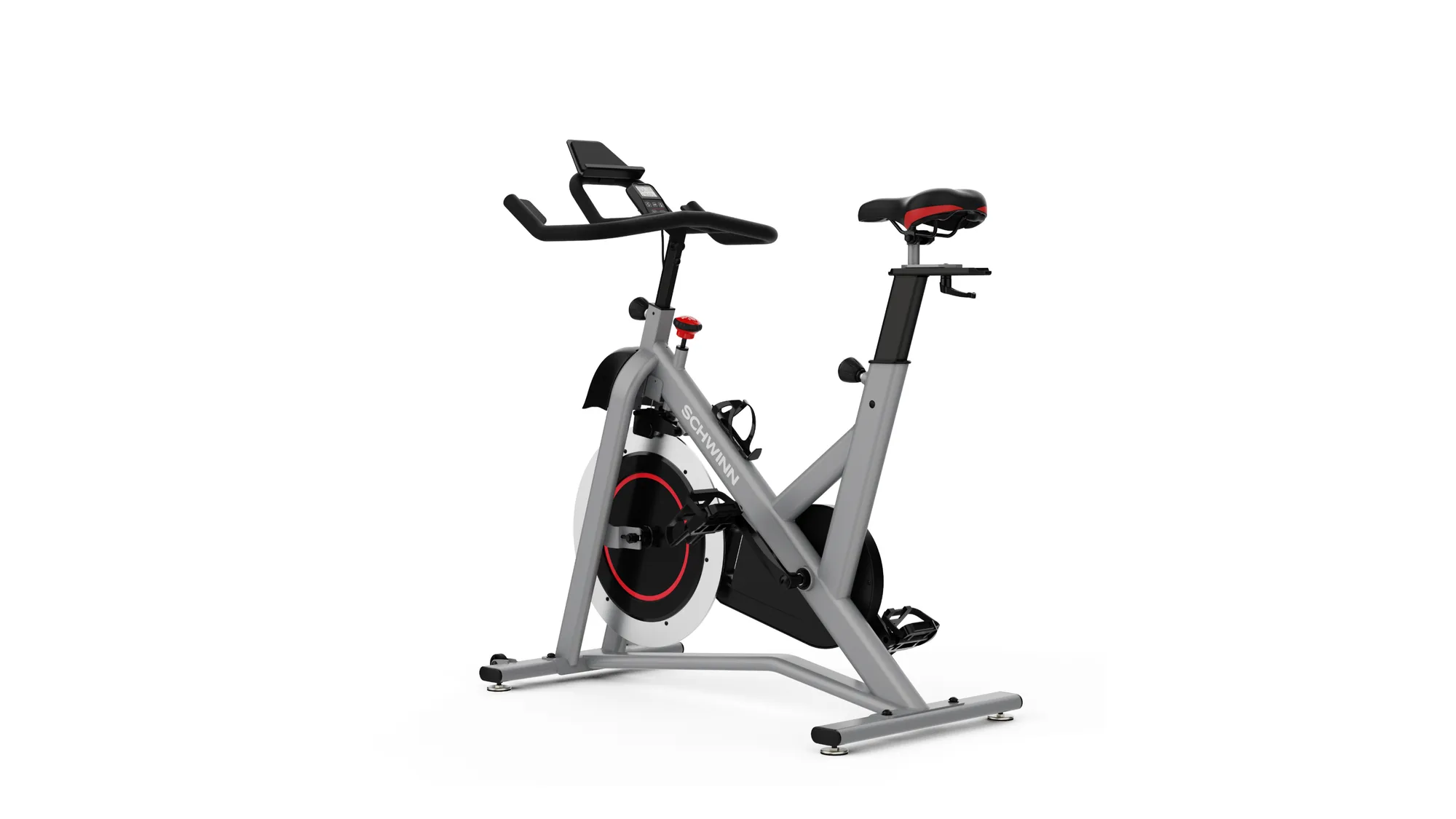
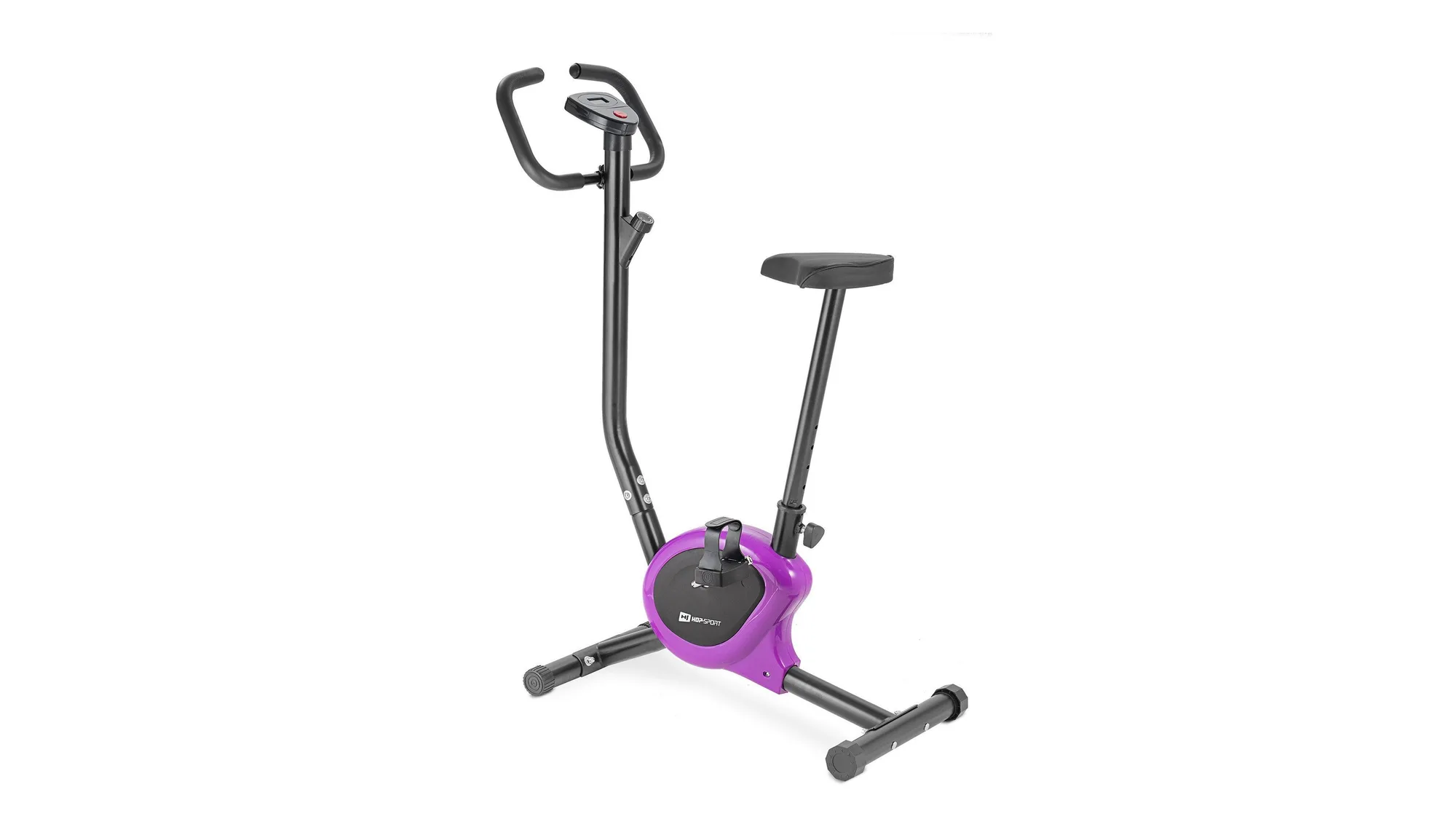
Overall heights listed are 109 cm for the Schwinn IC3.5, 120 cm for the Hop-Sport and 146.6 cm for the ProForm 225 CSX, but overall height says little about how high you must lift your leg to get on. Check the entry height with the retailer or maker before buying, and try one if you can. Where a figure is missing, ask in writing and keep the reply.
Which bike here has the most seat adjustment?
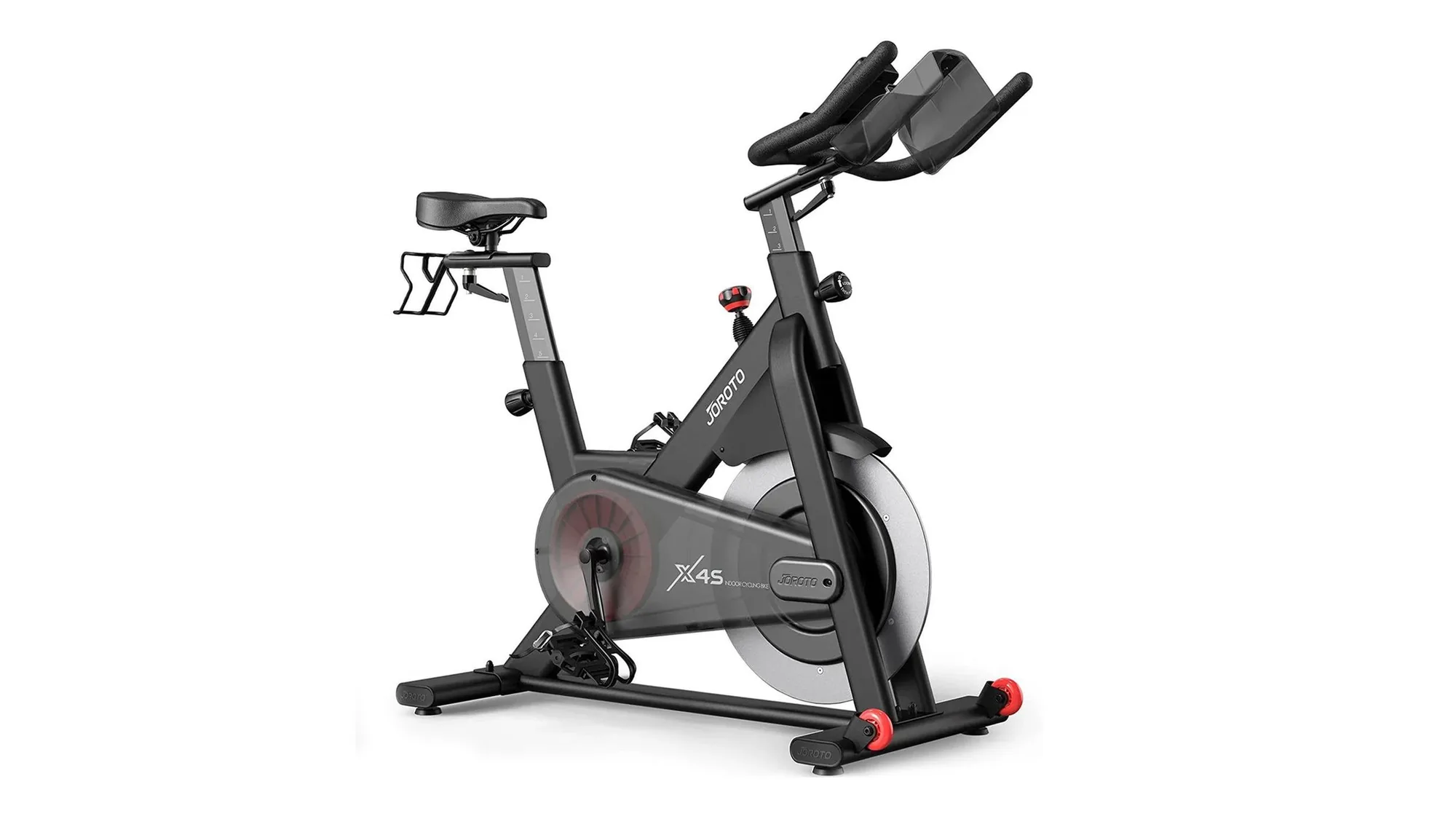
The JOROTO X4S has the most published seat adjustment: ten seat height levels and a rider height range of 150-195 cm (inseam 71-95 cm). Hop-Sport lists six levels with a 70-90 cm seat-to-pedal distance, and Schwinn gives no adjustment ranges.
Schwinn says seat and handlebar adjust, and ProForm lists an oversized cushioned seat and extra-wide pedals with adjustable straps, but neither gives a range. JOROTO also lists a four-way adjustable handlebar with six height levels. Reasoning from the figures, a published range lets you check your leg length against the bike before ordering, which a bare "adjustable" does not.
Equipment features worth comparing
Stability, weight and footprint
A heavier frame is generally less likely to move, which is reasoning rather than a tested claim. The makers' stated weights are 12 kg for the Hop-Sport body, 36 kg in the box for the ProForm, 38.3 kg assembled for the Schwinn IC3.5, and JOROTO lists figures between 42.5 and 44 kg that its page does not reconcile. The Hop-Sport page lists levelling pads and stabilisers, and a light bike is a reason to use them and to follow the manual.
Resistance and controls
The Hop-Sport has a mechanical knob under the handlebars. JOROTO uses a magnetic knob. ProForm lists 20 digital levels adjustable from push buttons. Schwinn lists 50 levels, electronically adjustable from 0 to 100. Larger controls and fewer menus may suit some people, but that is a personal preference rather than a published fact.
Pedals and footwear
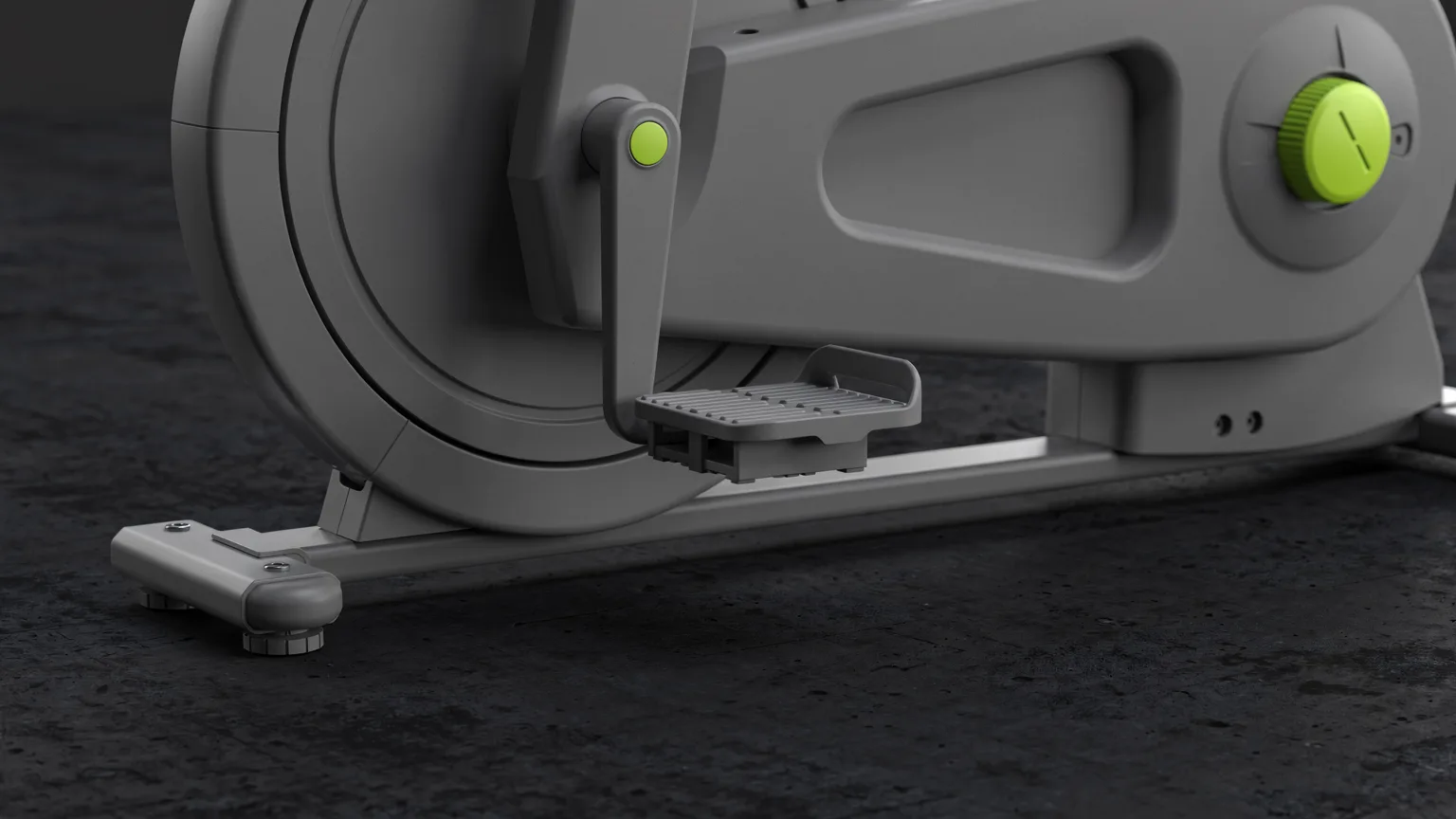
Hop-Sport lists anti-slip pedals with adjustable straps, and ProForm lists extra-wide pedals with adjustable straps. Schwinn lists dual-sided pedals, with an SPD clip on one side and a toe cage on the other. JOROTO publishes no pedal specification. Check what the pedals take against the footwear you plan to use.
The four linked bikes compared
| Bike | Seat or fit (maker) | Max user weight | Weight (maker) | Console power | Indicative price |
|---|---|---|---|---|---|
| Hop-Sport HS-010H Rio | 6 seat levels, 70-90 cm seat-to-pedal | 120 kg | 12 kg | Batteries (not included) | Around £93.99 (checked Oct 2026) |
| ProForm 225 CSX | Cushioned seat, wide pedals with straps | 125 kg | 36 kg in box | Not published | Check retailer |
| JOROTO X4S | 10 seat levels, rider 150-195 cm | 150 kg | 42.5-44 kg (page inconsistent) | Batteries | Around £399.99 (checked Oct 2026) |
| Schwinn IC3.5 | Adjustable seat and handlebar, no ranges given | 113 kg | 38.3 kg assembled | Wall adapter | Check retailer |
Which features suit which priority
- Lowest cost and lightest to move: the Hop-Sport, per its 12 kg weight and price. Its page says instructions are in Polish. See the Hop-Sport review.
- Cushioned seat and strap pedals on an upright: the ProForm. See the ProForm 225 CSX review.
- Widest fit range: the JOROTO, though its page does not publish a pedal specification. See the JOROTO review.
- Cycling-studio layout with cleat-compatible pedals: the Schwinn, an indoor cycling style bike that may not suit everyone. See the Schwinn IC3.5 review.
Reasoning from the specifications
If a lower, lighter, simpler bike is the priority, the published figures point to the Hop-Sport, with the caveats that its resistance is mechanical and its manual is in Polish. If a bigger weight limit and finer fit range matter, they point to the JOROTO, which is also the largest and most expensive. The ProForm sits between them on size and offers digital levels. The Schwinn is the least obviously matched to this brief, because it is an indoor cycling bike with the lowest weight limit of the four.
Questions to take to a health professional
Because comfort, balance and joint or heart conditions vary so much, a short list of questions can make the appointment more useful. Ask whether an upright or recumbent seat is more appropriate, what saddle height and pedal position are suitable, how long and how hard to start, and whether anything about your medication or condition affects exercising. A professional can answer these where a spec sheet cannot.
What to check before buying
- Entry height and saddle height range against your own measurements.
- The maker's maximum user weight, with margin.
- Placement on a firm, level floor, near a wall or sturdy furniture if you want support; see the flooring guide.
- Where the bike will sit and whether it needs a socket; the small-space setup guide may help.
- The maker's safety instructions in the manual, and whether they are in a language you read.
- Delivery and returns: GOV.UK guidance for sellers says customers can cancel an order up to 14 days after delivery without giving a reason, and that a faulty or not-as-described item must be refunded. Ask how that works for a heavy item you may need to repack.
Who should skip these bikes
Anyone who needs a recumbent seat, a step-through frame or a published entry height will not find them among these four, so they should look further or ask a professional first. For a wider comparison of the same bikes, see the home exercise bike guide, and for the lowest-cost options see the under £300 guide.