Choose a treadmill by checking five things on the maker's page: the maximum user weight, the running area, the motor and top speed, the incline, and the in-use and folded footprint. Price matters less than a machine that fits your body, your pace and your room.
This guide draws on the makers' own specification pages and NHS guidance. It involves no testing, because the site does not test products.
How big should the running belt be?
The running area decides how comfortable the machine is to walk or run on, so compare it with your stride and your height. Makers list it as length by width, and the figures differ a lot between folding models.
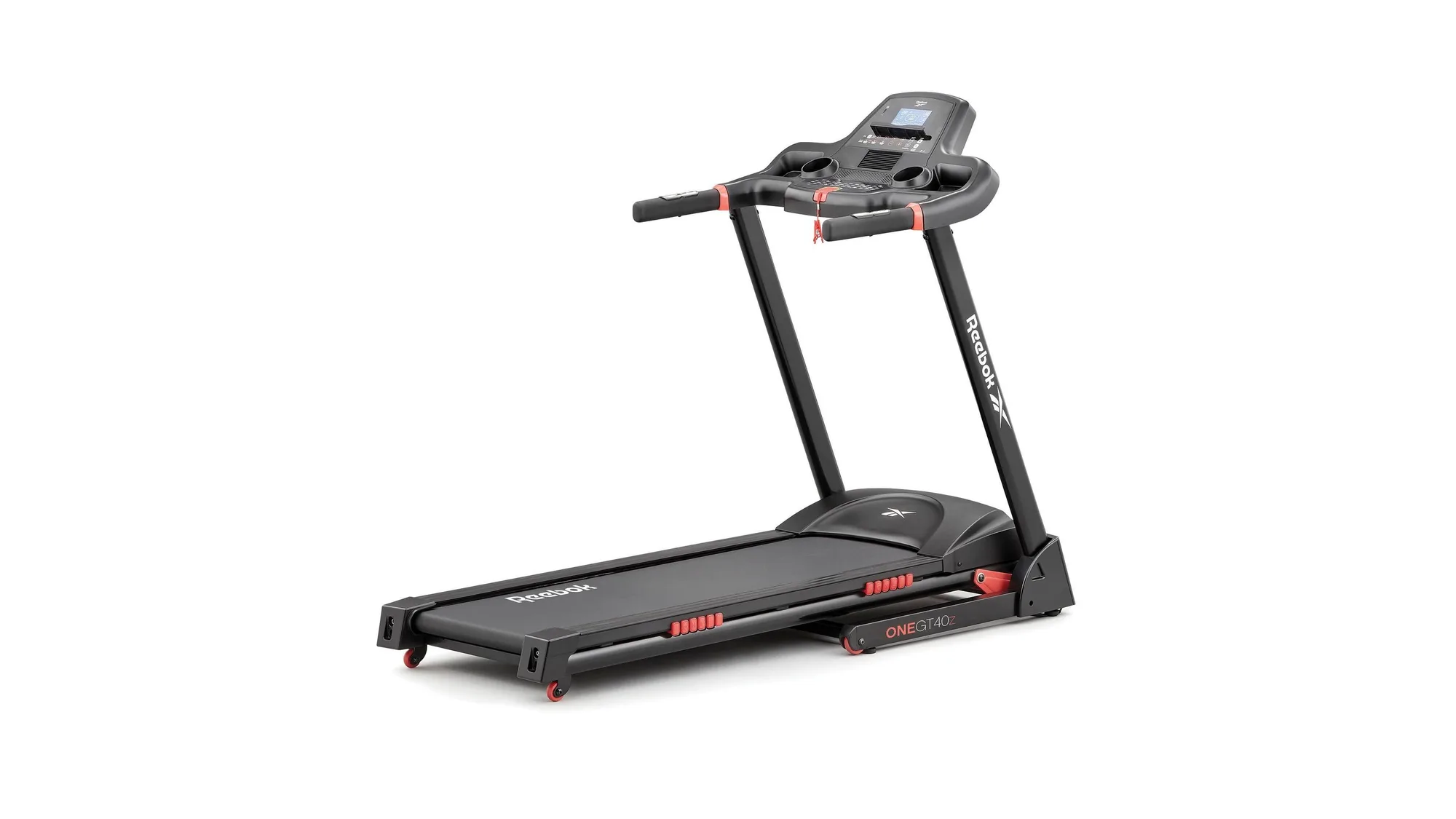
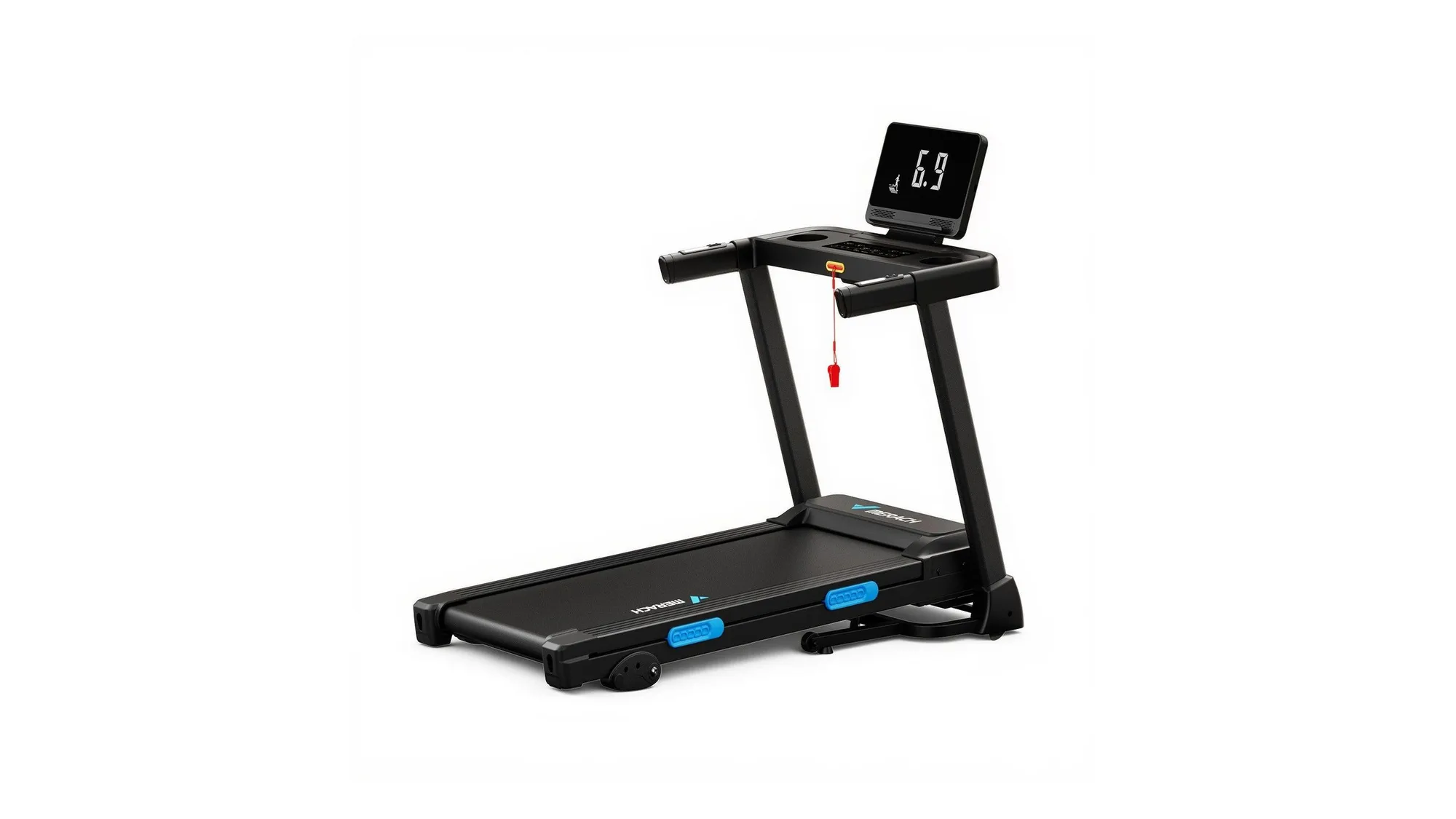
Reebok lists the GT40z with a 130 x 45 cm running area. MERACH lists the T12B2 with a belt of 108 x 41.9 cm, described as five-layer. A longer, wider belt gives more margin if you run; a shorter one is fine for walking at a steady pace.
If you are tall or plan to run, read the belt length on the product page rather than assuming it from the machine's overall size. Not every maker publishes it.
What do motor power and top speed mean for a home treadmill?
The motor and top speed tell you whether a treadmill suits walking, jogging or running. Higher figures suit faster, longer sessions, but the way makers state motor power is not always comparable.
Reebok lists the GT40z at 2.0 HP and a speed range of 1 to 18 km/h, and does not say whether the HP figure is continuous or peak. MERACH lists a speed range of 0.8 to 12 km/h on the T12B2 and does not state the motor power on that page.
That gap is useful to know before you buy. If a page gives a horsepower figure without saying whether it is continuous or peak, treat it as a rough guide and ask the seller. A top speed of 12 km/h is a brisk jog for many people; if you plan to run faster than that, a higher ceiling matters.
Is incline worth paying for?
Incline is worth having if you want to vary a walk or add effort without going faster. It is a feature you set from the console, so check how it adjusts.
Reebok lists 12 electronic incline levels on the GT40z. MERACH lists automatic incline up to 15% on the T12B2. The NHS lists riding a bike on hills as vigorous activity, and the same idea applies on a treadmill: a steeper setting raises the effort at the same speed.
How much user weight can a treadmill take?
Check the maximum user weight before anything else, because it differs by model and the limit is set by the maker. The figures below come from each maker's own page.
| Treadmill | Running area | Top speed | Incline | Max user weight | Size |
|---|---|---|---|---|---|
| Reebok GT40z | 130 x 45 cm | 18 km/h | 12 electronic levels | 110 kg | 168 x 77 x 134 cm in use |
| MERACH T12B2 | 108 x 41.9 cm | 12 km/h | Automatic, up to 15% | 136 kg | 65 x 70 x 125 cm folded |
Each page publishes one size figure and not the other: Reebok gives its in-use dimensions but not the folded ones, and MERACH gives folded dimensions but not the in-use ones. Look for both before you order.
How much space does a folding treadmill need?
Plan for the in-use footprint plus clear floor behind the belt, and separately for the folded size if you want to store it. Measure the room, the ceiling and the route the box will take into the house.
Reebok lists the GT40z at 168 x 77 x 134 cm in use and describes a soft-drop hydraulic fold with transport wheels. MERACH lists the T12B2 folded at 65 x 70 x 125 cm, with hydraulic folding and wheels for moving it. The best folding treadmill for home guide compares more models, and the small apartment home gym setup guide covers layouts.
Before buying, check the weight of the machine and how many people are needed to move it. Neither page above states a machine weight.
What does the console and app connection add?
A console or app only helps if it keeps you using the machine. The basics are speed, time, distance and incline; extras include programmes and app links.
Reebok lists a 5-inch LCD showing speed, time, distance, calories, pulse and incline, with 36 preset, 3 user-defined and 3 target programmes, and support for its Reebok Console App. MERACH lists an LED display with a remote control and heart rate monitor, plus compatibility with the Merach app, Kinomap, Zwift, Apple Health and Google Fit.
Read what each page says the console shows, and whether an app needs a subscription or an internet connection.
Does cushioning and noise matter in a flat?
Yes if you live above or next to others. Both makers describe cushioning, but give no impact figures to compare.
Reebok names its ONE Series cushioning technology on the GT40z. MERACH lists six silicone shock-absorbing pillars plus the five-layer belt, and a noise level under 40 dB. Those are maker statements and not measurements made here.
A mat under the machine protects the floor and helps with vibration; see the best home gym flooring guide and the home gym ventilation and noise guide.
How much exercise does the NHS recommend?
The NHS says adults should do at least 150 minutes of moderate activity a week, or 75 minutes of vigorous activity. Its moderate examples include brisk walking, and running is listed as vigorous.
That is about 20 to 30 minutes a day, according to the NHS. A treadmill you will actually use that often is worth more than a faster one that sits unused, so convenience and noise count. The NHS also says to start small and build up gradually, and that walking briskly counts.
If you have a health condition or have not exercised for a while, speak to a GP before starting.
How should you set a budget?
Start with the cheapest treadmill that meets your weight, belt and space needs, then pay more only for a feature you will use. Among the models covered here, the Reebok GT40z is around £549 and the MERACH T12B2 is around £330 (both checked Oct 2026). Prices are indicative and change, so check the current listing.
For more models see the best treadmill for home guide, and if you are unsure a treadmill is right at all, read treadmill vs exercise bike. Closer looks at each model: the Reebok GT40z review and the MERACH T12B2 review.
Should you buy a treadmill or something else?
A treadmill suits walking and running indoors; it is not the only way to meet the NHS target. The NHS lists riding a bike as moderate activity, and a bike usually takes less floor space. If you are weighing the two, the comparison guide sets out the trade-offs, and the NHS strength advice (two days a week, working all the major muscle groups) is separate from your aerobic minutes either way.
A short checklist before you buy
- Confirm the maximum user weight is comfortably above yours.
- Check the running area against your stride and height.
- Check the top speed against how fast you plan to go.
- Find both the in-use and folded dimensions.
- Read the maker's warranty terms.