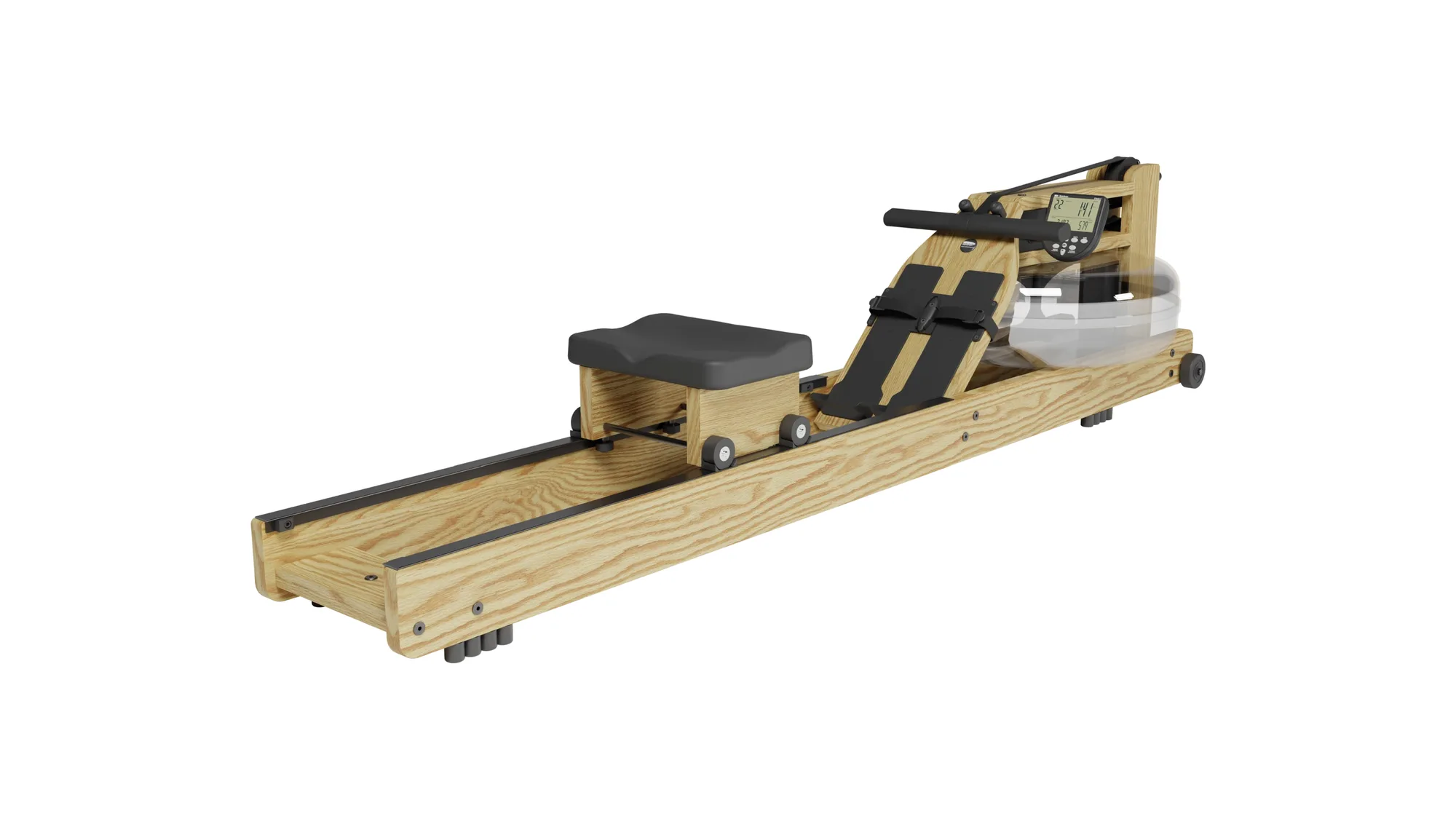
The WaterRower Original Oak is a water-resistance rower with a solid hardwood frame, a 17 litre tank and an S4 Bluetooth monitor included. Going by the maker's page, it stores upright, lists a 315 kg user weight limit and carries a 5-year frame and 3-year parts warranty. Indicative price: around £999 (checked Oct 2026).
This review is based on published specifications; the site does not test products.
What does the maker say it is?
WaterRower describes its machines as powered by the natural resistance of a patented WaterFlywheel. The Original Oak is made from solid Appalachian hardwood in Rhode Island, USA, and finished with Danish oil, which the maker says seals the wood against sweat, water and moisture. The same model is offered in other woods such as Cherry and Walnut. The page says it "operates quietly with only the sound of moving water", but gives no decibel figure.
Specification
| Specification | Maker's figure |
|---|---|
| Dimensions in use | 209 x 57 x 51 cm (L x W x H) |
| Dimensions stored upright | 51 x 57 x 209 cm (D x W x H) |
| Weight | 29 kg dry; 46 kg filled with 17 litres |
| Maximum user weight | 315 kg |
| Maximum user height | 94 cm (37 in), measured by inseam |
| Seat height | 30 cm; 51 cm with optional HiRise |
| Handle | 38 cm standard; 43 cm optional |
| Monitor | S4 Bluetooth monitor included (time, distance, stroke rate, intensity); upgrades include PowerPulley and a 19.5 in CITYROW touchscreen |
| Footboard | Adjustable, with push-button pads and straps |
| Recommended space | 240 x 100 cm (8.5 x 3.5 ft) |
| Noise figure | Not published |
| Warranty | 5-year frame, 3-year parts |
What is the maximum user weight?
WaterRower lists a maximum user weight of 315 kg and a maximum user height of 94 cm (37 in) measured by inseam. The 315 kg figure is the highest stated among the rowers with a published limit on this site, and the inseam limit is the point to check for taller users: Concept2's page says both its leg options fit inseams up to 96.5 cm.
Who does the specification suit?
The standard 30 cm seat sits low; WaterRower sells a HiRise option for a 51 cm seat. The wooden construction and the choice of finishes suit people who want a rower that is on show in a living area rather than hidden away, and the upright storage suits a household with floor space to spare in height rather than length. Users with an inseam above 94 cm are outside the stated limit.
Can the WaterRower be stored upright?
Yes. The maker says the machine is designed for vertical, space-saving storage without removing water from the tank, and includes transport wheels. The stored size is 51 x 57 x 209 cm. Reasoning from those dimensions, it needs only 51 x 57 cm of floor but 209 cm of clear height, so check the ceiling and doorways. At 46 kg filled, moving it is heavier than the 26 kg Concept2 RowErg, which is a point for anyone lifting it up stairs. See the small apartment home gym guide.
How do you look after the water?
WaterRower sells purification tablets that it says help prevent algae and bacterial growth, and instructs adding two tablets every four to six months. The tablets are sold in packs of 10. The maker says not to use them with WaterBlue dye, which may remove the blue colour. A tank needs periodic attention in a way an air rower does not, which is a point to weigh against the wooden finish and upright storage. The product page links to a Care and Parts section but gives no cleaning schedule for the wood or the rest of the machine.
What should you check before buying?
- Assembly and delivery. The product page shows free delivery on orders over £100 and links to a Delivery and Installation page; it states no assembly steps or delivery timeframes.
- Noise. No decibel figure is published.
- Price. The maker's own page lists the range "from" a different figure than the indicative price here, so confirm the finish and options you want.
- Your rights. GOV.UK's guidance for sellers says online purchases carry a 14-day cancellation period after receipt and that a faulty item returned within 6 months must be repaired or replaced; read the seller's terms for a 46 kg item.
- Flooring. See the flooring guide.
What does the specification imply?
This is reasoning from the maker's figures rather than any claim about use. At 209 x 57 cm in use, the Original Oak is about 35 cm shorter than the 244 cm Concept2 RowErg, although WaterRower recommends 240 x 100 cm of space and Concept2 recommends 274 x 122 cm for use. The 30 cm standard seat is low, and the optional HiRise lifts it to 51 cm, the same as Concept2's tall-leg option. The 17 litre tank accounts for the 17 kg between dry and filled weight, so anyone moving it with water inside should plan for 46 kg.
The handle is listed at 38 cm as standard with a 43 cm option, and WaterRower offers monitor upgrades: the PowerPulley Performance System, which the maker says uses a strain gauge and optical sensor, and a 19.5 inch CITYROW touchscreen with instructor-led content. The included S4 connects to WaterRower Connect and other compatible apps, according to the maker; confirm which apps and any subscriptions before comparing it with the Concept2 PM5, whose maker lists the free ErgData app.
Who should skip the WaterRower Original Oak?
Anyone with an inseam above 94 cm, a ceiling lower than about 2.1 m if they want to store it upright, or a need for a published noise figure should check elsewhere. The same goes for buyers who do not want a tank to look after, or whose budget sits nearer £500; the budget rowing machine guide covers lower-priced folding options.
How does it compare with the Concept2 on the maker figures?
Set side by side, the two machines trade off in predictable ways. The WaterRower lists the higher user weight (315 kg against Concept2's 227 kg as tested and 135 kg under EN 20957-7), the shorter length in use (209 cm against 244 cm) and an itemised warranty (5-year frame, 3-year parts). The Concept2 lists the lower weight (26 kg against 46 kg filled), a larger maximum inseam (96.5 cm against 94 cm) and a resistance figure, the drag factor, that WaterRower does not publish an equivalent of. Both are priced at around £1,000 (checked Oct 2026), and neither maker publishes a noise figure. Which set of trade-offs matters depends on the room, the users and whether a tank appeals.
What are the alternatives?
The air-resistance Concept2 RowErg (formerly Model D) is the closest comparison and is covered in air vs water rowing machines. The best rowing machine for home UK guide compares four models, and rowing machine vs exercise bike helps if you are undecided about the type of machine.
What is the price context?
The indicative price is around £999 (checked Oct 2026). Finish, monitor upgrade and delivery can change the total, so confirm on the retailer's page. For general activity amounts, the NHS recommends adults aged 19 to 64 build up to at least 150 minutes of moderate activity a week, so choose a machine you can fit and keep using.