Choose an exercise bike by four things: how the resistance works, whether the frame is upright or a spin-style design, the maximum user weight, and how much floor it needs. Price matters less than a bike that fits your body and your room.
This guide uses the makers' own specification pages and NHS guidance. It does not involve testing, because the site does not test products.
What does resistance type change on an exercise bike?
Resistance type decides how smoothly the bike rides, how you change effort and how much it costs. Makers list three broad approaches among the bikes covered on this site: a manual knob, magnetic resistance and electronic resistance.
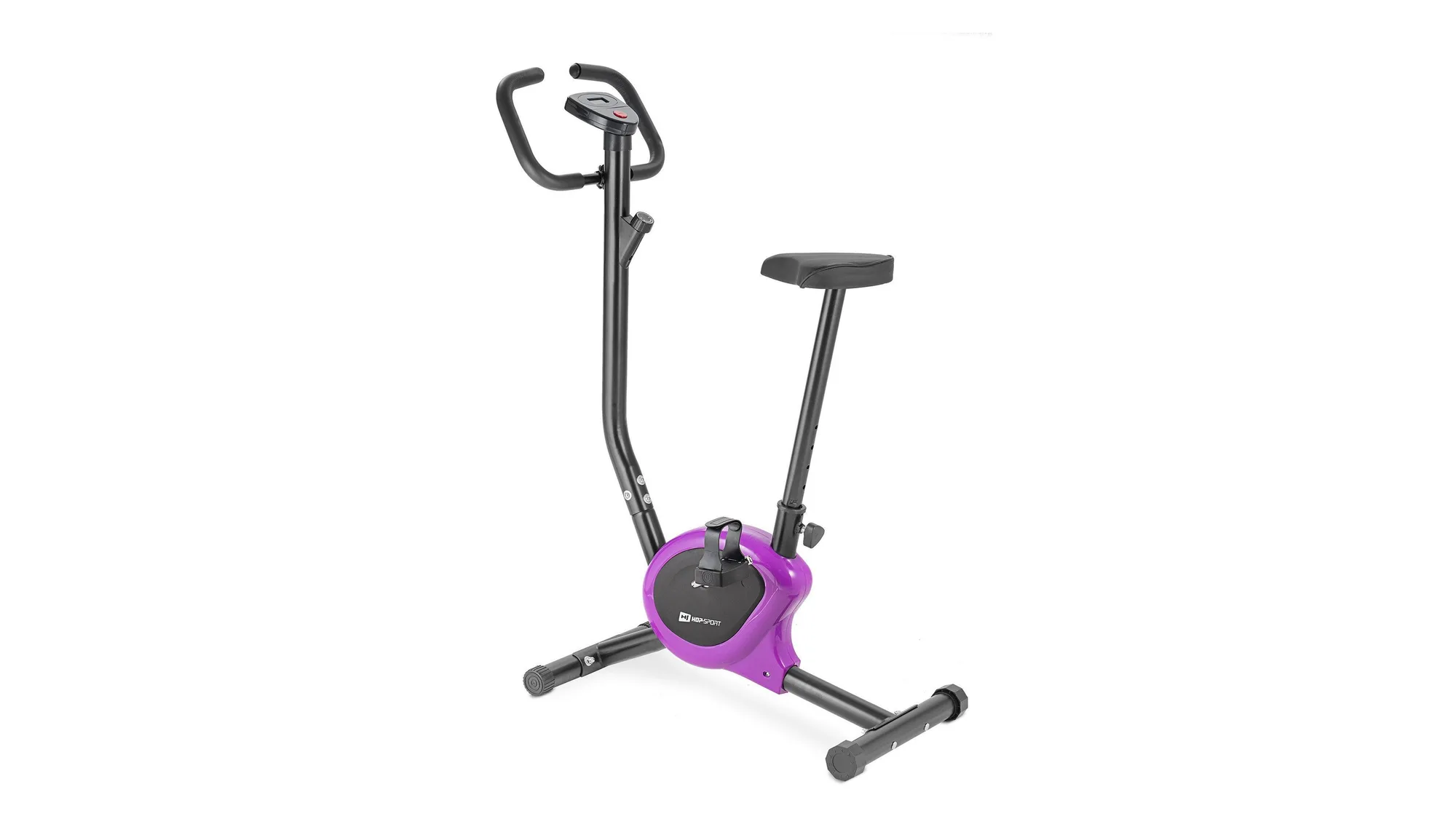
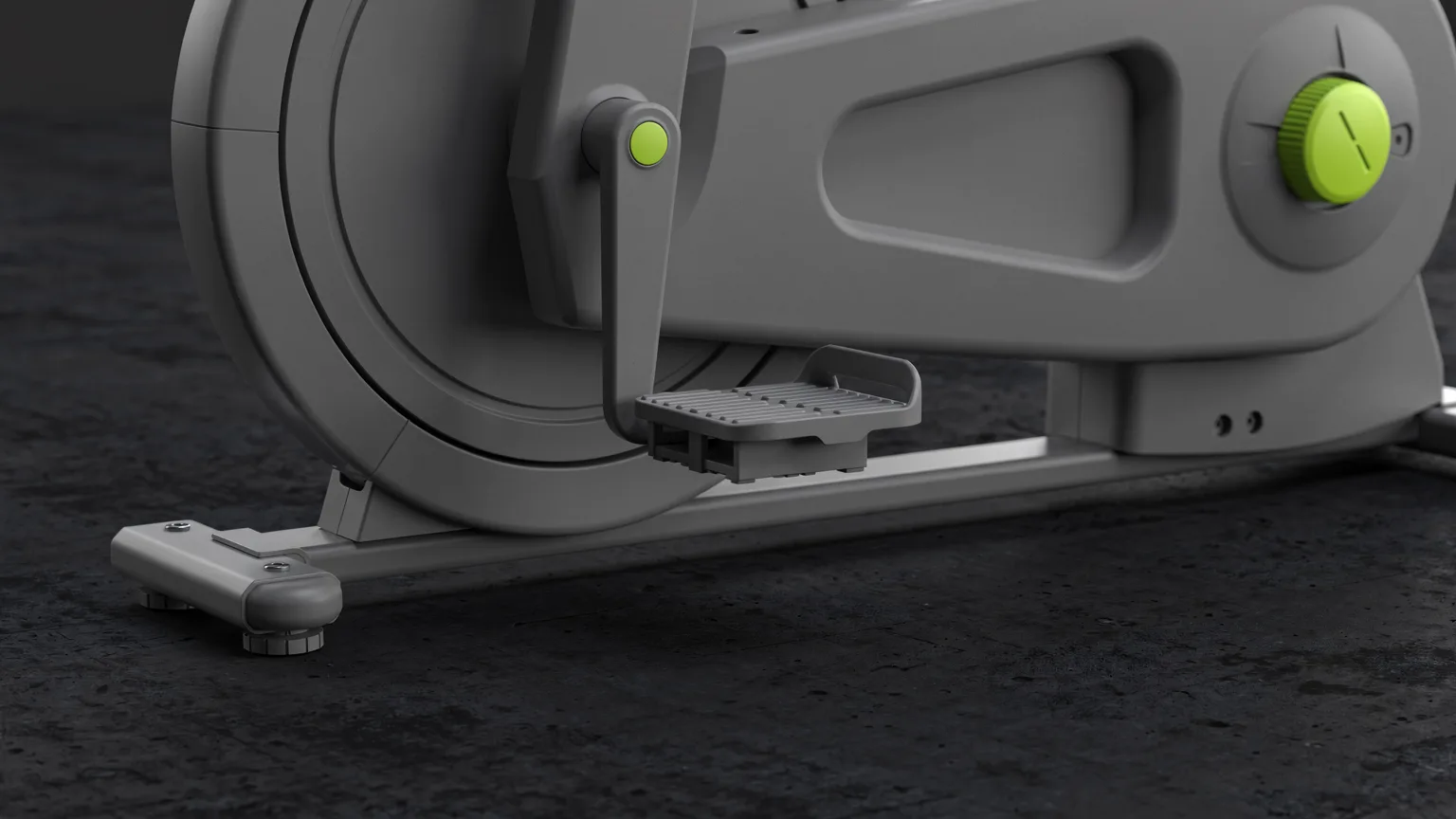
Hop-Sport's page for the HS-010H Rio describes mechanical resistance adjusted by a knob at the front of the bike, under the handlebars. That is the simplest arrangement and sits at the budget end, at around £94 (checked Oct 2026).
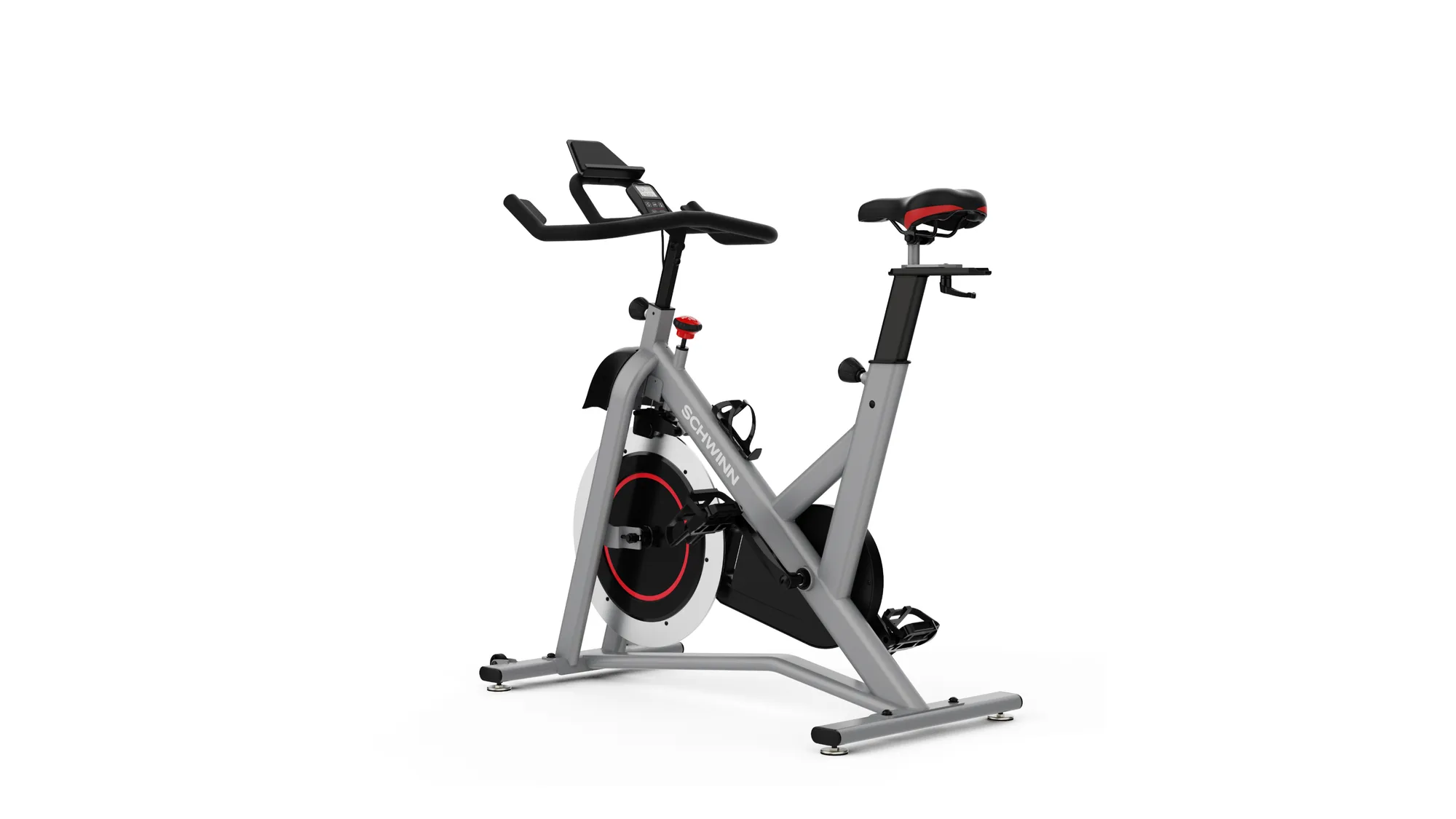
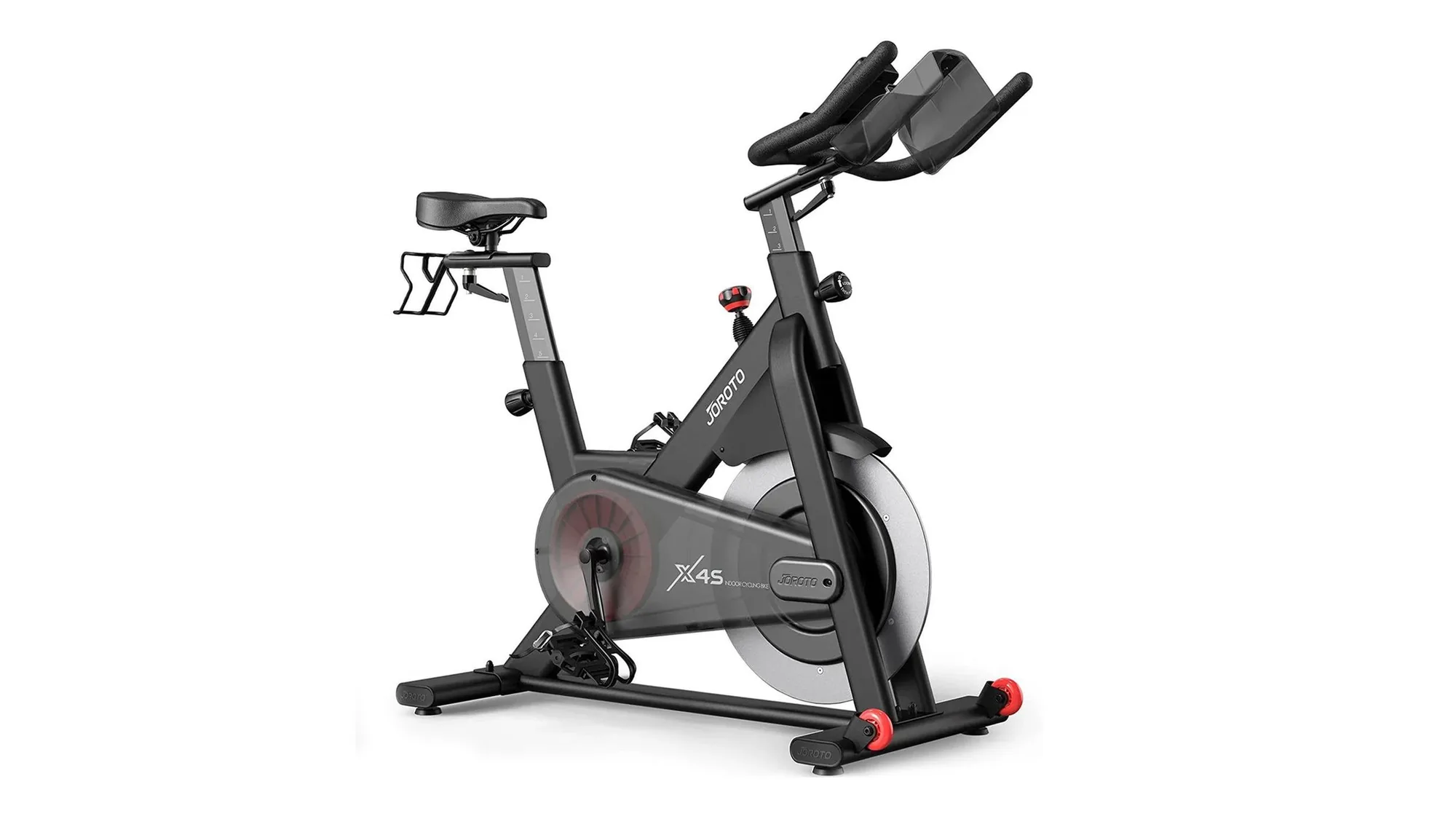
JOROTO lists the X4S with six magnets and resistance that is micro-adjustable from 1% to 100%. Schwinn lists the IC3.5 with electronic resistance across 50 levels. More levels and finer steps make it easier to repeat the same session from one week to the next.
Whichever you choose, check the maker's page for the resistance range rather than assuming. The best exercise bike for home guide compares specific models.
Is a spin-style bike or an upright bike better for home use?
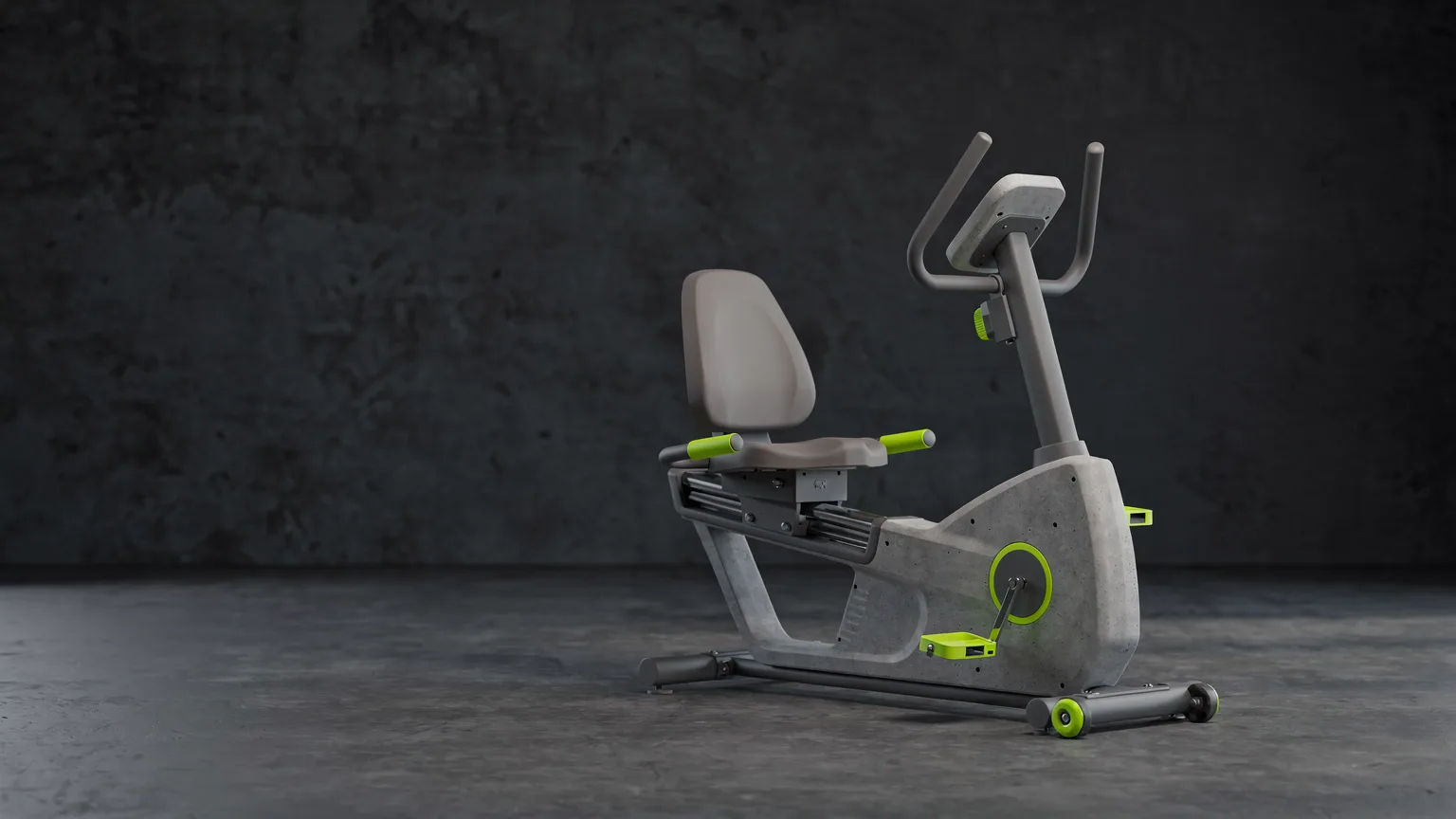
A spin-style bike suits harder, standing efforts, while an upright bike suits relaxed, seated riding. The frame shape follows from that, and it affects comfort more than any figure on a spec sheet.
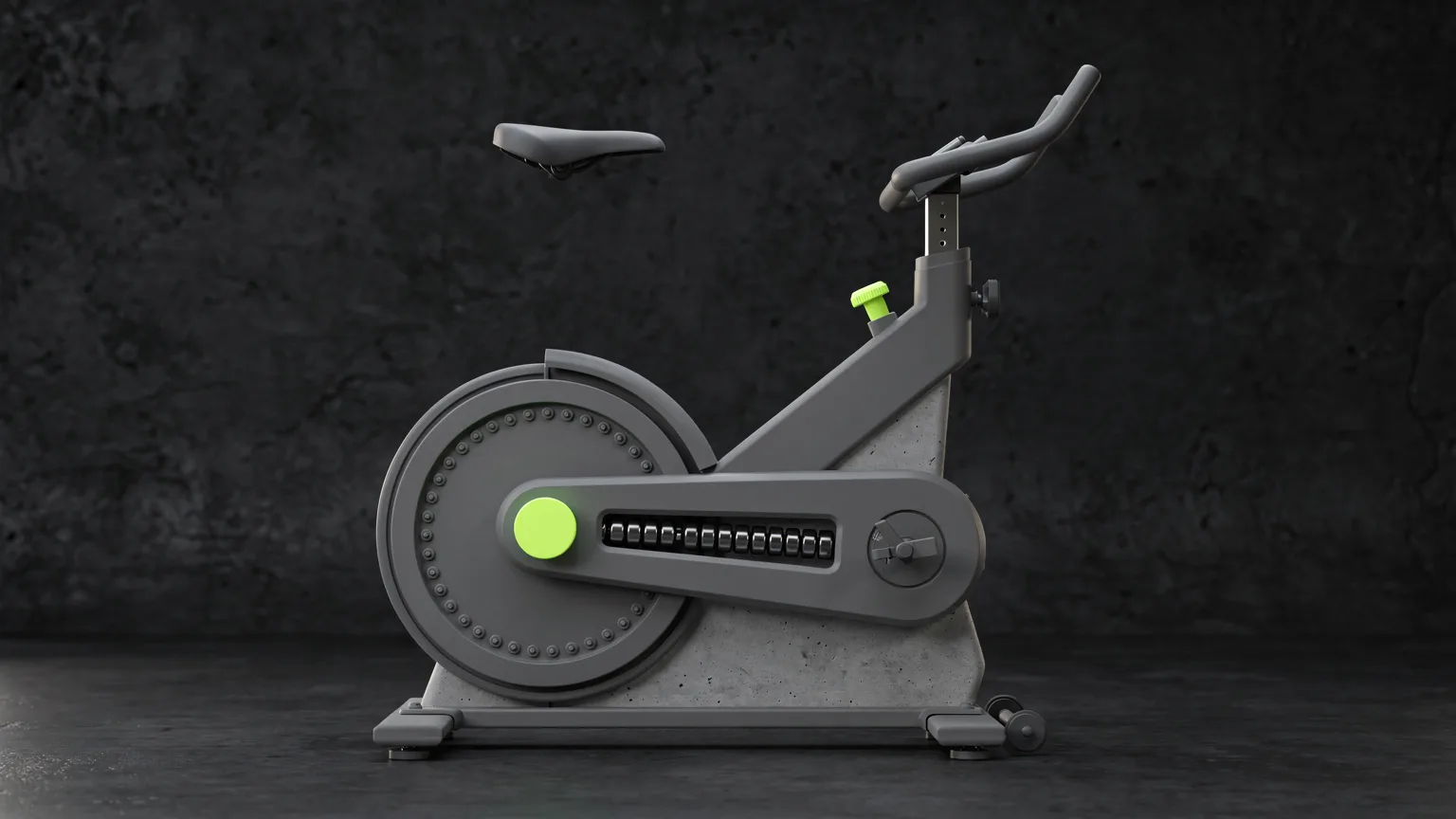
The JOROTO X4S and the Schwinn IC3.5 are both listed as indoor cycling bikes, with adjustable seats and handlebars. Schwinn lists dual-sided pedals with SPD clip and toe cage options, which matters if you own cycling shoes with cleats.
The Hop-Sport HS-010H is an upright bike. Its pedals have adjustable straps instead, so ordinary trainers work. The ProForm 225 CSX is also an upright design; see the ProForm 225 CSX review for what the maker states.
If you are unsure, the best exercise bike for seniors guide explains why seated, easy-access frames suit some riders.
How much weight can an exercise bike take?
Check the maximum user weight before anything else, because it differs by a wide margin between models. The figures below come from each maker's own page.
| Bike | Resistance | Max user weight | Dimensions (L x W x H) | Bike weight |
|---|---|---|---|---|
| JOROTO X4S | Magnetic, 1% to 100% | 150 kg | 123 x 51 x 118 cm | 44 kg net (page also lists 42.5 kg) |
| Schwinn IC3.5 | Electronic, 50 levels | 113 kg | 115.5 x 53.5 x 109 cm | 38.3 kg assembled |
| Hop-Sport HS-010H Rio | Mechanical knob | 120 kg | 93 x 42 x 120 cm | 12 kg |
The JOROTO page lists a 4-way adjustable seat and handlebar. Schwinn lists adjustable handlebars and seat, and Hop-Sport lists six seat height levels with a seat-to-pedal distance of 70 to 90 cm. Hop-Sport does not list handlebar adjustment on that page.
JOROTO's page is not fully consistent: it lists 13 kg for the flywheel in one table and 11.5 kg for the cast iron wheel elsewhere, and the warranty is stated as both one and two years in places. Confirm figures like these with the seller before ordering.
How much space does an exercise bike need?
Plan for the bike's listed footprint plus room to climb on and off, which the maker's dimensions do not include. Measure the room, the ceiling height and the route the box will take into the house.
The Hop-Sport HS-010H is the smallest in the table at 93 x 42 cm, and at 12 kg it is far easier to move. The JOROTO X4S lists an assembled footprint of 52 x 126 cm and a net weight of 44 kg, so it is a bike you set up once.
If floor space is the main limit, see the small apartment home gym setup guide for layout ideas.
How should an exercise bike fit your body?
A bike fits when you can sit comfortably, reach the handlebars without straining and pedal with a slight bend in the knee at the bottom of the stroke. The seat and handlebar ranges decide whether that is possible for your height.
Look for the adjustment range on the maker's page: Hop-Sport gives a seat-to-pedal distance of 70 to 90 cm, and JOROTO lists seat and handlebar movement in both height and reach. If you share the bike with someone of a different height, a wider range and quick adjustment matter more than extra resistance levels.
Comfort also depends on the saddle and your riding time. If a bike feels wrong in the first few minutes, check the return terms with the seller before you commit to it.
Do you need an app, a console or Bluetooth?
Only if a screen would keep you riding. The basics are the same on every bike: time, distance, speed and calories.
Hop-Sport lists an LCD screen showing time, distance, calories and speed, powered by batteries that are not included. JOROTO lists a backlit monitor showing time, distance, speed, RPM, load, calories and heart rate when a sensor is connected, plus Bluetooth that works with fitness apps such as Kinomap. Schwinn lists an LCD display.
Read each page for what the console actually shows. Calorie figures on a bike are estimates, so use them to compare your own sessions, not as exact measurements.
What does the NHS say about how much to ride?
The NHS recommends adults aged 19 to 64 do at least 150 minutes of moderate intensity activity a week, or 75 minutes of vigorous activity. Its examples are riding a bike for moderate activity and riding a bike fast or on hills for vigorous activity.
That is about 30 minutes on five days. A bike you will use that often is worth more than a better one that sits unused, so quiet running and easy access count. The home gym ventilation and noise guide covers sharing a home with a bike.
If you have a health condition or have not exercised for a while, speak to a GP or physiotherapist before starting.
How should you set a budget?
Start with the cheapest bike that meets your weight, height and space needs, then spend more only for a feature you will use. Budget bikes cover basic riding; higher prices tend to buy finer resistance control and a studio-style frame.
JOROTO's X4S is around £400 (checked Oct 2026) and the Hop-Sport HS-010H is around £94 (checked Oct 2026). Prices are indicative and change, so check the current listing. Our best exercise bike under £300 guide covers the middle ground.
Deciding between a bike and another machine? The treadmill vs exercise bike comparison sets out the trade-offs.
A short checklist before you buy
- Confirm the maximum user weight is comfortably above yours.
- Check the seat height range against your leg length.
- Choose the pedal type to suit your shoes.
- Measure the footprint, the ceiling and the doorway.
- Read the maker's warranty terms, and confirm any figure that looks inconsistent.
The product pages are the JOROTO X4S review, the Schwinn IC3.5 review and the Hop-Sport HS-010H review if you want a closer look at one model.