A smart home gym is worth it if you value compact storage, digital resistance and guided content enough to pay a premium for them. On the makers' published figures the systems here run from around £963 to around £3,599 (checked Oct 2026), and the money buys convenience rather than extra load.
This guide sets out the trade-offs from maker documentation. It does not draw on product testing, because the site does not test products.
What are you paying for in a smart home gym?
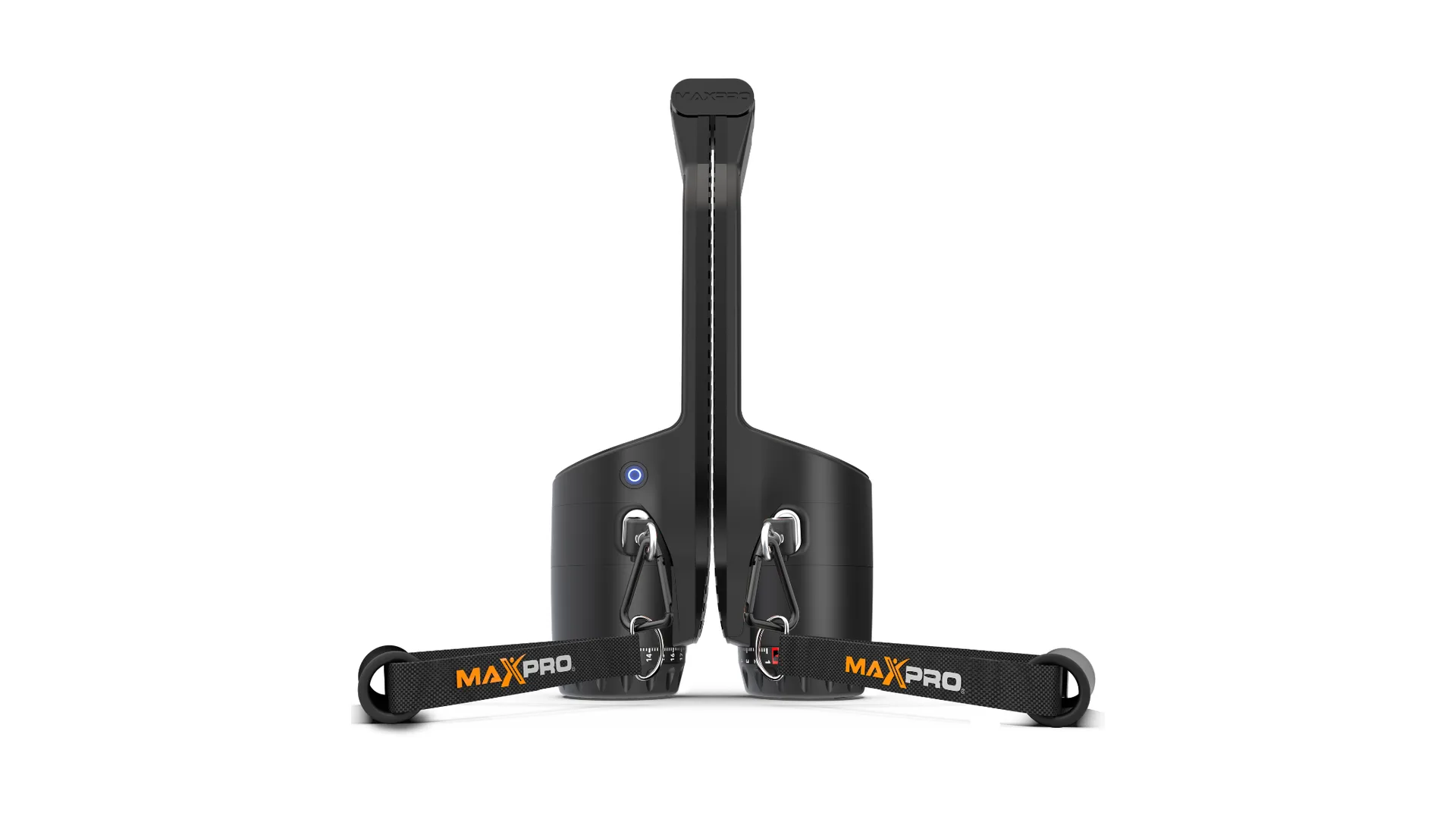
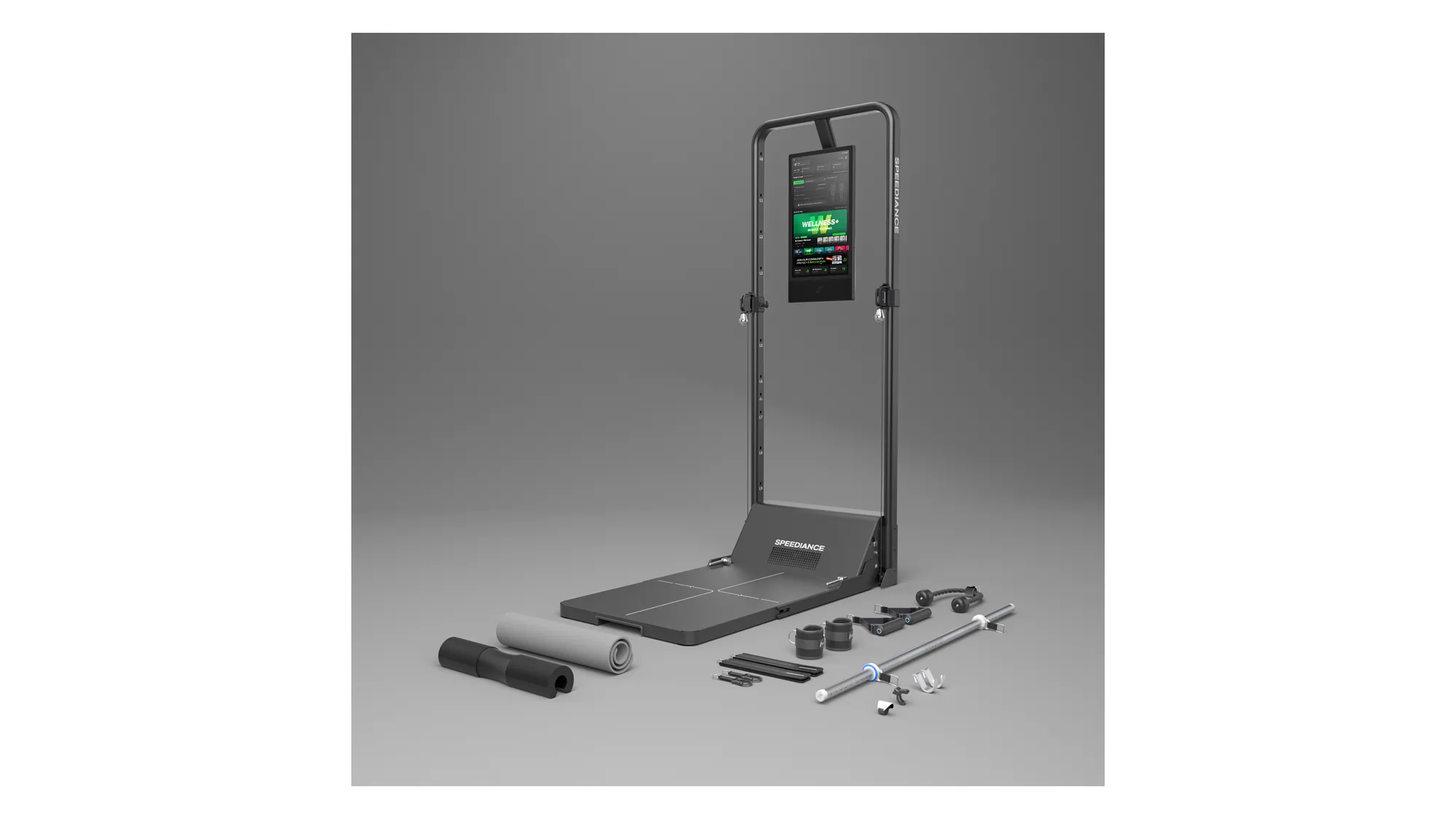
A smart system swaps weight plates for motor or cable-based digital resistance. That gives adjustable load in small steps, storage that can be compact, and an app or screen with guided workouts. Speediance, for example, lists two 800W motors, a 21.5-inch touchscreen and resistance up to 130lb per arm. MAXPRO lists a dial with 50 settings from 5 to 300lb in a 9.4lb (about 4.3kg) unit. AEKE's page states 220lb resistance with 1lb precision control.
Speediance's US page also lists four resistance modes (chain, standard, eccentric and constant). Variable modes are something a stack of plates does not offer on its own, so they are part of what the premium covers if you would use them.
Is a smart home gym worth the price compared with traditional equipment?
It depends on space and priorities. On the makers' published figures, the premium pays for compact storage, digital resistance and guided content rather than for more load. A cable system such as the MAXPRO SmartConnect (around £963, checked Oct 2026) costs far less than a full machine like the Speediance Gym Monster 2S (around £3,599, checked Oct 2026), and the AEKE K1 is listed at around £3,498 (checked Oct 2026).
Start with what you would buy otherwise. A pair of adjustable dumbbells, a bench and a rack covers many routines, and the sums are in our guides. A smart system makes sense when storage, guided content or tracking are what you are paying for, and when you have confirmed the one-off price, any add-on costs and the UK warranty route. If any of those is unclear from the seller, treat the premium as unproven.
| Question | Smart system | Traditional equipment |
|---|---|---|
| Space | MAXPRO folds to about 41cm by 18cm; Speediance folds to a stated 0.37m width but stays 1.85m tall | Racks and plates need permanent floor space |
| Load adjustment | Dial, app or screen | Manual plate or pin changes |
| Guidance | App or screen programmes | Self-directed, or separate apps |
| Typical outlay | Around £963 to around £3,599 for the systems listed here | Varies widely; see our budget guide |
| Ongoing cost | None stated by MAXPRO and AEKE; Speediance add-ons not priced on pages checked | None, apart from consumables and maintenance |
For lower-cost routes, see how to build a home gym on a budget, how much a home gym costs, adjustable dumbbells and the beginner's guide to home gym equipment.
Do smart home gyms need a subscription?
Not all do. MAXPRO states "No subscription needed" for its app and guided workouts, and AEKE's FAQ states there are no subscriptions or additional costs. Speediance sells an AI coaching add-on called Wellness+ and an extended cover plan called Speediance Care. Its EU page describes Care as up to four years of protection and says repairs after the standard 24-month warranty are at the owner's expense, but shows no price for either product.
Ask the seller what is included in your package. The pages checked also do not say what happens to the app if you stop paying for an add-on or the maker stops supporting it, so that is a question for the seller too.
Are the maker warranties enough?
MAXPRO and Speediance both state two-year warranties, and AEKE's FAQ does too, so the headline term is the same across the three. The differences are in the detail. MAXPRO's warranty page covers only the original purchaser and lists cables as a wear item that is not covered; the product page gives expected cable life as 1.5 to 2 years and says replacement kits are sold by MAXPRO.
MAXPRO also says it pays service shipping only within the Continental US; customers elsewhere pay shipping and bear the risk of loss in transit. None of the pages checked set out UK claim handling, so confirm the route with the UK seller.
GOV.UK's guidance for traders says a customer who cancels within 14 days of receiving an item must be offered a refund, and that a faulty item returned within 6 months must be repaired or replaced unless the trader shows it was not faulty when sold. That is written for sellers, but it indicates what a UK seller's terms should reflect. A maker's US-store terms, such as MAXPRO's 30-day return on unused items in original packaging, are a separate matter.
How much space does a smart home gym need?
Speediance lists the 2S at about 0.84 sq m unfolded and 0.25 to 0.26 sq m folded, and 1.85m tall. MAXPRO lists the SmartConnect at 32.3in (about 82cm) long unfolded and about 41cm by 18cm folded. Storage claims need measuring: Speediance stays 1.85m tall when folded and weighs 78kg or more (US page) or about 82kg (EU page), so check ceiling height, door widths, stairs and floor type.
The unfolded 0.84 sq m is the area to leave clear when training, and arm movement needs room on both sides in addition. See the small apartment home gym setup guide and the renters' equipment guide.
Do smart home gyms have to be wall-mounted?
Not the ones covered here. The MAXPRO SmartConnect is a 9.4lb folding unit that includes a door mount per the maker, and the Speediance 2S is described as a floor-standing, folding machine. Check each manual for set-up requirements and, if you rent, your tenancy terms.
When do the numbers point to a smart gym?
- You are short on floor space and want something you can stow. The MAXPRO's published weight and folded size fit that case; a large machine does not unless you have a permanent spot for a 78kg-plus, 1.85m-tall unit.
- You want guided programmes and a screen, and accept paying more for them.
- You would otherwise buy a cable machine and a bench, which the Speediance Works Plus or Family Plus packages bundle with an adjustable bench per Speediance's page.
When may a smart gym not be worth it?
- You mainly want heavy compound lifts. A power rack and barbell suit that better on a cost basis.
- You do not want any ongoing cost or app dependency.
- You cannot confirm UK delivery, returns and warranty terms from the seller. The maker pages checked were US or EU stores.
Exercise guidance
The NHS advises adults aged 19 to 64 to do strengthening activities that work all the major muscle groups on at least 2 days a week, and at least 150 minutes of moderate activity a week or 75 minutes of vigorous activity. It lists lifting weights, using resistance bands and bodyweight exercises as examples. Any equipment can meet that, so a smart system is a convenience choice, not a requirement. Anyone with a health condition should speak to a doctor first, and follow the maker's manual for loading and set-up.
Where to go next
Compare specifications in the best smart home gym UK guide or the MAXPRO vs Speediance comparison. The AEKE K1 is also listed on its maker page at a stated 220lb resistance, with no subscription per its FAQ, though UK delivery is not confirmed there.