To build a home gym on a budget in the UK, start with exercises that need no equipment, then add one dumbbell pair, then flooring, and only then larger items. The NHS lists body-weight exercises and resistance bands for muscle strengthening, so equipment is optional at first. Indicative prices below were checked in October 2026.
What should I buy first for a home gym on a budget?
Buy nothing first: start with the exercises the NHS already lists, then add one versatile item. The NHS recommends muscle-strengthening activities on at least two days a week that work all the major muscle groups, and lists lifting weights, working with resistance bands and body-weight exercises such as push-ups, sit-ups and squats.
Its home strength-exercise page shows chair-based moves, such as sit-to-stand, mini-squats and calf raises at 5 repetitions each, a wall press-up of 5 to 10 repetitions for up to 3 sets, and biceps curls of 5 per arm for 3 sets. It says filled water bottles will do as light weights for the curls. The NHS's wider guidance says to aim for at least 2 sets of 8 to 12 repetitions of each activity, with 3 sets for more benefit, and to start gradually and build up over weeks. That is a zero-cost starting point, and a way to learn whether you will keep training before spending anything. For health conditions, speak to a GP or other qualified professional first.
A low-cost addition is a set of resistance bands; our resistance bands guide compares them.
Are adjustable dumbbells worth the extra cost?
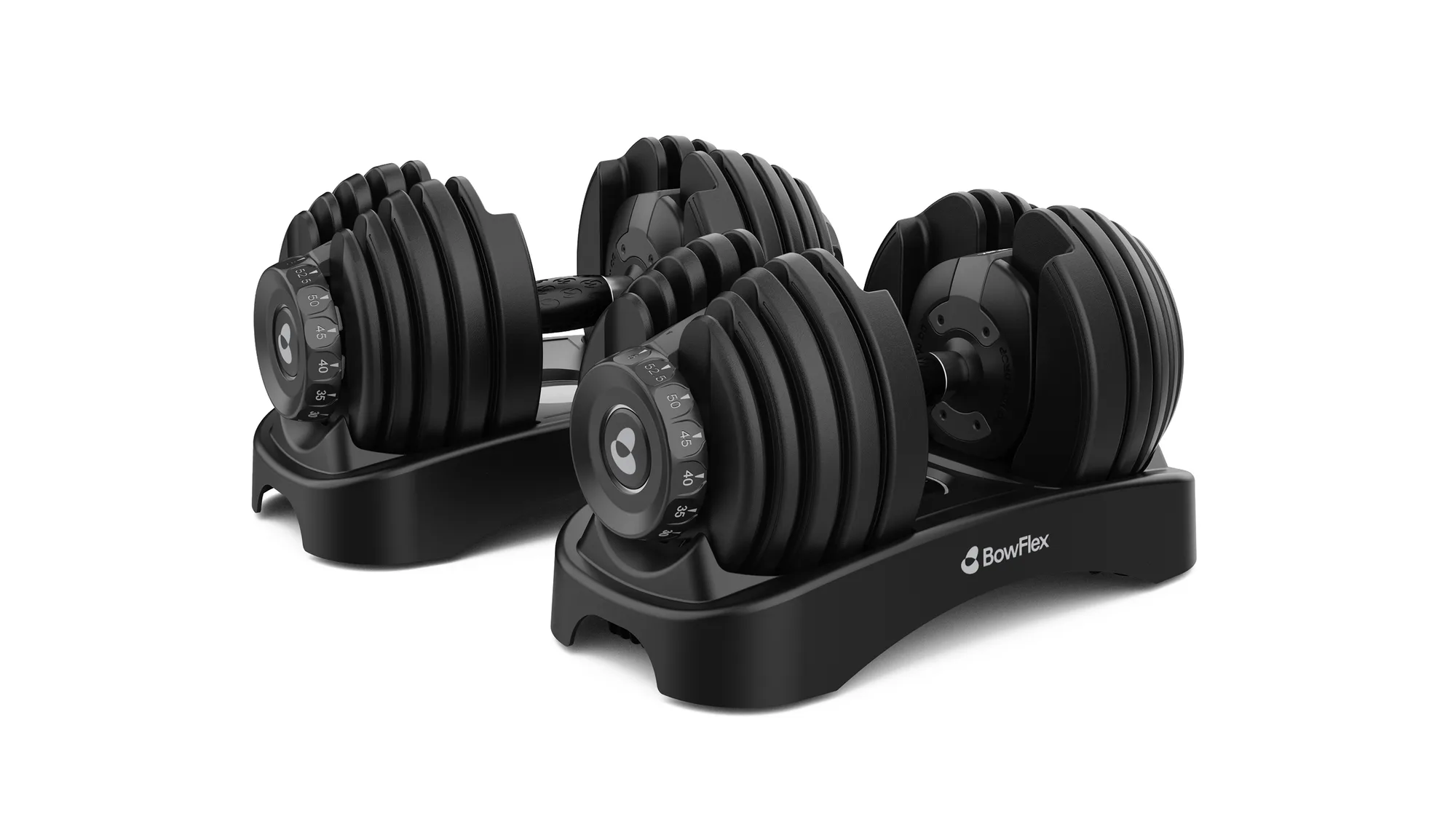
It depends on the range you need: the extra spend buys more settings per pair, not more quality as such. Three dumbbell routes appear on this site, and the price gap between them is large.
| Option | Indicative price (checked Oct 2026) | Stated range |
|---|---|---|
| PROIRON rubber hex dumbbells, 14kg (pair) | around £90 | Fixed weight, listed as a pair; no maker page located |
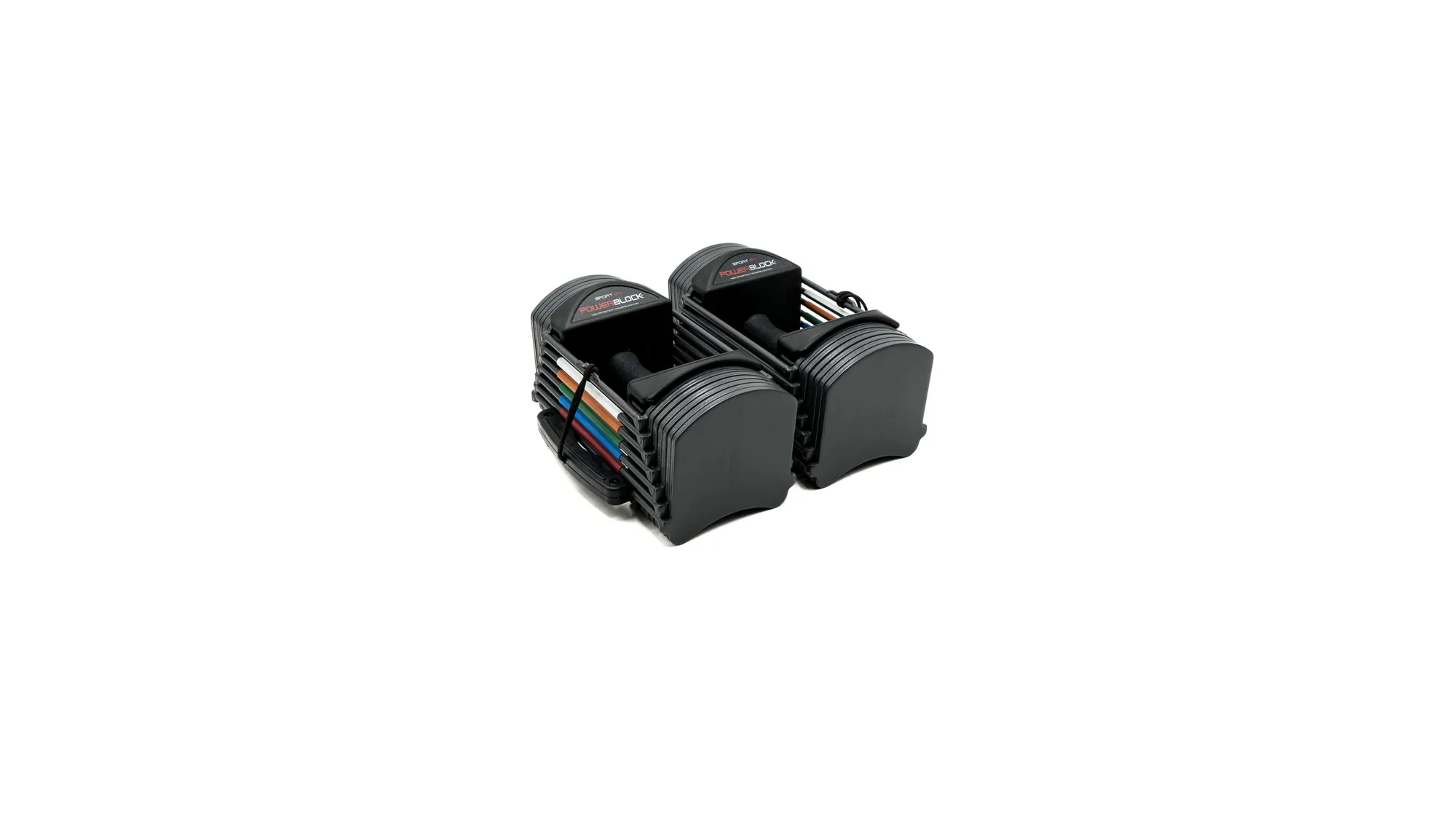
| PowerBlock Sport 24 | around £205 | 3 to 24 lb (about 1.4 to 10.9 kg) per dumbbell in 3 lb steps |
| Bowflex SelectTech 552 | around £608 | 5 to 52.5 lb (2.3 to 23.9 kg) per dumbbell, 15 settings |
The reasoning is as follows. A fixed pair is the lowest outlay, but it offers one load, so progressing means buying more pairs. The PowerBlock offers eight settings per dumbbell and, per PowerBlock, replaces eight pairs, at roughly twice the fixed-pair price. The Bowflex covers a wider range but costs around three times the PowerBlock. If you are likely to outgrow about 10.9 kg per dumbbell, the Bowflex's 23.9 kg top setting is the relevant figure; if you will not, the extra spend buys range you may not use. See the budget dumbbells guide, the adjustable dumbbells guide and the dumbbell weight guide for beginners to decide.
Step size is the other difference. The Bowflex moves in 2.5 lb steps up to 25 lb and 5 lb steps above that, while the PowerBlock moves in 3 lb steps from 3 to 24 lb, so a 3 lb jump is a large proportional change at the light end. The NHS describes 8 to 12 repetitions of an activity as one set, and says to gradually increase repetitions over time, so smaller load steps are a convenience rather than a requirement. Our progressive overload guide sets out the NHS wording.
Do I need flooring for a budget home gym?
Flooring is a sensible early purchase if you will lift weights over a hard or finished floor, though it is not essential for bodyweight work. On the indicative prices, the Nicoman 9-pack is around £60 and the AIRHOP 12-pack around £130. Neither has a maker page, so sizes and thickness are unverified; check the retailer listing for current figures. The GCM matting roll, at around £234 for 10 m x 1.5 m, suits large areas rather than a corner. Our flooring guide and rubber versus foam comparison go into detail.
What should I add after dumbbells and flooring?
Add a bench, rack or cardio machine only to meet a specific need. Our strength equipment checklist shows what each purchase adds, the folding bench guide covers a space-saving bench, and the power rack guide covers the costliest step. For cardio, the JTX Freedom Air is around £430 on the indicative price, against around £990 for a Concept2; JTX publishes a 2-year in-home repair warranty and a 28-day money-back guarantee on its page, and lists the machine at 40 kg and 230 x 55 x 88 cm assembled, with folding storage.
How can I spread the cost of a home gym?
Add up the items you want and divide by the months you are willing to wait. For example, the PowerBlock plus the Nicoman mats is about £265 on the indicative prices, which is roughly £44 a month over six months. A fixed pair plus mats is about £150, or about £25 a month over six months. That is arithmetic, not a recommendation.
How does this compare with the alternatives?
- Second-hand: lowers the price but removes retailer protections. See the second-hand guide.
- Waiting for sales: our buying-time guide covers when prices tend to move.
- A gym membership: The Gym Group's page lists plans from £15.99 to £24.99 a month depending on type, with a £10 joining fee, and our comparison sets that against equipment prices.
- Full costs: the cost guide adds up complete builds.
What should I check before I buy?
- Warranty terms. PowerBlock lists a 5-year limited warranty for residential use only; Bowflex lists 2 years on parts as standard, with accidental damage covered only under its optional Protection+ plans.
- Stated tolerances. Bowflex notes that individual weight settings may vary from stated values due to manufacturing tolerances.
- Returns terms. Where a product has no maker page, check the retailer's returns terms before relying on its listed weight or size.
- Space and storage. See the storage ideas guide and the small apartment setup guide.
Which budget mistakes do the specifications point to?
These are reasoned from the published figures, not from anyone's experience of the products.
- Buying range you will not use. The Bowflex's top setting is 23.9 kg per dumbbell, while the PowerBlock stops at about 10.9 kg. If your target loads sit well below 10.9 kg, the extra roughly £400 between the two buys capacity beyond that.
- Buying the cheapest item with no specification. The PROIRON pair and the flooring packs have no maker page, so their weights, sizes and thickness cannot be verified from a maker.
- Buying a large item before the habit. A rower at around £430 to around £999 is a bigger commitment than a pair of dumbbells at around £90. Our smart home gym guide applies the same reasoning to the most expensive systems.
- Ignoring where kit will live. Stated dimensions help: the PowerBlock is listed at 10 x 5.5 x 5.5 in (about 25 x 14 x 14 cm) per dumbbell, and the Bowflex at 43 x 21.2 x 22.8 cm per dumbbell.
Who should skip this plan?
Anyone whose goal needs a barbell, a rack or a specific machine from day one should skip it, because a staged dumbbell plan will not cover that. The power rack and garage guides are a better starting point.