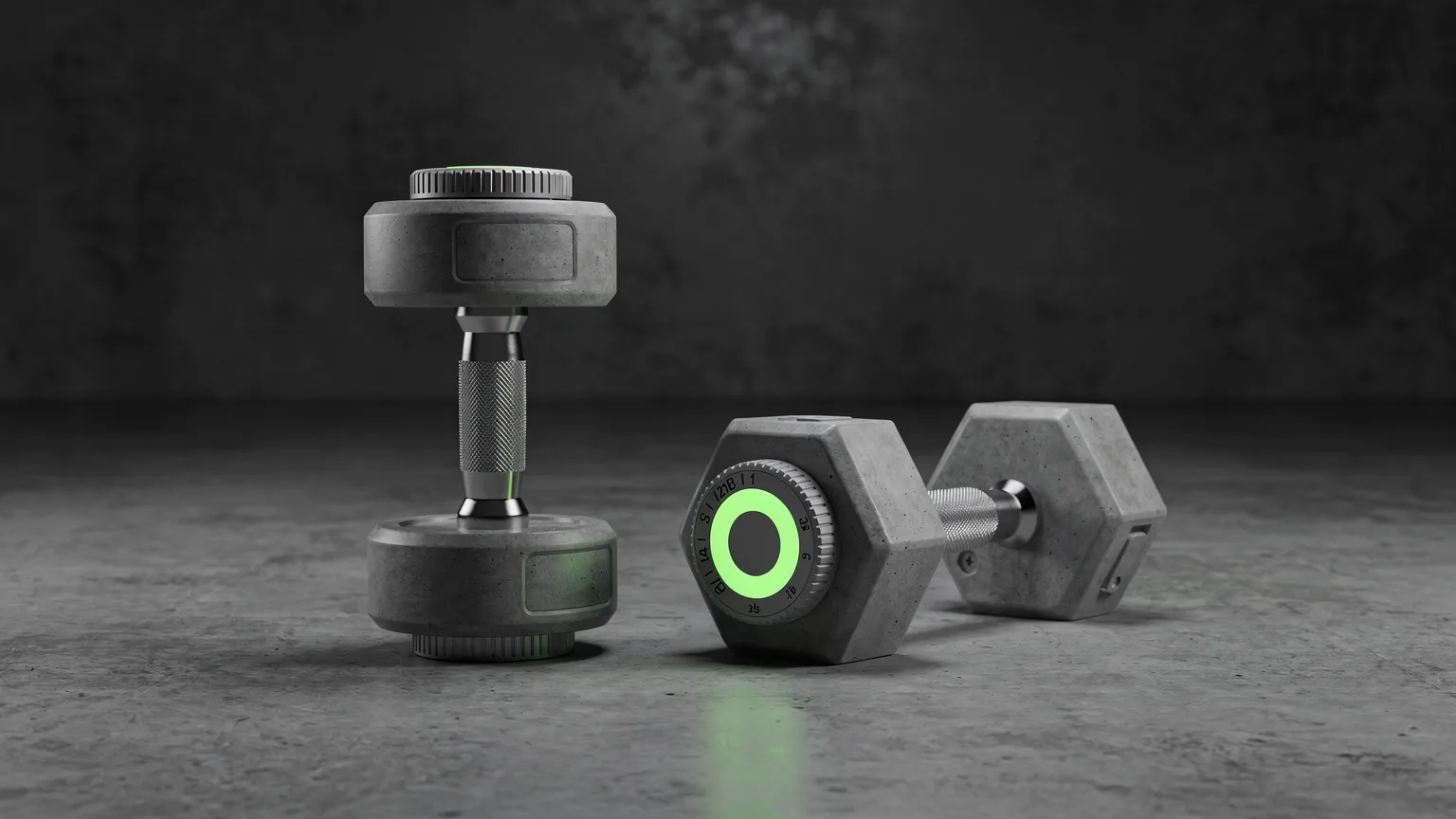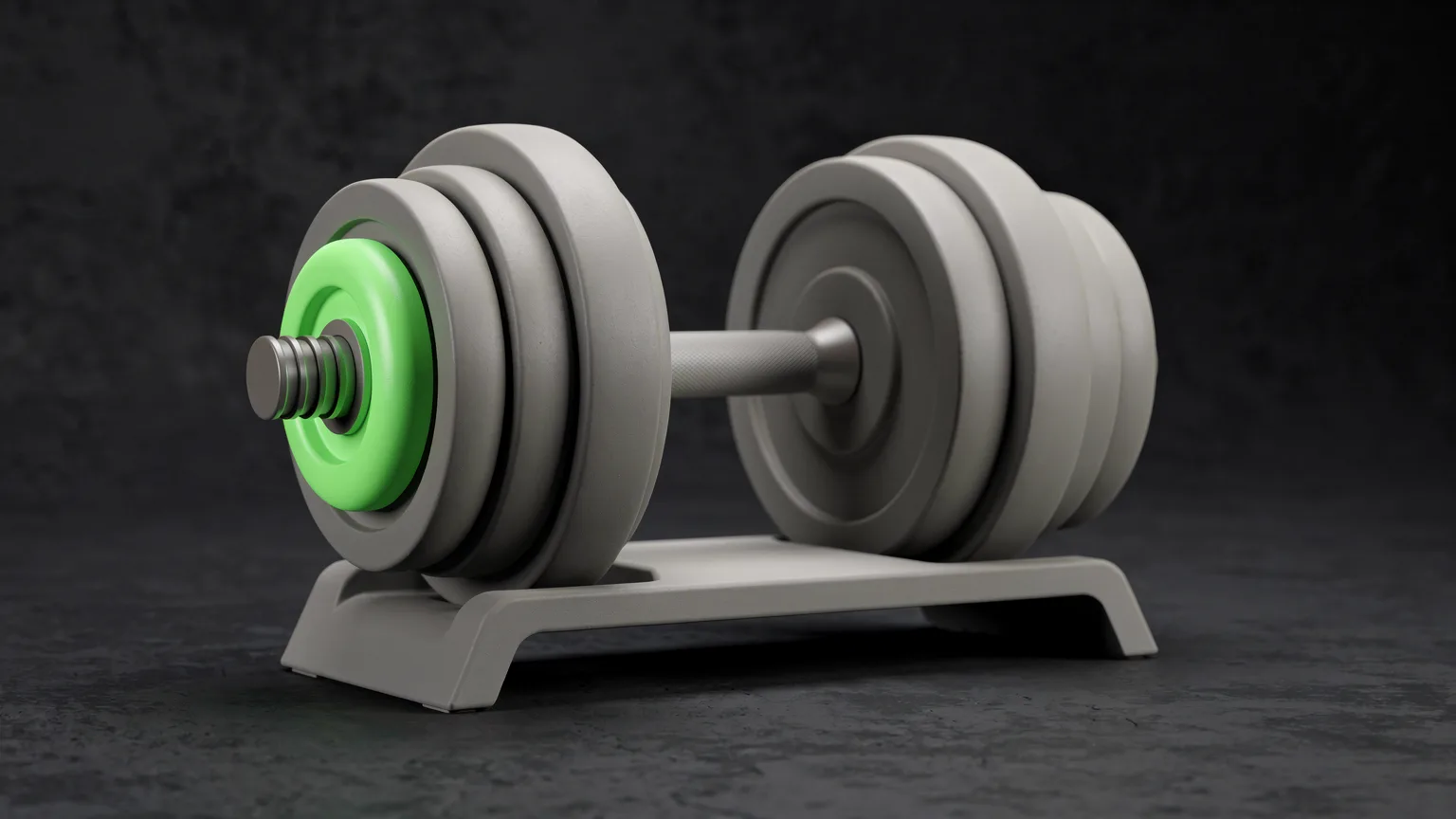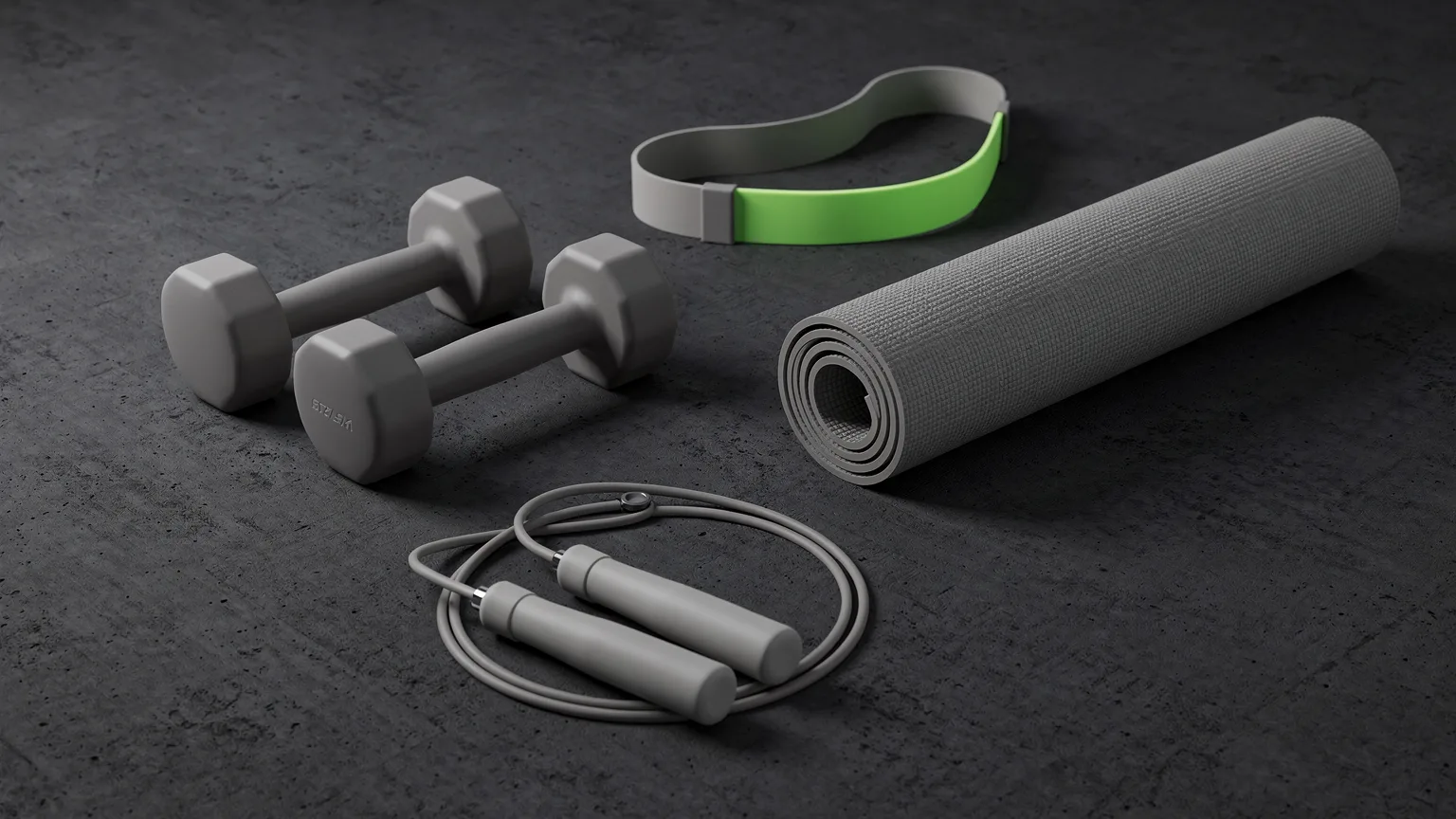
Home gym equipment for beginners can be as simple as adjustable dumbbells or resistance bands, a mat and some clear floor. The NHS asks adults for muscle-strengthening activity on at least 2 days a week, and meeting that does not require a rack, a bench or a smart machine.
What should a beginner buy first for a home gym?
A beginner should buy one way to add resistance, usually adjustable dumbbells or resistance bands, plus a mat or tiles to protect the floor. That covers the NHS strength guideline in the smallest possible space, and everything else can be added when your exercises need it.
The NHS lists lifting weights, resistance bands and bodyweight moves such as push-ups and sit-ups among effective muscle-strengthening activities. Adjustable dumbbells replace several pairs of fixed weights, so they suit people who expect to progress and have little storage. Fixed dumbbells have no mechanism to fail but need a new pair for each step up. The adjustable vs fixed-weight dumbbells guide compares the two, the dumbbell weight guide for beginners covers starting loads, and the resistance bands guide covers the lighter, cheaper option.
What does the NHS guideline mean for what you buy?
The NHS guideline translates into two buying tests: can this item help you do strength work on at least 2 days a week, and can it help you reach a weekly aerobic target? If it does neither in the space you have, it can wait. The table sets out what the NHS page says and what it implies for a shopping list.
| NHS guidance for adults 19 to 64 | What the NHS page says | What it implies for buying |
|---|---|---|
| Muscle strengthening | All major muscle groups on at least 2 days a week; examples include lifting weights, resistance bands, push-ups and sit-ups | Dumbbells, bands or bodyweight work are enough; no rack is needed |
| Moderate aerobic activity | At least 150 minutes a week; you can talk but not sing; brisk walking and cycling are examples | Walking and cycling outdoors cost nothing; a bike or treadmill is optional |
| Vigorous aerobic activity | 75 minutes a week can give similar benefits to 150 minutes of moderate activity; running and skipping are examples | A shorter, harder session can substitute, if it suits your health |
| Spreading activity | Aim for 4 to 5 days a week, or every day | Kit that is quick to set out is easier to use that often |
| Strength and aerobic minutes | Strengthening does not count towards aerobic minutes | Plan both, as separate items |
The NHS also suggests cutting back on time spent sitting or lying down and breaking up long stretches of inactivity, which no equipment purchase replaces. The last row matters when budgeting: the page treats strength work as an addition to the aerobic target, not a replacement for it.
In what order should you add equipment?
Add equipment in this order: adjustable resistance, floor protection, a bench, cardio, then racks. Each step should be bought only when the previous set-up stops covering the exercises you do.
1. Floor protection
Even light training can mark a floor, and dropped weights are noisy. A mat or interlocking tiles protect the surface and mark out a training area. The right choice depends on what is underneath and how heavy the kit is; see the home gym flooring guide and rubber flooring vs foam mats.
2. A bench, when your exercises need one
A bench makes presses and supported rows possible, but it is not essential on day one. Foldable and stowable designs exist for small rooms; see the weight bench guide.
3. Cardio, if the aerobic target is your priority
Walking, jogging outdoors and cycling cost nothing. If you want an indoor option, treadmills, exercise bikes and rowing machines differ a great deal in footprint, noise and price. Start with the treadmill vs exercise bike comparison or the rowing machine vs exercise bike comparison.
4. Racks and cages, later
Racks are designed for barbell training, where a loaded bar sits above you or on your back. A rack needs floor area and ceiling height that many homes lack. If you reach that stage, read how to choose a power rack and power rack vs half rack first.
Do beginners need a power rack?
Usually not. A power rack is designed for barbell training and needs significant floor space and ceiling height, so it is normally a later purchase once you know you will keep training. Dumbbells, kettlebells and bands meet the NHS strength guideline without one.
What can a beginner safely skip at first?
- Smart or connected machines. They bundle hardware, software and often a subscription. Whether that is worthwhile is covered in is a smart home gym worth it.
- Heavy barbell sets. They need a rack and a stable floor, and they add handling risk when moving plates.
- Gadgets and accessories. Straps, belts and similar items solve problems you may not have yet.
How do you plan the space before buying?
Measure the area where you will train, including room to move around the equipment, and the place it will live when not in use. A set-up that has to be dismantled every session tends to be used less, which is reasoning rather than a sourced finding. The small apartment home gym guide covers compact layouts, and the budget home gym guide and home gym cost guide help put a figure on it.
Should I see a doctor before starting?
The NHS advises seeing your GP first if you have not exercised for some time or have a medical condition or health concern, and checking that the activity and its intensity suit your current fitness. A GP, physiotherapist or qualified fitness professional can advise on your own situation; this guide cannot.
Handling and safety basics
Moving and loading equipment is a common source of strain. The Health and Safety Executive says manual handling means transporting or supporting a load by hand or bodily force, including lifting, putting down, pushing, pulling, carrying or moving loads. It also says the law sets no specific weight limits, though weight is important. Its guidance is written for workplaces, but its first step, to avoid hazardous handling so far as reasonably practicable, applies at home: ask for help with heavy deliveries, plan the route through the house and avoid carrying anything further than you need to. The home gym safety guide covers the maker-instruction side of training alone.
A simple buying checklist
- Write down the two strength days and any aerobic activity you intend to do each week.
- List the exercises you expect to use, and buy only equipment those need.
- Check the maker's published dimensions, load limits and warranty before ordering.
- Confirm you can store the item and move it through your home.
- Check the retailer's returns terms. GOV.UK says online customers can cancel up to 14 days after delivery without giving a reason, with exceptions such as goods worth £42 or less.
- Add the next piece only when the current set-up stops being enough.
Prices change often, so check the current figure on the retailer's page rather than relying on any article.