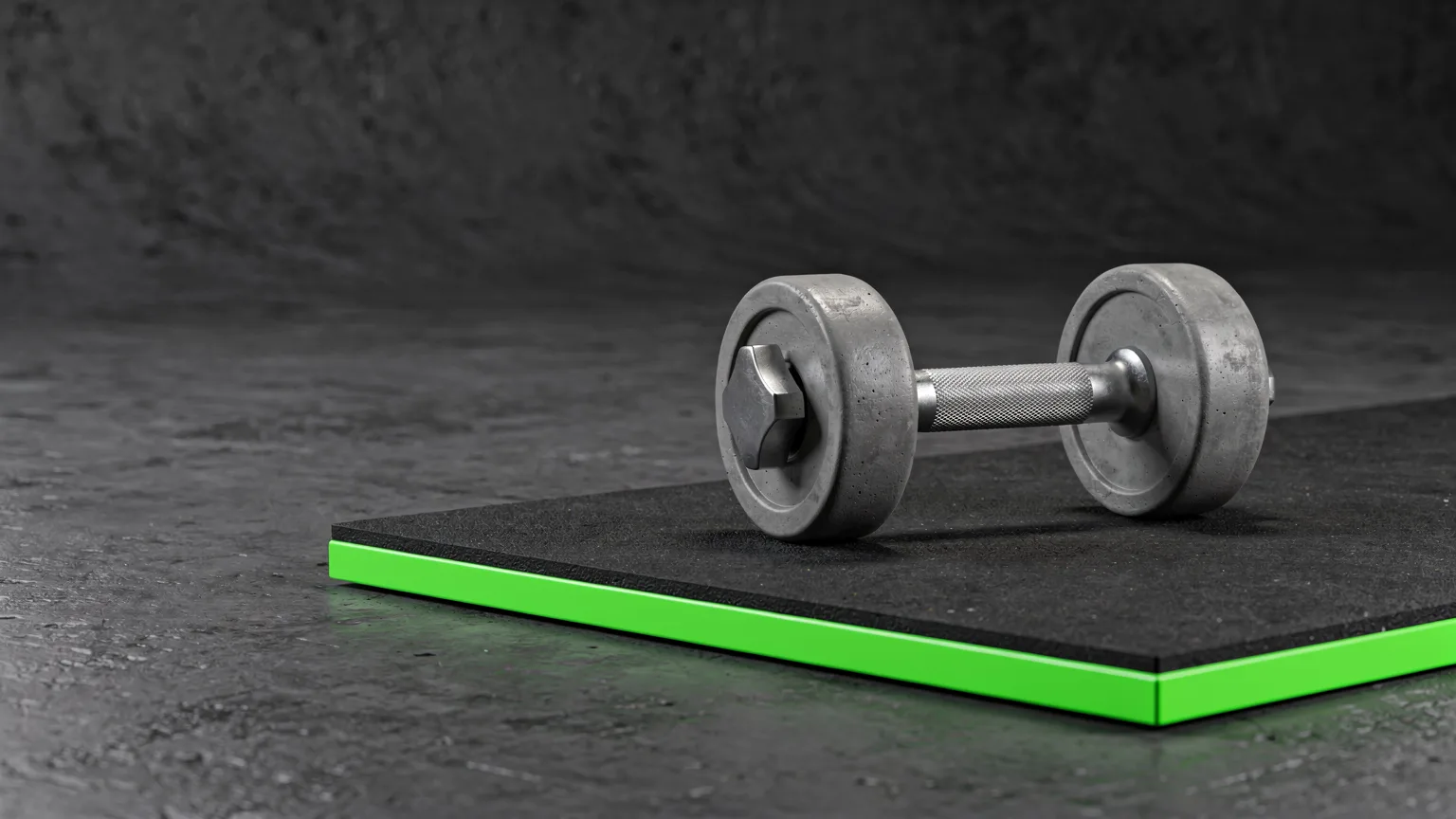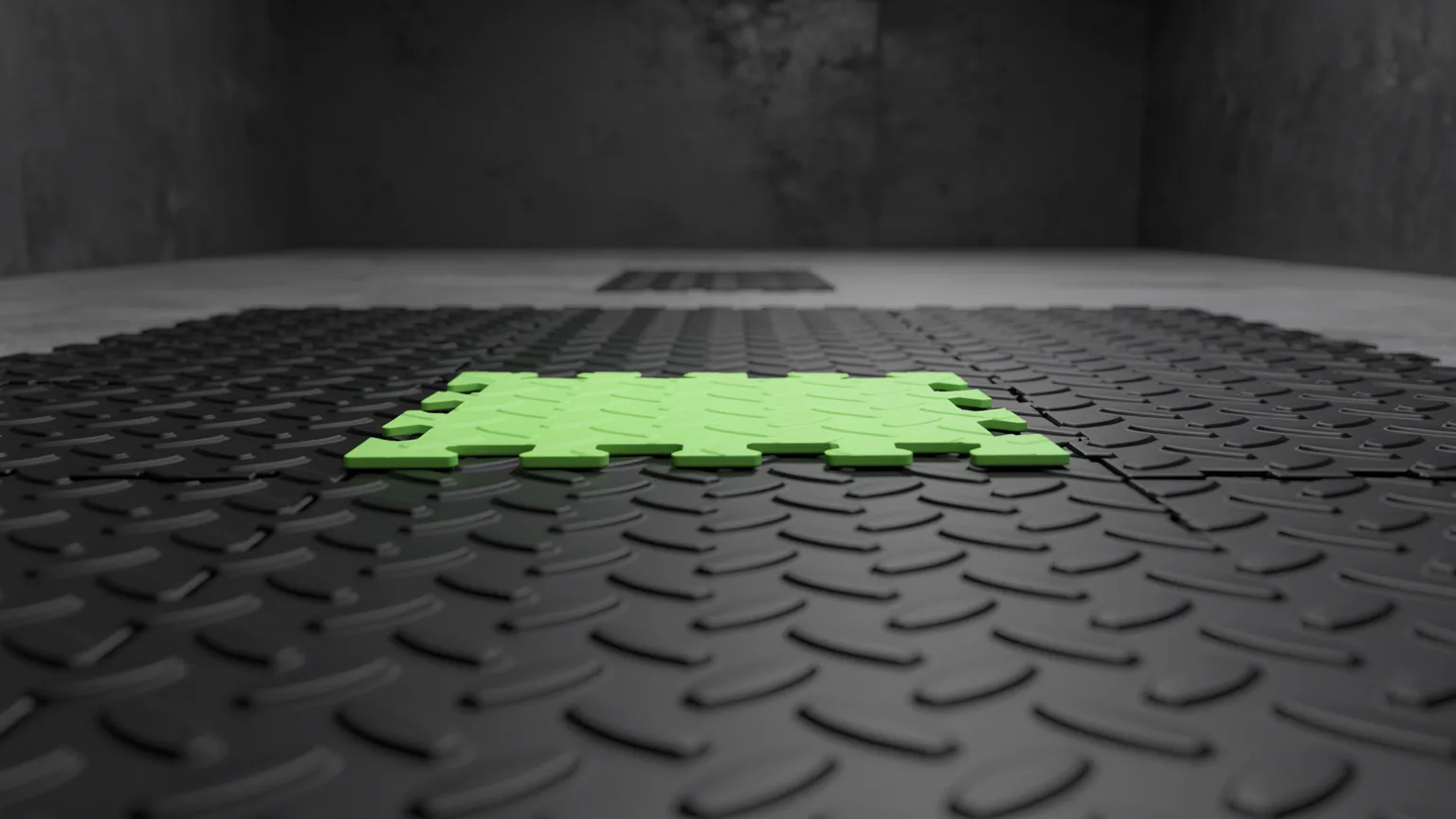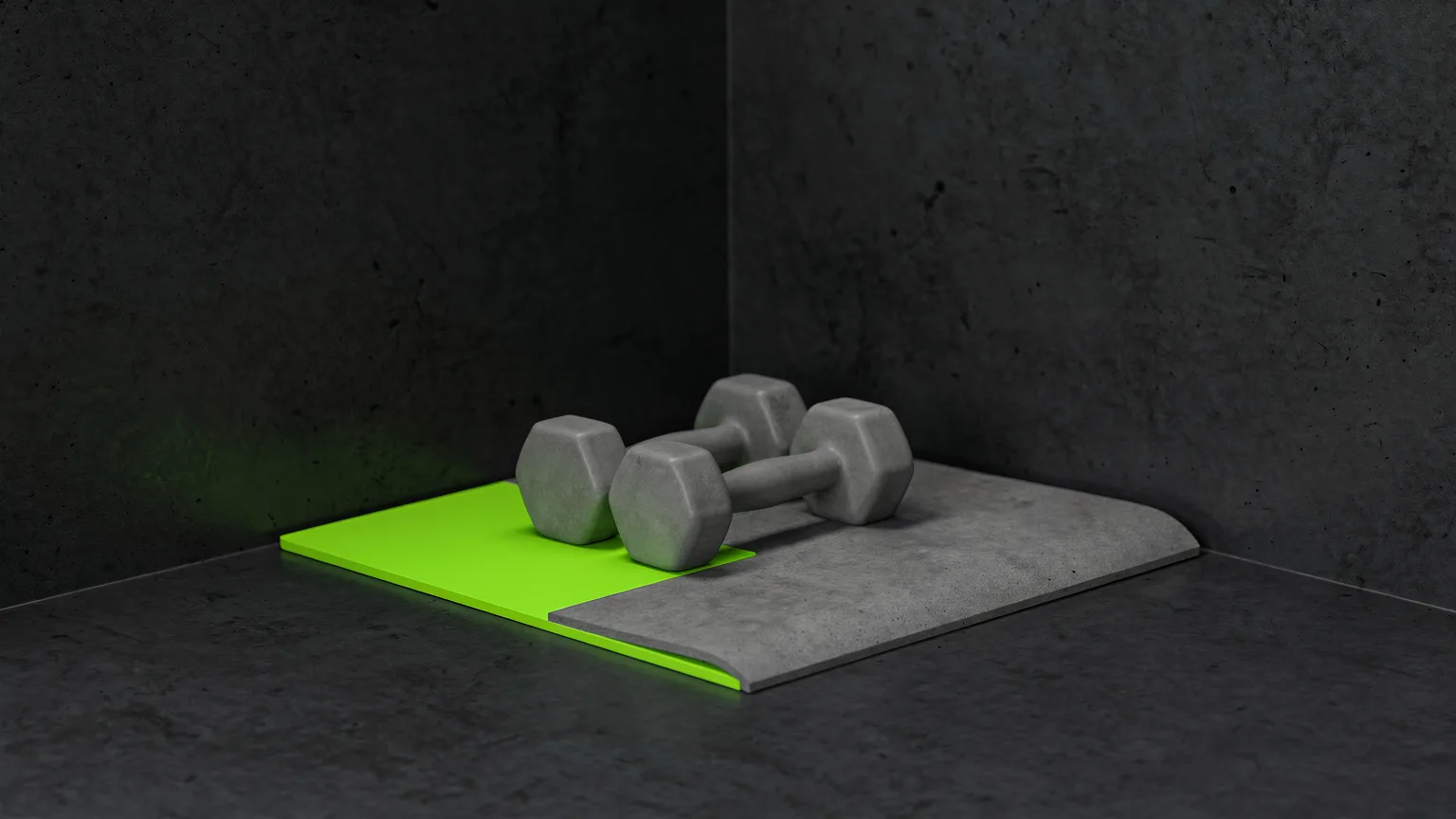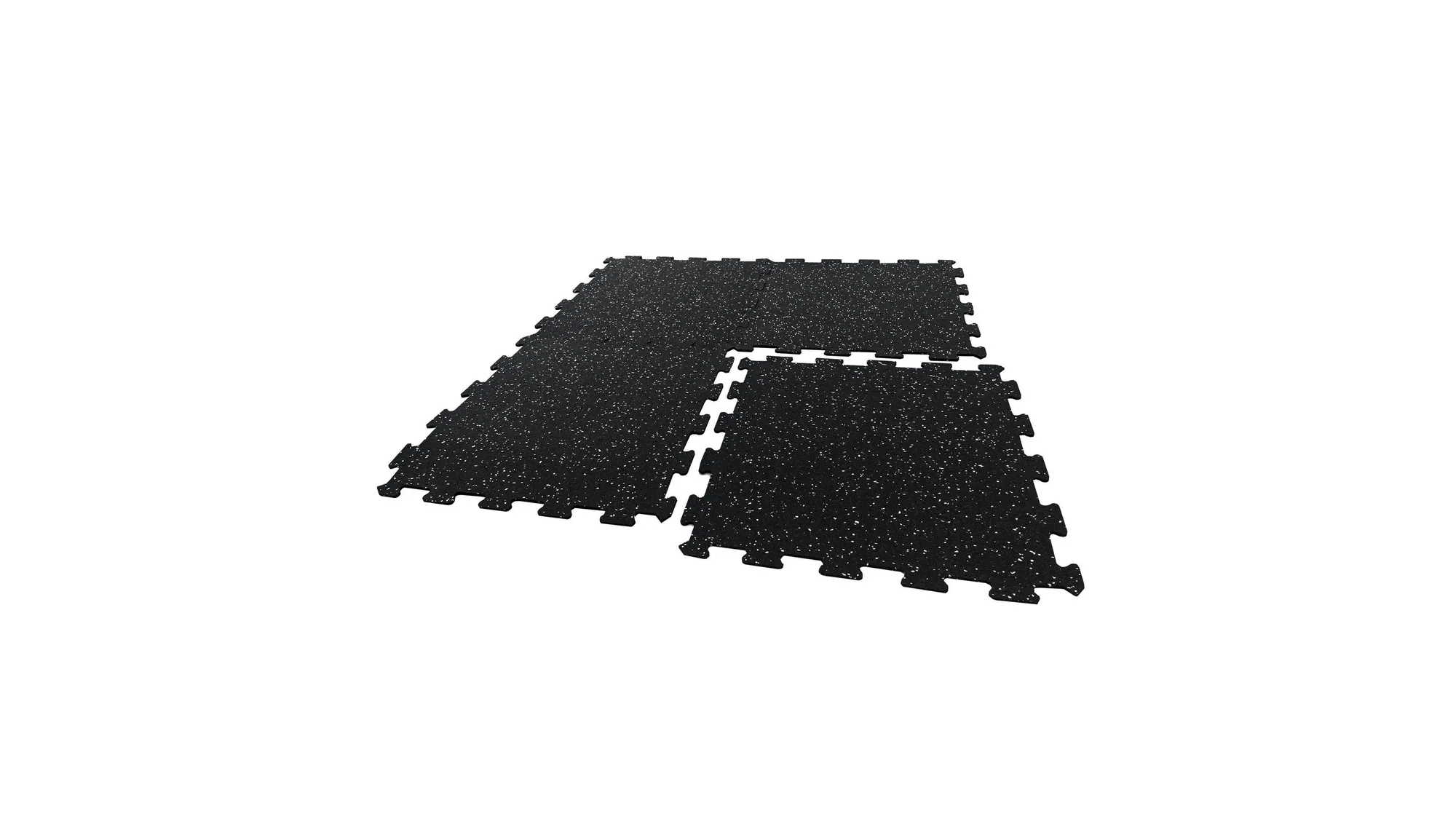
The Nicoman Interlocking Floor Mats (9-pack) are 62cm x 62cm tiles with a rubber top over high-density EVA foam, 14mm thick, sold by Nicoman as a floor-protection mat for home gyms, garages and playrooms. Nicoman publishes no load rating, so this is a light-training surface.
What are the Nicoman 14mm interlocking floor mats made of?
They are a two-layer tile: Nicoman describes "high-density EVA foam topped with rubber", with part of the rubber recycled, and states the mats are free from phthalates, lead and latex (Nicoman product page). The maker's own title calls them "Anti Vibration" foam mats, though the page publishes no vibration figure to back that wording.
The maker lists these features: waterproof and easy to clean, lightweight interlocking pieces that connect and separate easily, reduced noise and impact, and two detachable edge pieces per mat so the edge of a finished floor can be made neat. It names home gyms, playrooms, garages and sheds as uses, and Pilates and push-ups as example activities. Colour is black and white speckled.
That description puts the product in the foam-tile family rather than the solid-rubber family. If the distinction is new, the site's rubber flooring vs foam mats guide explains the trade-off between the two constructions.
What does the maker's specification list say?
The table below holds every figure Nicoman publishes for the 62cm tile. Blank spots in the maker's page are marked "Not published" rather than filled from memory.
| Item | Nicoman page |
|---|---|
| Tile size | 62cm x 62cm |
| Thickness | 14mm |
| Construction | High-density EVA foam with rubber top, partly recycled rubber |
| Pack sizes offered | 1 (sample), 4, 8, 9, 12, 16, 20, 24, 28, 32, 36, 40, 48, 72 and 144 |
| Edge pieces | Two detachable edge pieces per mat |
| Colour | Black and white speckled |
| Coverage per pack | Not published |
| Weight per tile | Not published |
| Load or drop rating | Not published |
| Foam density | Not published |
| Warranty | Not published |
The page also lists a single-tile sample from £9.99, which lets a buyer check the colour and feel of one tile before committing to a pack. This site tracks the 9-pack at around £60 (checked Oct 2026); the maker's page shows prices for each pack size on its own listing, so confirm the current figure there.
How much floor does a 9-pack cover?
A 9-pack is nine 62cm tiles, which is about 3.46 square metres before any edge pieces are counted. The page does not state a coverage figure, so this is arithmetic from the published tile size (0.62m x 0.62m = 0.384 square metres per tile), not a maker claim.
Laid three by three, the tiles would make a square of roughly 1.86m on each side. That is enough for a yoga and bodyweight corner, or the standing area in front of a single machine, but it will not cover a double garage or a full spare room. The maker sells packs up to 144 tiles, so larger rooms are bought as a bigger pack of the same tile; the site's home gym planner is a convenient place to sketch the room footprint first.
The two detachable edge pieces per mat are the maker's route to finishing the perimeter. The page does not say whether the 9-pack includes edge pieces for every mat, so check the pack contents on the listing before assuming the outer edge will be flat and finished.
Can foam-and-rubber tiles take dropped weights?
Nicoman does not say. The page lists the tile as reducing "noise and impact" and recommends it for floor protection, but it publishes no load rating, no drop-height figure and no foam density, so no claim about barbells, kettlebells or loaded racks is supported by the maker.
Reasoning from construction rather than from a maker claim, a 14mm tile with an EVA foam core is a lighter build than a solid rubber tile. The cautious reading is to treat it as a cushioned surface for bodyweight work, stretching, yoga, resistance bands and light dumbbell exercises, and to look at solid rubber for rack work. The site's guide to flooring for heavy weights sets out what to look for when loads are involved, and the best home gym flooring UK guide compares the formats side by side.
For a broader sense of where this tile sits, the York Fitness Floor Guards review covers another foam pack from a maker that also publishes no load rating, which makes the two easy to compare on size and thickness alone.
What are Nicoman's delivery and returns terms?
Nicoman's shipping policy says orders are prepared within 24 to 48 hours and usually arrive in two to three business days, with a 2pm cut-off. Free delivery applies to most UK mainland orders above a threshold that the page does not state, and certain flooring products are excluded, with charges shown at checkout (Nicoman shipping policy). Northern Ireland, the Scottish Highlands and remote areas carry an extra charge.
The refund policy gives 30 days from receiving an order to return an item that is unused, in its original packaging and approved in advance by email or through the customer account (Nicoman refund policy). On standard UK returns the buyer pays return shipping and packaging, and original shipping costs are not refunded. Heavy items over 20kg can be collected for a fee. Refunds go to the original payment method, up to 5 days after the return is received and inspected. Custom-cut items cannot be returned unless Nicoman made an error or the item arrived damaged or defective.
The custom-cut exclusion matters for foam tiles in particular: a buyer who trims tiles to fit a room has altered the goods and should not expect to return them on a change of mind. Cut a spare tile only after the fit is certain. Statutory rights are separate from a shop's own policy; GOV.UK says online buyers can generally cancel within 14 days of receiving an item and that faulty goods returned within six months must be repaired or replaced unless the seller can show the fault was not there when sold (GOV.UK).
Who should skip these mats?
Anyone planning heavy lifting on the floor should skip them, because the maker gives nothing to support that use. The same goes for buyers who need a published warranty, a weight figure for carrying tiles upstairs, or a density figure to compare against other foam products: none of these is on the page.
They also suit a renter's needs only partly. The tile is a floating, interlocking surface that does not need fixing to the floor, which keeps it simple to lift and move, as the maker's "lightweight" wording suggests; the site's guide to home gym equipment for renters covers what else to weigh. For noise between floors, the ventilation and noise guide explains why a thin surface is only one part of the answer.
Price context and what to check before buying
This site tracks the 9-pack at around £60 (checked Oct 2026). Retail prices move, so treat that as indicative and confirm on the maker's page. Check four items before ordering: whether the pack includes edge pieces, the stock status (the maker's page showed the product as backordered when it was read), the delivery charge for your postcode, and the refund conditions if tiles will be cut.
If the aim is a first training corner on a small budget, the budget home gym guide shows where flooring sits among other early purchases.