Match gym flooring thickness to the heaviest thing you do on it. US Rubber, a rubber flooring maker, suggests 8 mm for cardio and equipment, 9 mm for free-weight areas and 12 mm for heavy lifting. Foam tiles of 10 to 14 mm suit floor exercise and protecting a surface, not dropped weights.
This guide draws on maker pages from US Rubber, ARK Mat, Regupol, Nicoman and York Fitness. Nothing here was tested, and the site does not test products. No maker publishes a universal thickness rule, so treat the figures below as what each maker says about its own product.
How thick should home gym flooring be?
It depends on the heaviest thing you do on the floor, and on the material. The clearest thickness-by-use guidance among the makers opened for this guide comes from US Rubber, which manufactures recycled-rubber gym flooring in California.
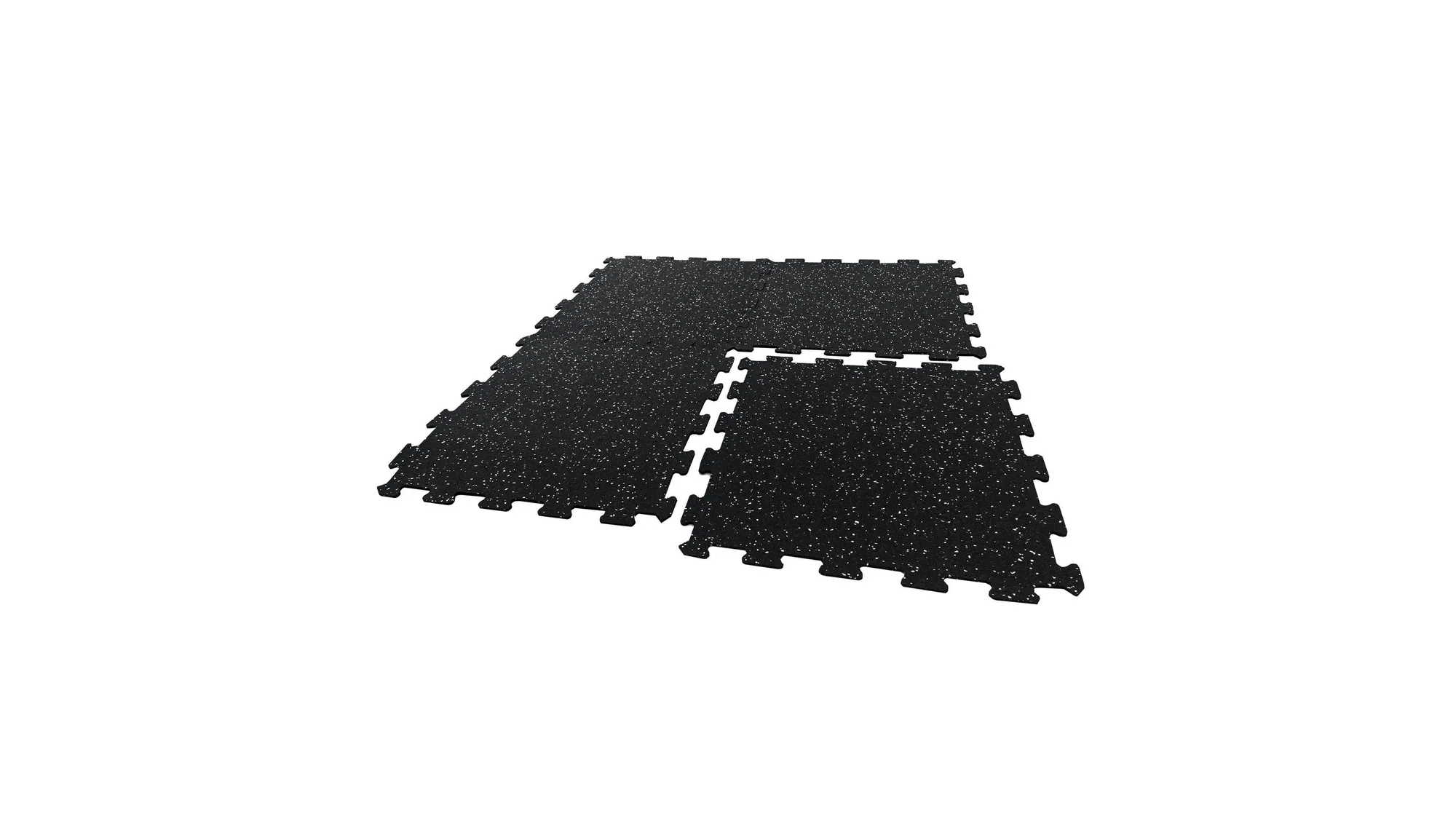
- 8 mm (5/16 in): US Rubber recommends it for cardio and equipment areas.
- 9 mm (3/8 in): its suggestion for free-weight areas.
- 12 mm (1/2 in): its suggestion for heavy lifting areas, which it links to bumper plates and Olympic lifting platforms.
US Rubber gives no separate figure for dropped weights, but says platforms and specialty drop zones may use thicker tile overlays, and that interlocking mats used for drop zones are typically 12 mm to 25 mm. It also tells readers to confirm specifications against the current technical data sheet. Those are one US maker's figures for its own product, not a UK standard.
What thicknesses do makers actually sell?
Solid rubber ranges from the single digits to the high teens of millimetres, while foam-based tiles sit around 10 to 14 mm. Thickness alone does not make a foam tile equal to solid rubber, because the material differs.
| Product | Material | Thickness listed | Maker's stated use |
|---|---|---|---|
| Regupol everroll classic (rolls, 1,250 mm wide) | Rubber roll, about 1.06 kg per m² per mm | 4, 6, 8, 10 or 12 mm | Free weight training and weightlifting, cardio and machine training, indoor cycling |
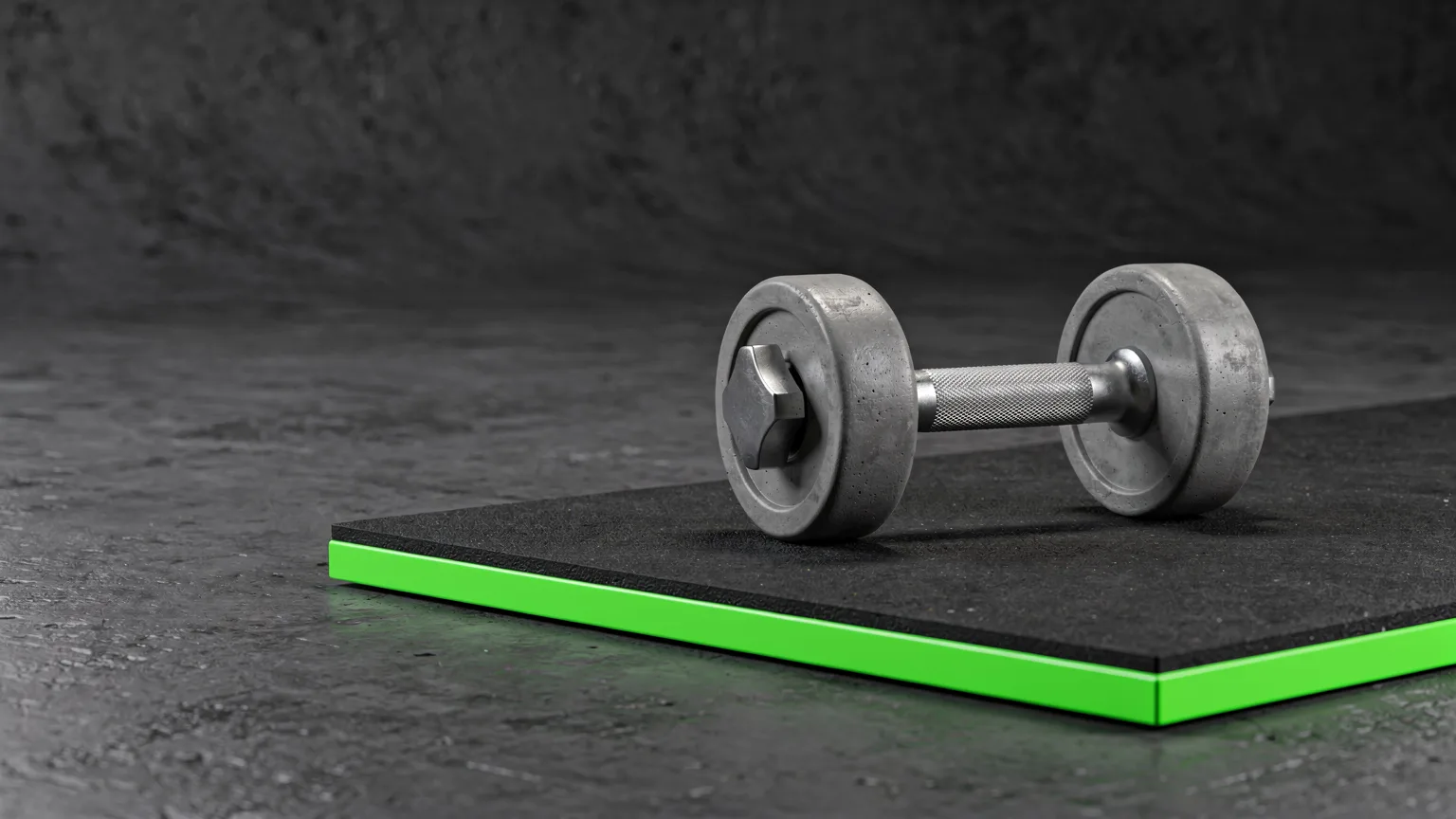
| ARK Mat rubber gym mat, 6 ft x 4 ft | Solid natural rubber, non-porous | 12 mm or 17 mm | Absorbing the impact of free weights, home gyms, treadmills and kids' rooms |
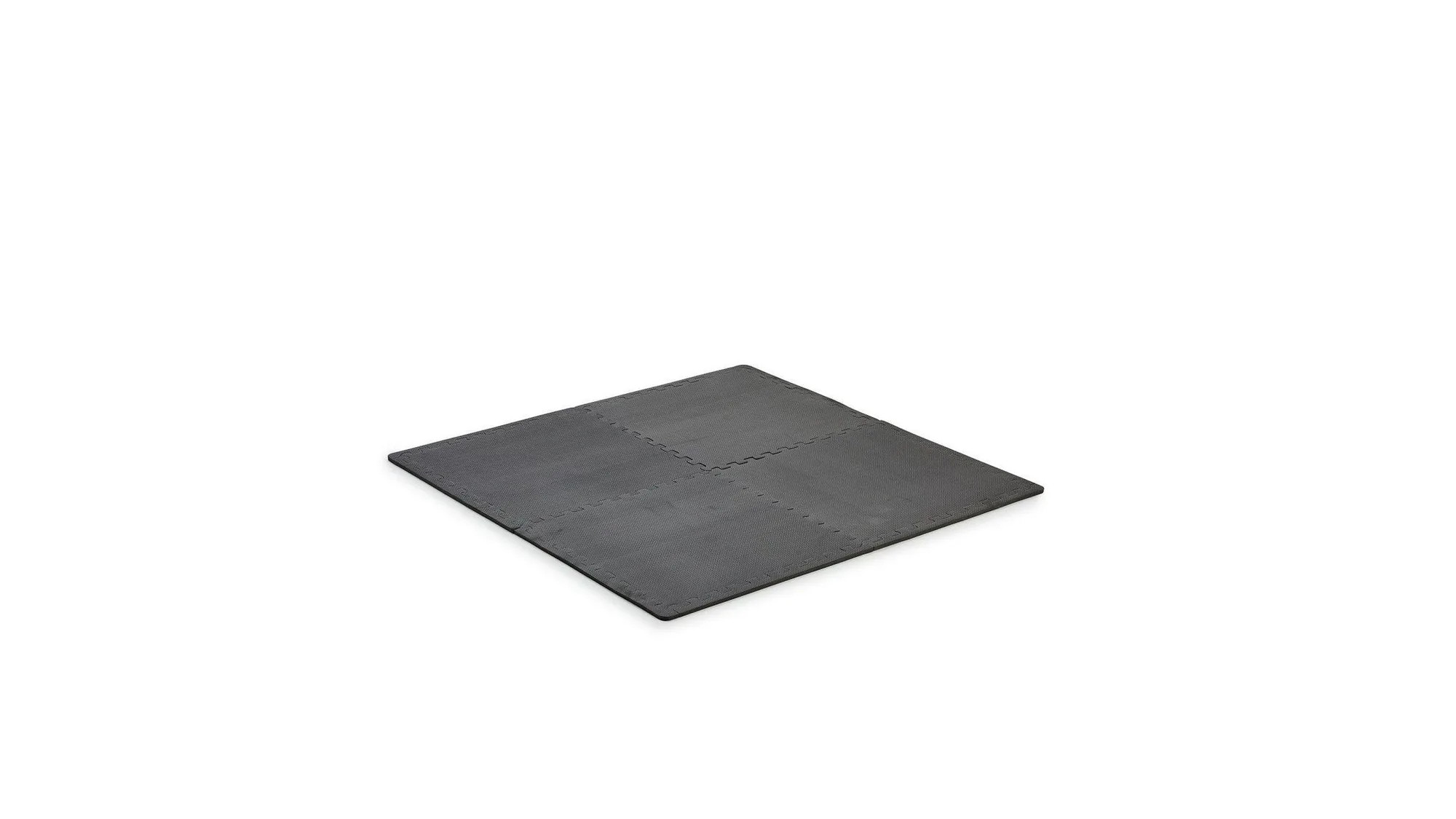
| Nicoman interlocking mat, 62 x 62 cm | EVA foam with rubber top | 14 mm | Everything from Pilates to push-ups, and protecting floors from equipment |
| York Fitness Floor Guards, 60 x 60 cm | Foam | 1.3 cm (13 mm) | Floor exercises and under York exercise equipment |
Regupol also lists puzzle tiles at 6 mm only. Its roll page says various thicknesses are available so you can meet the specific demands of different training areas, and it does not say which thickness suits which task.
Is 12 mm enough for lifting and dropping weights?
US Rubber puts 12 mm in its heavy-lifting tier, and ARK Mat sells a 12 mm solid rubber mat describing its surface as absorbing the impact of free weights. ARK's page does not tie that claim to either of its two thicknesses, and publishes no load or drop rating.
The consequence is that 12 mm solid rubber is a reasonable starting point if you lift, but the maker figures do not prove it will survive repeated heavy drops. If you drop barbells regularly, ask the seller what drop weight and height the mat is intended for before buying. Our guide to flooring for heavy weights compares the products that publish the most detail.
What is the difference between 12 mm and 17 mm rubber?
ARK Mat lists 12 mm and 17 mm versions of the same 6 ft x 4 ft (1.82 x 1.22 m) mat, which is about 2.22 square metres. The page states one difference: the 12 mm version has handles on a flat underside, while the 17 mm version has grooves on the reverse and is not completely flat.
ARK does not say which thickness is better for weights, noise or uneven floors, and it does not publish a mat weight. Thicker rubber has more material, and Regupol's roll weight of about 1.06 kg per square metre per millimetre shows that each extra millimetre adds weight. That is simple arithmetic: a 17 mm roll of that product would be about 18 kg per square metre, against about 12.7 kg for 12 mm. It is a calculation from Regupol's figure, not a measured weight for ARK's mats.
Is thicker flooring always better?
No. Thicker rubber costs more, weighs more and can make a squat rack or bench sit higher. It also does not fix a bad subfloor. The makers opened here publish little on the floor underneath, so ask the seller what subfloor the product is meant for. Our flooring installation guide covers what two roll makers require of a subfloor.
Foam is a separate trade-off. York describes its 1.3 cm Floor Guards as suitable for floor exercises and for use underneath York exercise equipment, and says a set is large enough for a weights bench. Nicoman's 14 mm tile says it can easily hold the weight of heavy machinery but publishes no load rating. Neither maker presents foam as a place to drop plates. See rubber flooring vs foam mats for the full comparison.
Which thickness suits which home gym?
Use the heaviest activity as your guide, then check the maker's own statement for the product you choose.
- Bodyweight, yoga, bike or rower on a hard floor: foam tiles of 10 to 14 mm, such as the Nicoman or York ranges, match the uses those makers list.
- Machines and treadmills: solid rubber of about 8 mm, or foam under the equipment where the maker says so. ARK lists treadmills among its uses.
- Lifting without dropping: about 8 to 12 mm solid rubber, in line with US Rubber's 9 to 12 mm tiers and Regupol's weightlifting listing.
- Bumper plates or Olympic lifting: 12 mm at least on US Rubber's figures, with thicker drop-zone tiles or a platform as a further step if the maker will not state a drop rating.
For a general overview of options, see the best home gym flooring guide.
What do the individual product pages say?
Where a review exists, it records the maker's specification in detail: the ARK Mat 12 mm rubber gym mat review, the Nicoman interlocking mats review and the York Fitness floor mats review. The ARK 12 mm mat is around £53.95 (checked Oct 2026) in the Where to buy block. Prices are indicative and dated, so confirm the current price and size before ordering.
Check each product's page for noise claims too. Regupol gives a laboratory figure of 19 dB impact-sound reduction for its 8 mm roll, tested to DIN EN ISO 10140. Other makers here, including ARK and Nicoman, make general noise claims with no figure, and no maker publishes a thickness-by-thickness noise comparison.