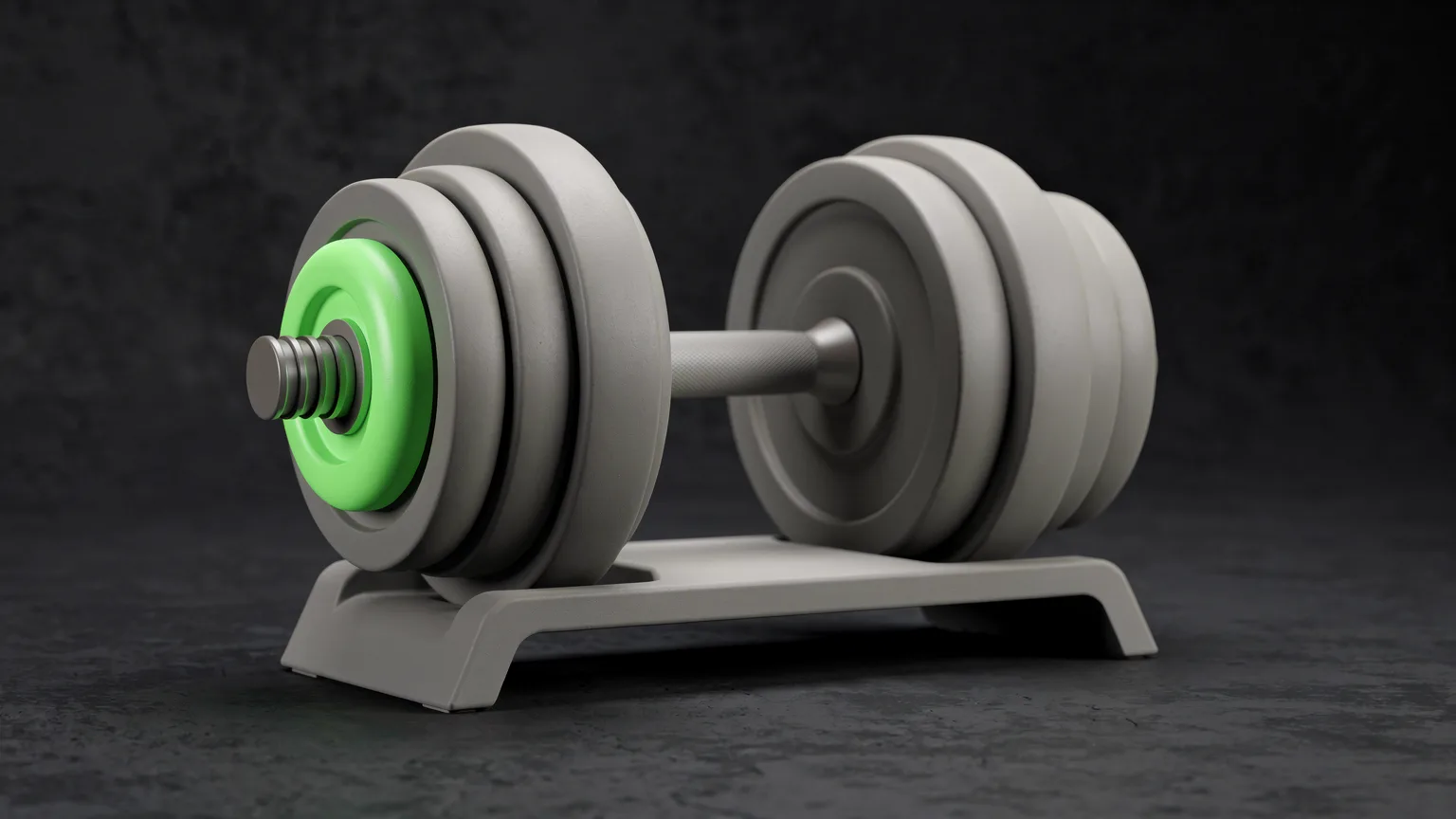
Progressive overload at home means gradually increasing what you ask of your muscles over time. The NHS does not use the phrase, but its guidance says to start gradually, build up over weeks and gradually increase repetitions of each exercise. This page is general information, not a training plan.
What is progressive overload?
Progressive overload is the gradual increase of demand on your muscles over time. The NHS recommends muscle-strengthening activities on at least two days a week that work all the major muscle groups: legs, hips, back, abdomen, chest, shoulders and arms. It describes 8 to 12 repetitions of an activity as one set, advises at least two sets, and suggests three for more benefit. It says activities should bring you to the point where it would be difficult to do another repetition without help, and that you should start gradually and build up over a period of weeks.
The NHS's home strength-exercise page adds a related point: build up slowly and aim to gradually increase the repetitions of each exercise over time. It lists lifting weights as an option and says filled water bottles will do for light weights on biceps curls. The NHS's wider strength guidance also lists resistance bands. If you have a health condition, are returning after illness or injury, or are unsure how hard to work, speak to a GP or a qualified instructor first; this page cannot tailor anything to you.
How does the NHS describe building up strength at home?
It describes small starting numbers and gradual increases. Its home exercises start at 5 repetitions: sit-to-stand, mini-squats and calf raises are each listed at 5, the wall press-up at 5 to 10 repetitions for up to 3 sets, and biceps curls at 5 per arm for 3 sets. For sit-to-stand it says "the slower the repetitions, the better", and it notes that calf raises become harder when done without the chair for support. Those are the NHS's own examples of making an exercise harder without adding any weight.
What ways can demand increase?
From the NHS wording, three levers appear: the number of repetitions, the number of sets and the load. A fourth, how often you train, appears in the "at least two days a week" guidance, and a fifth, an easier-to-harder variation such as calf raises without chair support, appears on its home-exercise page. Which lever to use, and how quickly, is an individual question for a qualified professional rather than something a buying guide can prescribe.
Why does equipment step size matter?
Load can only change in the increments your equipment allows, so step size sets how finely you can raise it. The sourced figures below show each step as a proportion of the weight, which is simple arithmetic on the makers' published settings.
| Equipment | Published settings | Example steps |
|---|---|---|
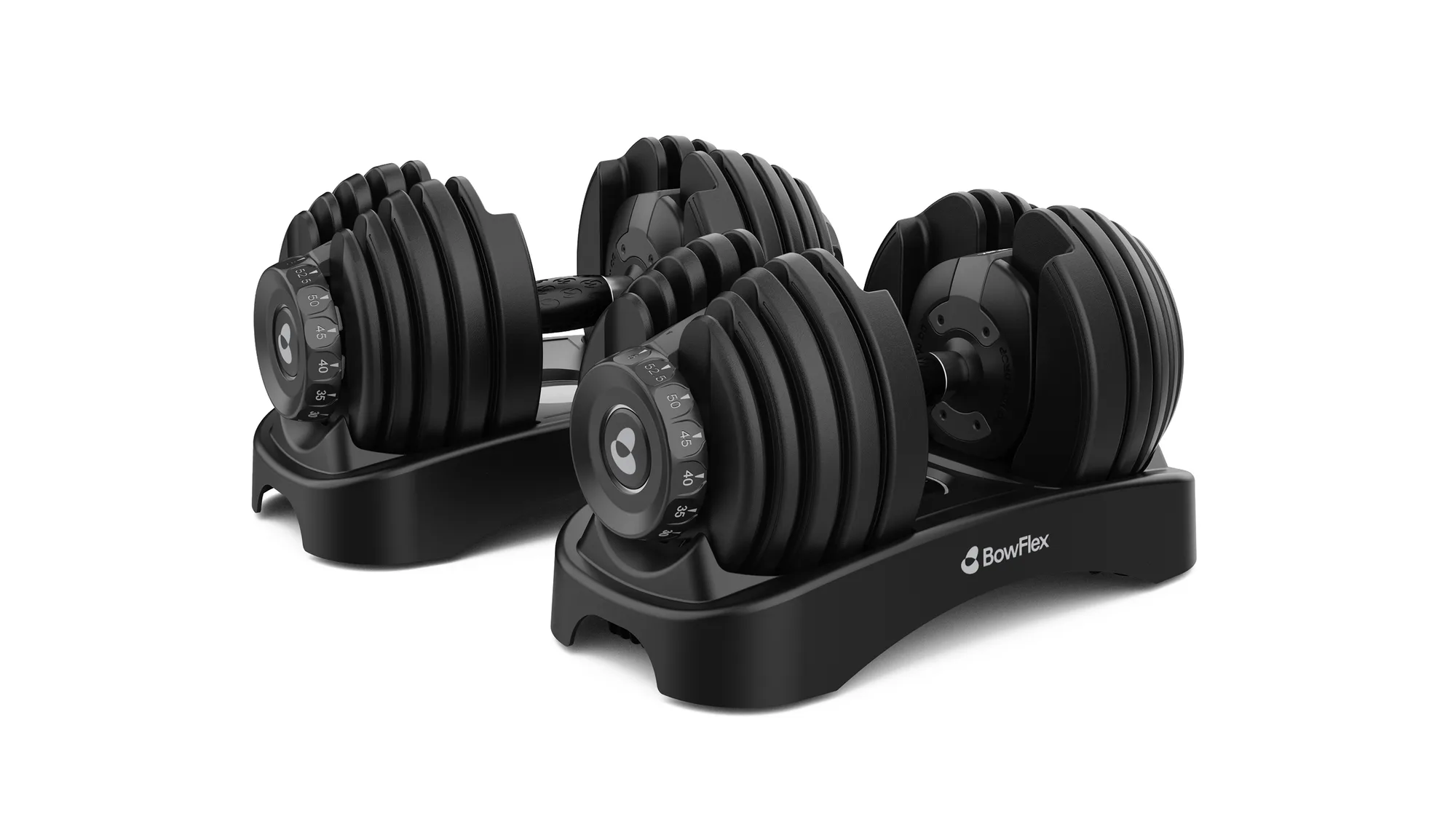
| Bowflex SelectTech 552 | 15 settings per dumbbell: 5 to 25 lb in 2.5 lb steps, then 30, 35, 40, 45, 50 and 52.5 lb | 5 to 7.5 lb is +50%; 25 to 30 lb is +20%; 50 to 52.5 lb is +5% |
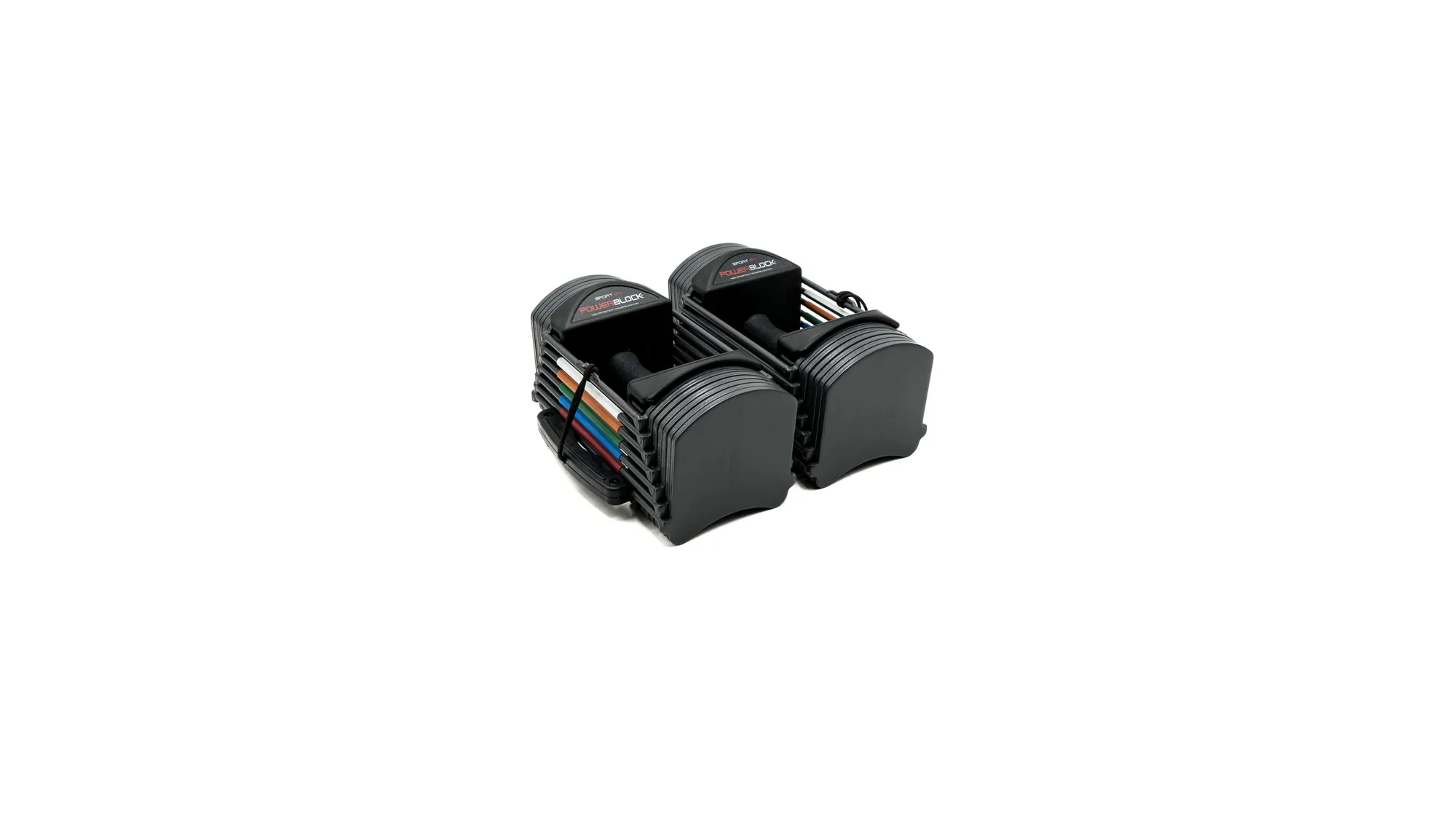
| PowerBlock Sport 24 | 3 to 24 lb in 3 lb steps (3, 6, 9, 12, 15, 18, 21, 24) | 3 to 6 lb is +100%; 9 to 12 lb is +33%; 21 to 24 lb is about +14% |
| Fixed pair (PROIRON, listed as 14kg pair) | One weight; no maker page located | Any change means buying another pair |
The reasoning that follows is not a training rule. On the published settings, steps are proportionally largest at the light end of each set, and smallest near the top of the Bowflex. That is one reason the NHS's emphasis on gradually increasing repetitions is useful: repetitions and sets can change without any equipment change. Bowflex also notes that individual settings may vary from the stated values because of manufacturing tolerances, so treat the labelled weights as nominal. For the Bowflex, the five steps above 25 lb work out at about +20%, +17%, +14%, +13% and +11% (25 to 30 lb up to 45 to 50 lb), with the final 50 to 52.5 lb step at +5%. Nine of its 15 settings fall between 5 and 25 lb, which is where the finest steps sit in absolute terms but not in proportion.
The maximum matters too. The Bowflex's top setting is 52.5 lb (23.9 kg) per dumbbell and the PowerBlock's is 24 lb (about 10.9 kg). If your equipment tops out, the only levers left are repetitions, sets and frequency, or buying more equipment. Our adjustable dumbbells guide and adjustable versus fixed comparison set these ranges against price: around £608 for the Bowflex and around £205 for the PowerBlock, both checked in October 2026, against around £90 for a fixed pair.
Can I progress without buying heavier weights?
Yes. The NHS guidance refers to gradually increasing repetitions, and its list of activities includes body-weight exercises such as push-ups, sit-ups and squats, plus resistance bands. Equipment mainly changes how fine the load steps can be, such as 2.5 lb steps on the Bowflex 552 against 3 lb on the PowerBlock Sport 24. For the equipment side, see our resistance bands guide, and our kettlebell versus dumbbell guide for other loading options.
How do I check my kit leaves room to progress?
Compare your current level with the maker's top setting before you buy. The NHS cue is that another repetition should be difficult without help. Whether a given weight meets that cue depends on you, not on the equipment, so the specification cannot tell you. What it can tell you is whether your kit leaves room above your current level. A set that tops out at about 10.9 kg per dumbbell leaves less room than one that reaches 23.9 kg, and a fixed pair leaves none. Checking the headroom before you buy, rather than after, avoids paying twice. Our budget home gym guide shows how to weigh that against price.
Should I keep a record of what I do?
It helps, though it is a practical suggestion rather than NHS wording. A written record of what you did last time makes it possible to see whether your demand is actually rising, and the format is up to you: a note on your phone is enough. If you buy a heavier or adjustable set, our dumbbell weight guide for beginners and strength equipment checklist show what to look for.
Should I get medical advice before increasing training?
If you have a health condition or are unsure how hard to work, yes: speak to a GP or qualified instructor. The makers raise their own safety points as well.
- Follow the maker's manual for loading and adjusting any equipment; our safety tips cover general set-up.
- Heavier loads on a barbell or rack bring different risks; the power rack guide explains what to check.
- Equipment warranties vary: PowerBlock lists 5 years for residential use, and Bowflex lists 2 years on parts with accidental damage covered only by optional plans.
Who should look elsewhere?
Anyone who wants a programme with specific loads, rep targets or progression rates should ask a qualified instructor or physiotherapist. A buying guide can describe step sizes and the NHS's general guidance, but it cannot judge your capacity.