To choose a power rack for a home gym, work from the room outwards: measure floor area and ceiling height, then compare listed dimensions, the capacity of each safety component, anchoring and what is in the box. Price comes last, because extras are often sold separately. Examples here use published maker specifications; the site does not test racks.
What should I measure before buying a power rack?
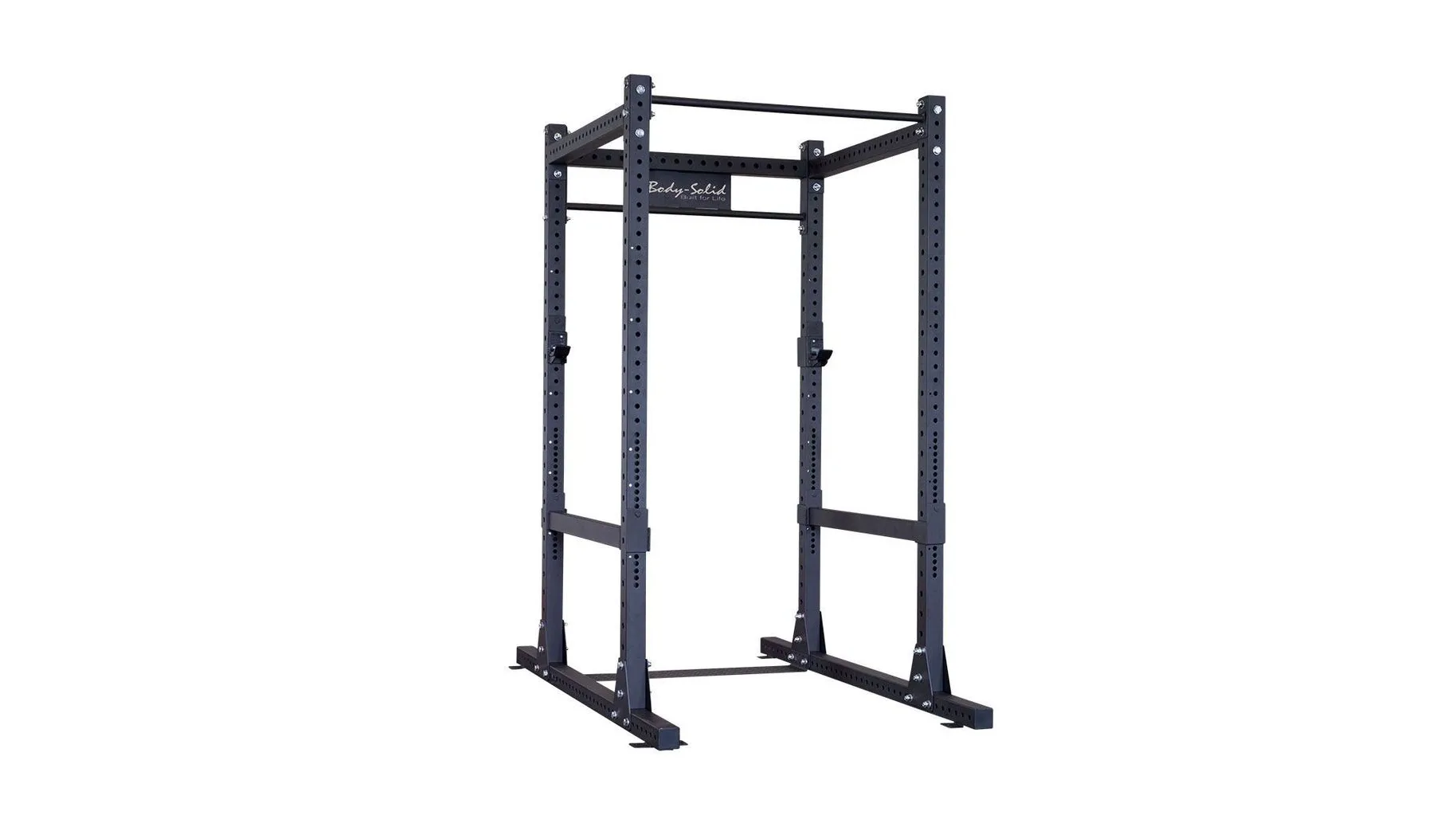
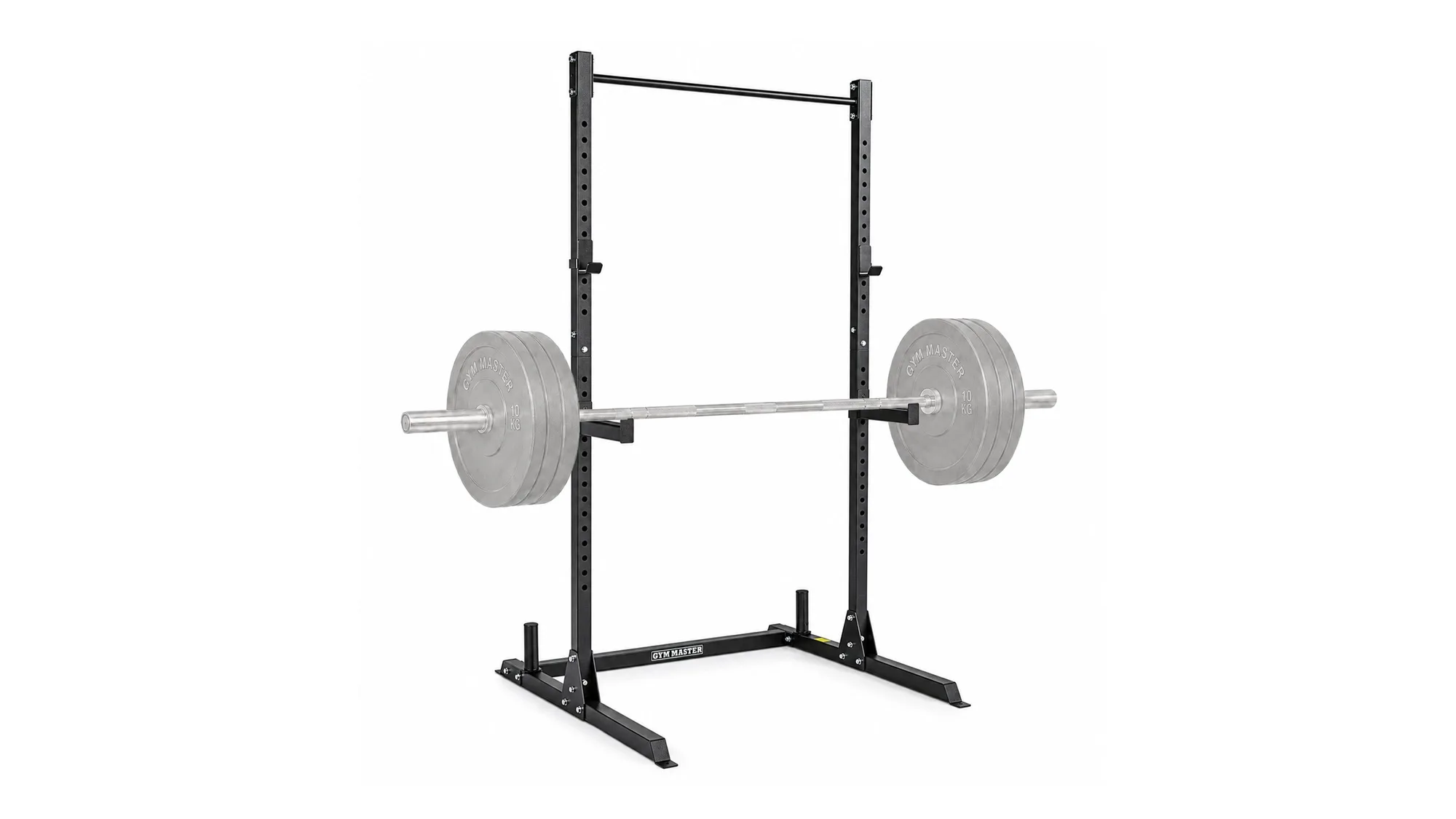
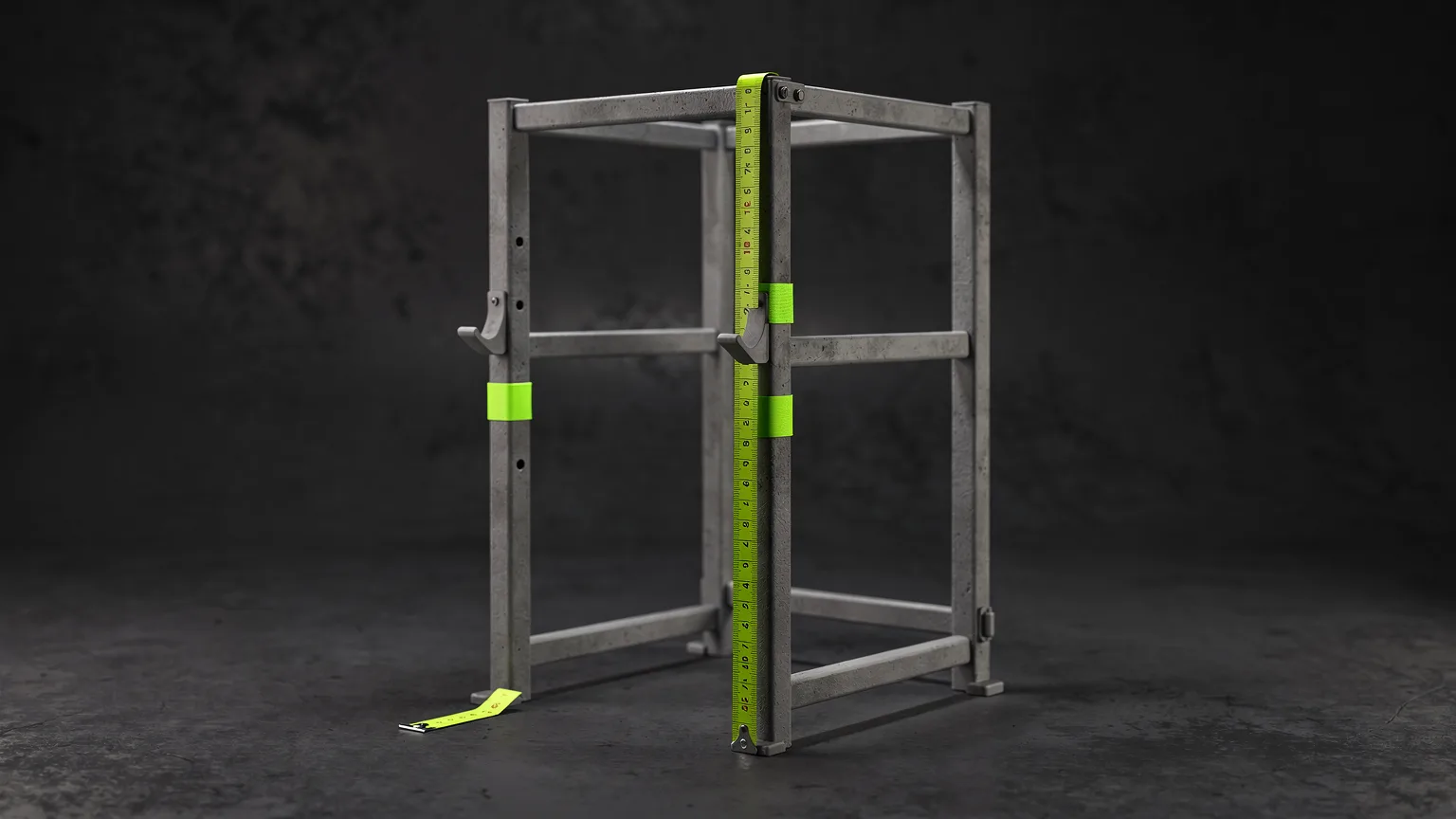
Measure ceiling height, floor area and the route the parts will take. Maker-listed heights run from 216cm (BodyPower TITAN, with lat tower attached) to 220.5cm (GYM MASTER) and about 227cm (Body-Solid SPR1000, 2267mm in the maker's table). A garage with a low door or a room with a low ceiling can rule a rack out before any other criterion.
Allow for the route in as well. BodyPower lists its rack at 158.3kg and says its Premium Installation service for items over 85kg is ground floor only. Also leave space around the frame: Body-Solid's manual advises setting its rack on a solid, level surface a few feet from walls or furniture. For small spaces see small apartment home gym setup.
Full rack, cage or half rack
A full rack has four uprights; a half rack has two. Floor area, attachments and conversion options differ by model, and the power rack vs half rack comparison sets out the published figures. BodyPower says its half rack can be converted to a full rack with extra uprights and a kit, sold separately, so check whether the maker offers an upgrade path if space may change. Body-Solid's page lists connector bars and monkey bars for bolting two of its racks together, and a rear extension.
Do all makers publish weight capacities?
No. GYM MASTER lists 200kg for J-cups and spotters and 120kg for its pull-up bar but no total capacity, Body-Solid's data sheet gives a single 1000lb (about 454kg) figure, and BodyPower lists separate figures for each component. If a maker does not publish a figure, treat it as unknown rather than assuming it.
| Component | GYM MASTER | Body-Solid SPR1000 | BodyPower TITAN |
|---|---|---|---|
| J-cups / J-hooks | 200kg (with spotters) | Not published separately | 400kg |
| Safeties / safety booms | 200kg (with J-cups) | Not published separately | 400kg |
| Pull-up or chinning bar | 120kg | Not published separately | 250kg |
| Lat tower | Not applicable | Not applicable | 160kg |
| Overall capacity | Not published | 1000lb (about 454kg) | Not published |
The load on the bar includes the bar itself. What loads are appropriate for you, and how to set safeties for a given lift, are questions for a qualified coach or fitness professional and the maker's manual.
Is a bigger steel tube always better?
Not by itself. Frame tube size is only one published figure, and wall thickness, capacity ratings and assembly also matter. GYM MASTER lists 50 x 50mm tube without a wall thickness, BodyPower lists 75 x 75 x 3mm steel, and Body-Solid lists 3 x 3 inch, 11-gauge steel (the maker does not give 11-gauge in millimetres). A larger tube is a prompt to ask for wall thickness where the maker does not give it, not a safety rating.
Hole spacing governs how finely the bar can be set. GYM MASTER lists 28 positions at 5cm spacing between 45cm and 197.5cm. Body-Solid lists 1 inch spacing on its safety bars and front bench-press holes, 2 inch on other front holes and 3 inch on the upright side holes. BodyPower does not state a spacing on its page but lists laser-cut numbers at every hole.
Should a power rack be bolted down?
The makers speak to anchoring directly. Body-Solid's manual says to securely anchor the machine using the anchor holes and to consult a professional contractor. GYM MASTER strongly recommends bolting its rack to the ground and supplies the bolts. BodyPower advises bolting the rack to the floor where possible, and warns that its jammer arms need a counterweight, otherwise the rack can tip and cause injury.
Floors differ, and renters may not be allowed to drill, so read home gym equipment for renters and flooring for heavy weights, and ask a qualified professional about fixings.
Bar fit, bench and attachments
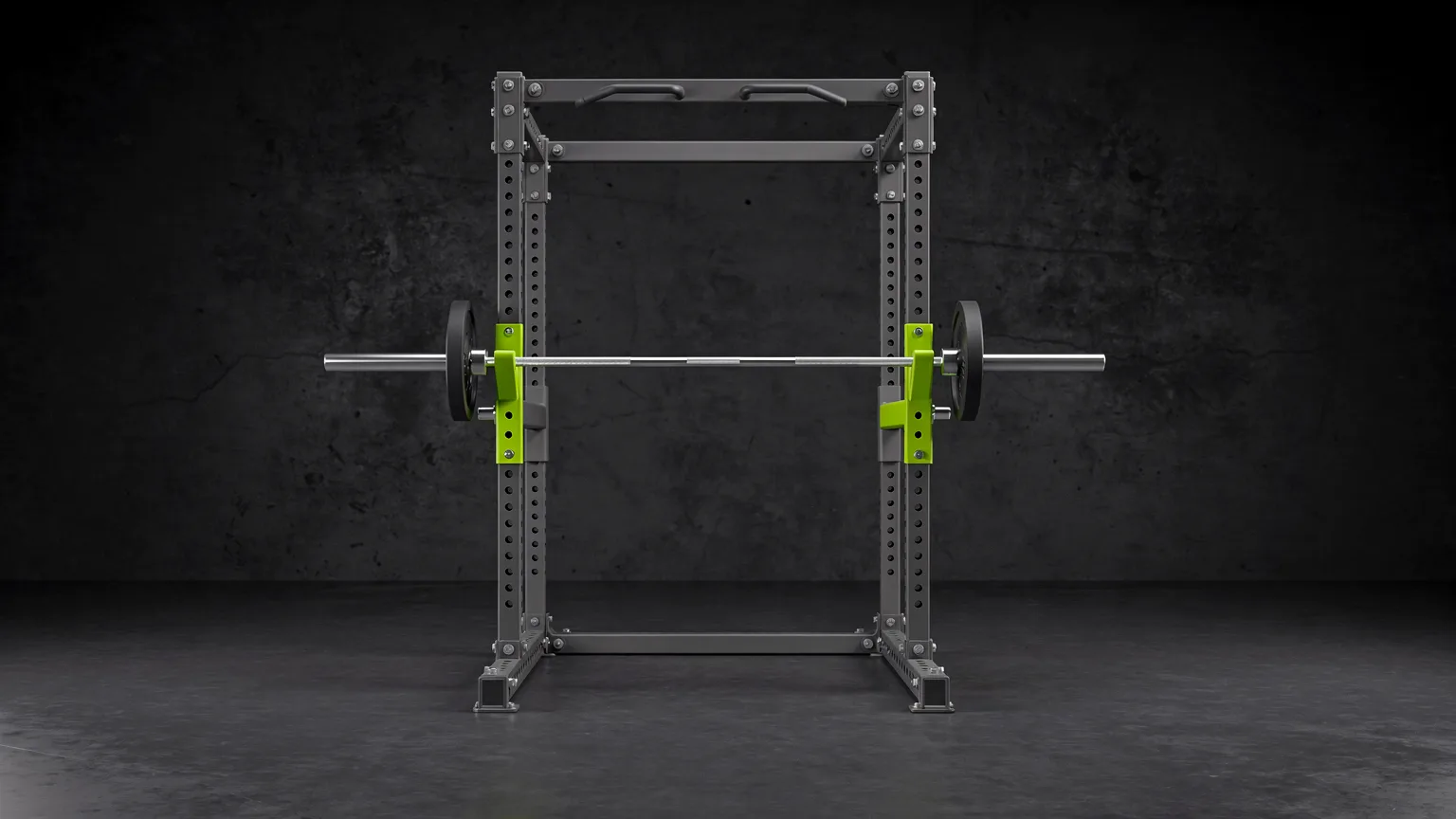
GYM MASTER states its rack suits 6ft International or 7ft bars; BodyPower names barbells with a 51.5 inch (131cm) shaft length, such as 7ft bars. If you plan to bench inside the frame, compare the bench width to the rack. See the weight bench guide. Check what is included: BodyPower lists monolifts, a landmine, a lat tower and dipping horns as included but sells a multi-grip pull-up bar, roller J-hooks, jammer arms and a weight storage kit separately, and Body-Solid lists more than 15 optional attachments. Body-Solid's manual says to use only attachments the manufacturer recommends.
Warranty, assembly and standards
Warranty information varies. BodyPower lists a lifetime frame warranty excluding paint, 3 years on components and 1 year on pads and grips. Body-Solid's data sheet lists a lifetime warranty on frame and welds, and its manual says that using non-Body-Solid replacement parts will void the warranty. GYM MASTER does not state a warranty on its page.
Assembly is also a published point. Body-Solid's parts list names four uprights, two base frames, three top frames, a chin-up bar and a set of M16 bolts, washers and nylon lock nuts, and the manual says to obtain assistance if you cannot assemble the rack alone. GYM MASTER says assembly is required and lists the spanners and Allen key you must supply. BSI's listing for BS EN ISO 20957-4 says its scope includes free-standing barbell racks, so it is reasonable to ask a seller whether a rack is made to a relevant standard.
What are my rights if the rack is wrong?
GOV.UK's guidance for sellers says a business must offer a full refund if an item is faulty, not as described or does not do what it is supposed to. It also says a customer who cancels an online order within 14 days of receiving the item must be offered a refund. Read the full page and the seller's own returns terms before ordering something this heavy, because returning a rack means disassembly and collection.
A short checklist
- Measured ceiling height, door width and delivery route against the maker's listed dimensions and weight.
- Identified which component each capacity figure refers to, and noted any figure the maker does not publish.
- Confirmed how the rack is meant to be anchored and whether your floor and tenancy allow it.
- Checked bar length compatibility, bench width and which attachments are included or sold separately.
- Read the warranty terms and the maker's manual before assembly, and kept the manual for the safety and maintenance notes.
How much does a power rack cost in the UK?
Among the racks used as examples, indicative prices checked in Oct 2026 are around £100 for the GYM MASTER, around £1,097 for the Body-Solid SPR1000 and around £1,259 for the BodyPower TITAN. Accessories are often extra. The best power rack comparison places them side by side, and the reviews cover the GYM MASTER, Body-Solid and BodyPower racks individually. For a wider kit list see garage gym essentials.
Who should skip or delay a rack
If the ceiling, floor or lease rules out fixings or the listed heights, a rack is not a fit yet. Home gym safety tips may help with planning, but they do not replace advice from a qualified professional.