A home gym equipment checklist for cardio starts with one machine that fits your room, your floor and your neighbours, then a few supporting items. The NHS target is 150 minutes of moderate activity a week; the checklist below turns that into space, noise, power and delivery checks.
What do you need for a cardio home gym?
You need one main machine, enough clear floor around it, a floor surface that suits it, and a plan for noise, power and delivery. Everything else is optional. This page is a planning checklist rather than a product ranking, so it works for a rower, a treadmill or an exercise bike.
The sections below follow the order in which problems usually show up: the activity target, the machine type, the footprint, the floor, the noise, the power and finally the paperwork (warranty, delivery and returns). Figures come from the makers' own pages, which were read in October 2026.
How much cardio does the NHS recommend?
The NHS says adults aged 19 to 64 should do at least 150 minutes of moderate-intensity activity a week, or 75 minutes of vigorous activity, spread over four to five days or every day. It also says to do strengthening activities on at least two days a week, in addition to those aerobic minutes.
The NHS gives a simple talk test for intensity. At a moderate level you can talk but not sing. At a vigorous level you cannot say more than a few words without pausing for breath. The NHS lists cycling and brisk walking as moderate examples, and running and fast or hill cycling as vigorous ones.
The NHS also advises checking with a GP first if you have not exercised for a while or have a medical condition. Nothing on this page is medical advice. If you are building the strength side of the room as well, the strength training equipment checklist covers it.
Checklist step 1: which type of cardio machine fits you?
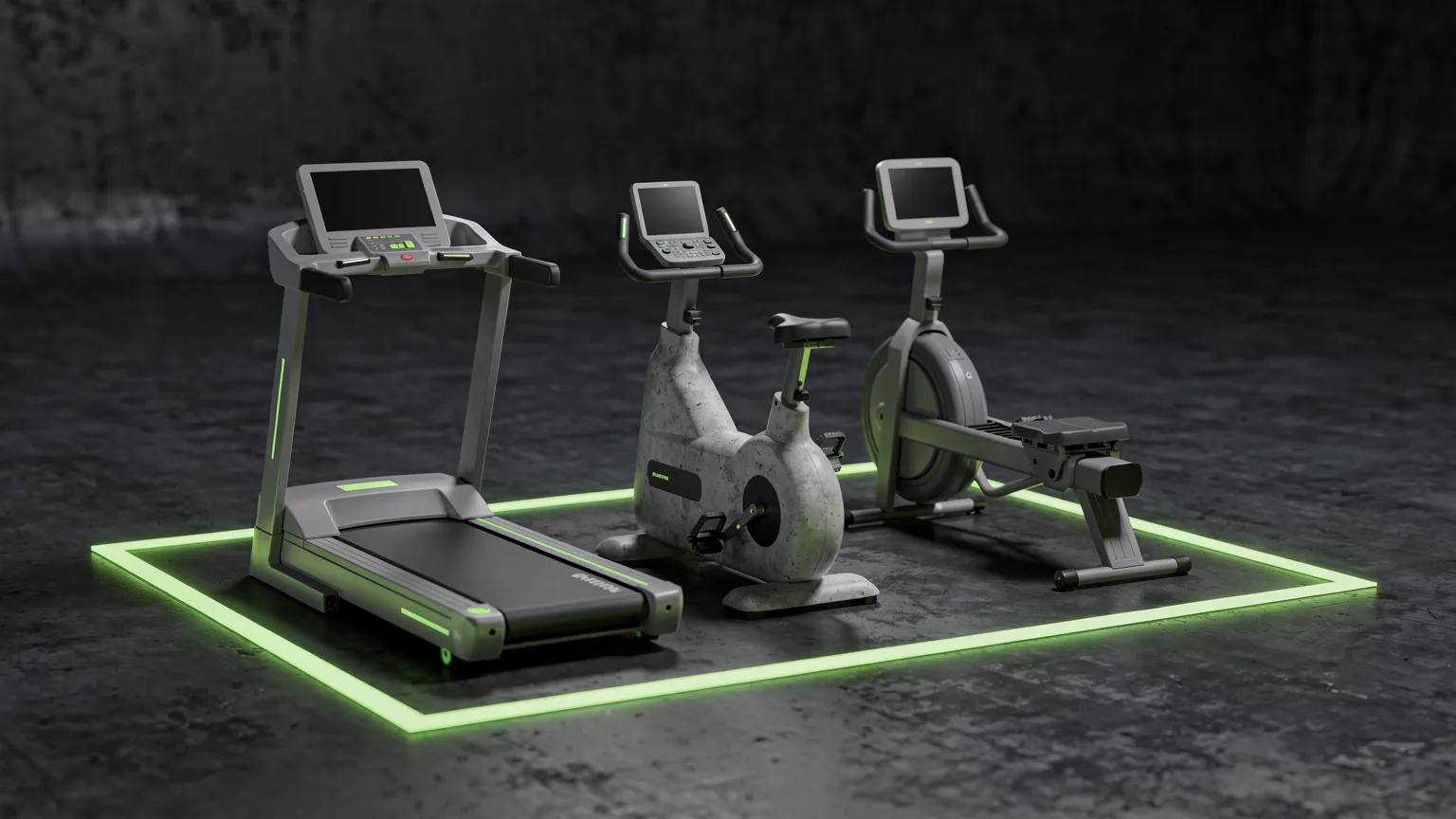
Choose the machine type before the model. A rower, a treadmill and an exercise bike meet the same NHS target in different ways, and each has a different footprint, noise profile and power need. The pages linked here compare the types in depth:
- Rowing machine vs exercise bike for a whole-body machine against a seated one.
- Treadmill vs exercise bike for walking and running against cycling.
- Air vs water rowing machines if a rower is your shortlist.
If walking or running is the goal, the NHS Couch to 5K plan is nine weeks, with three sessions a week and rest days in between, and the NHS notes you can use a treadmill instead of running outside. That is a useful check on whether you would really use a treadmill three times a week.
How much floor space does a cardio machine need?
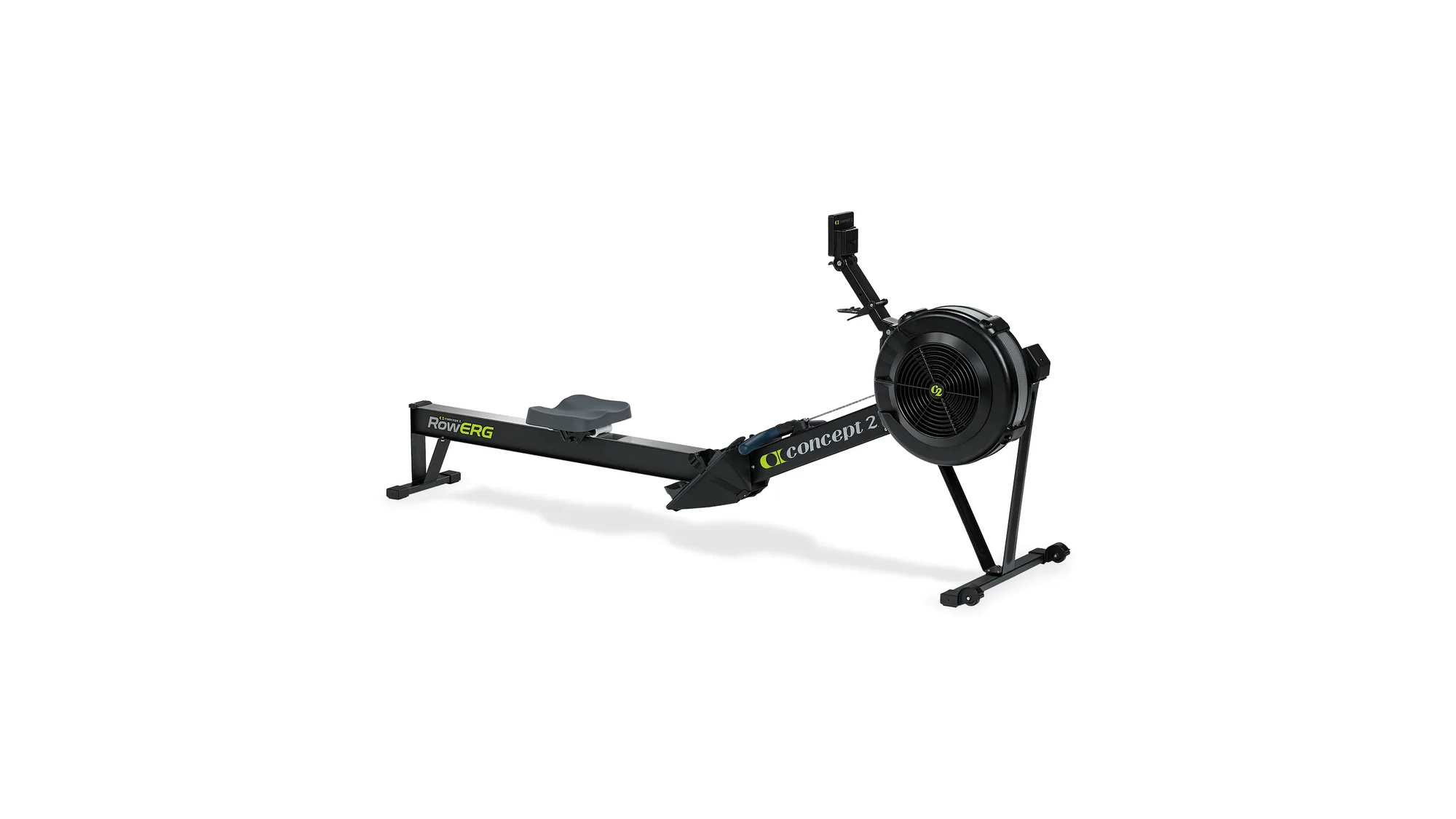
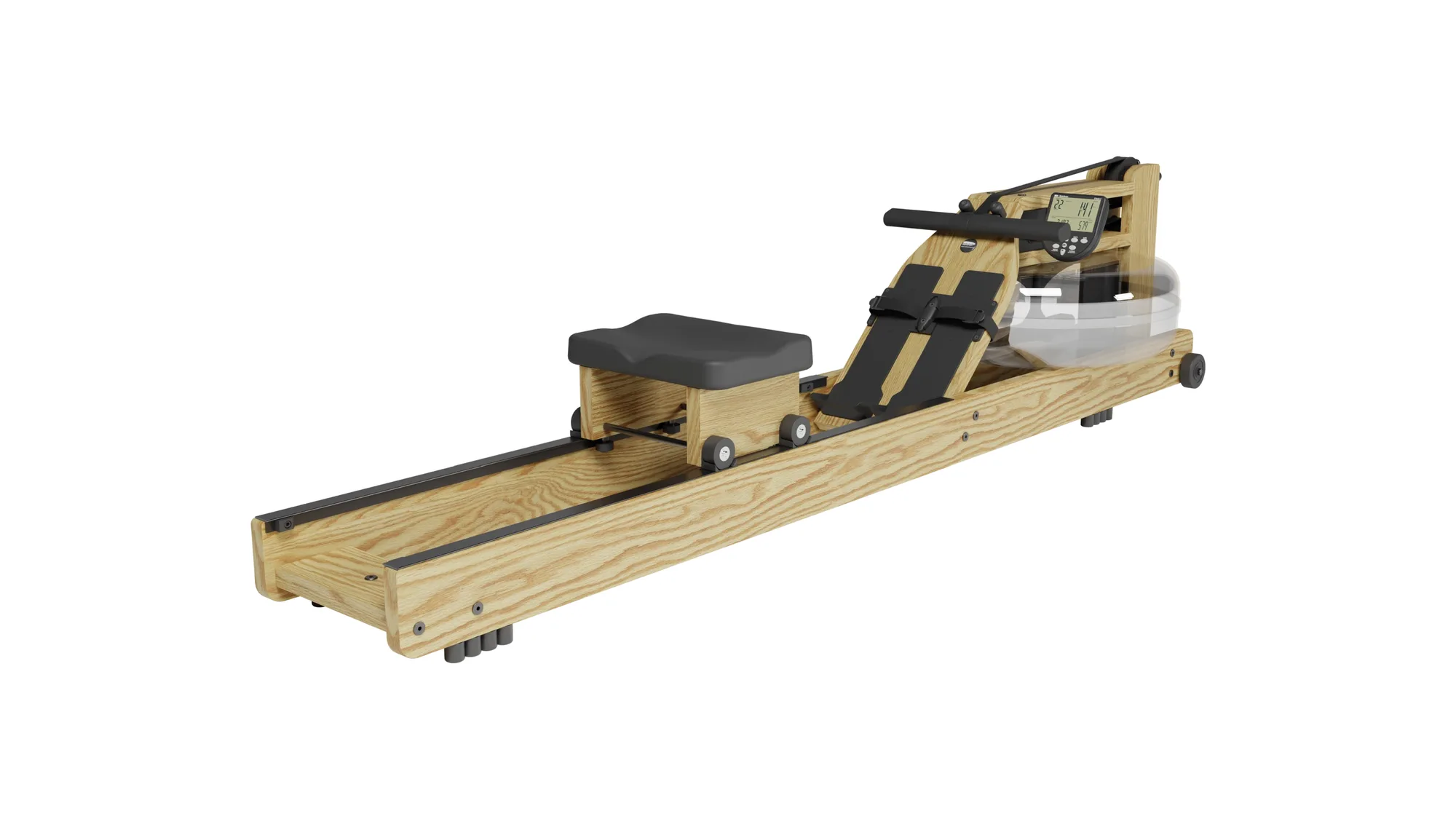
Allow the maker's stated in-use size plus clear room around it. Concept2 states a RowErg is 244 cm long by 61 cm wide and recommends a 274 x 122 cm area to use it. WaterRower recommends a 240 x 100 cm training area. Treadmill and bike makers publish less consistently, as the table shows.
| Machine | In-use size (maker) | Stored or folded size (maker) | Source note |
|---|---|---|---|
| Concept2 RowErg | 244 x 61 cm; recommended use area 274 x 122 cm | Separates in two: 63.5 x 83.8 x 137.2 cm (standard legs) | Concept2 RowErg page |
| WaterRower Original Oak | 209 x 57 x 51 cm (L x W x H); recommended area 240 x 100 cm | Upright: 51 x 57 x 209 cm (D x W x H) | WaterRower UK page |
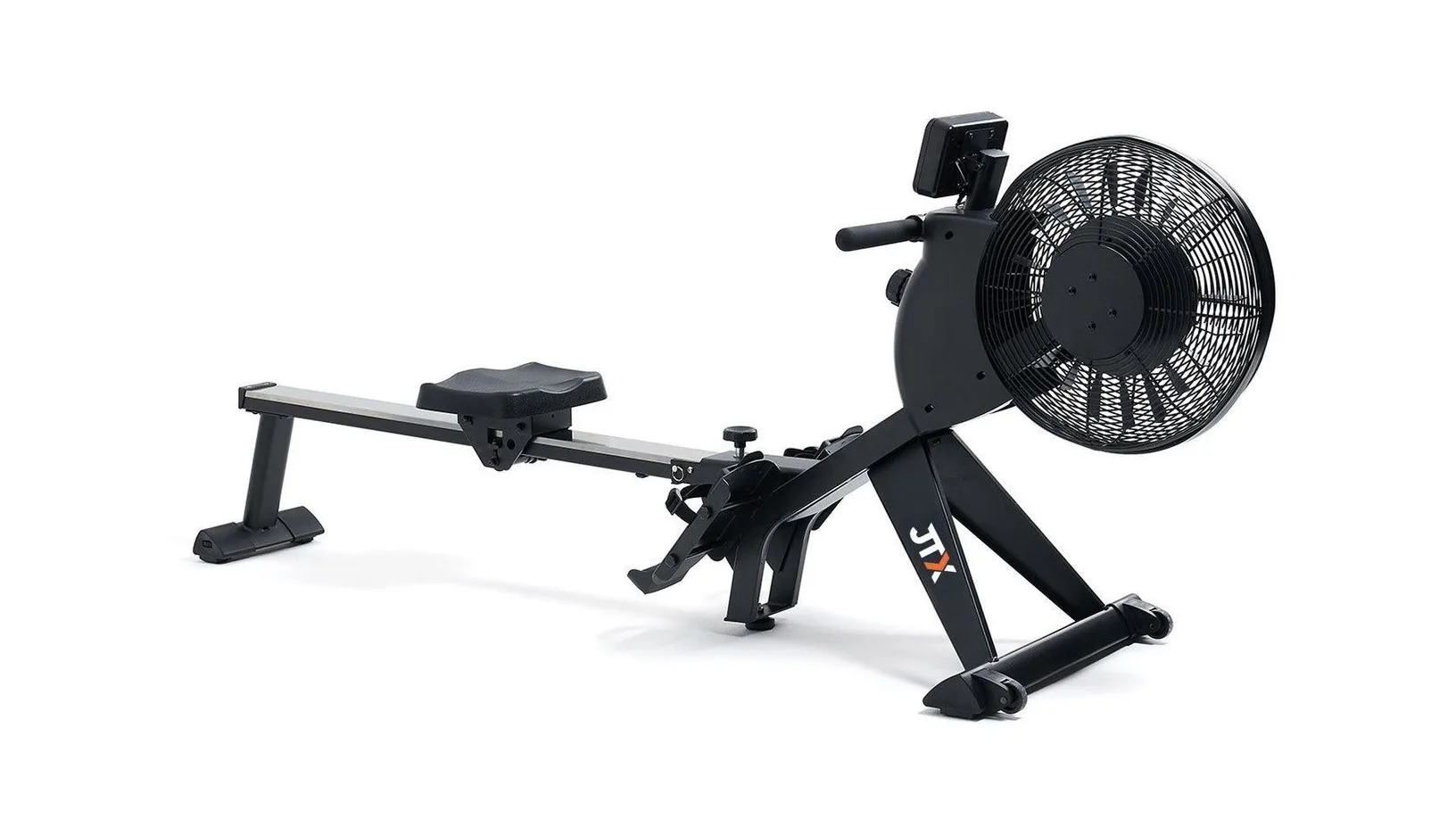
| JTX Freedom Air | 230 x 55 x 88 cm | Not published (boxed size 125 x 32 x 62 cm) | JTX product page |
| Reebok GT40z treadmill | 168 x 77 x 134 cm setup size | Not published | Reebok UK page |
| MERACH T12B2 treadmill | Not published | 65 x 70 x 125 cm folded | MERACH UK page |
| Schwinn IC35 bike | 115.5 x 53.5 x 109 cm | Not published | Schwinn page |
Two points follow from the table, labelled here as reasoning rather than maker statements. First, a machine that stands upright, such as the WaterRower, trades floor area for height, so the 209 cm stored height needs checking against your ceiling and any sloping roof line. Second, where a maker does not publish a folded size (JTX, Reebok), ask the seller before ordering rather than assuming the machine will fit a cupboard. For a wider look at compact kit, see the small apartment home gym guide.
Does a cardio machine need power?
It depends on the machine, so check each. Concept2 states the RowErg monitor runs on two D cell batteries and draws power from the spinning flywheel during a workout. Schwinn states the IC35 needs mains power and plugs into a standard wall outlet. For the Reebok, JTX and MERACH models above, the makers do not list an electrical power specification on the pages read.
For planning, that comes down to one decision: is there a socket within cable reach of where the machine will sit? The extension-lead and fuse questions are for the seller's manual rather than guesswork. Treadmills are the usual mains case, because they have a motor, so ask for the plug and cable details before ordering.
Will a cardio machine be noisy for neighbours?
Possibly, and the makers rate it differently. JTX gives the Freedom Air a "High" noise rating. MERACH states noise below 40 dB for the T12B2, which is the maker's own figure and not an independent measurement. WaterRower says the Original Oak runs quietly with only the sound of moving water. Concept2's RowErg page contains no noise statement.
GOV.UK explains that a council has a duty to investigate a statutory nuisance, including noise, and that breaking a noise abatement order from a home can lead to a fine of up to £5,000. It also advises talking to your neighbour first. The practical checklist item is timing: decide your quietest sensible training hours before the machine arrives. Our ventilation and noise guide covers placement in more depth.
What floor should a cardio machine sit on?
A firm, level surface, with a mat or flooring underneath if the maker or your landlord requires it. Cardio machines are not dropped like weights, so impact is rarely the issue; the floor protection and the stability of the machine are. Makers of flooring describe their products in terms of thickness and material, and the home gym flooring guide compares them.
Weight matters on upstairs floors. Concept2 lists the RowErg at 26 kg with standard legs, WaterRower lists the Oak at 46 kg when filled to 17 litres, JTX lists the Freedom Air at 40 kg, and Schwinn lists the IC35 at 38.3 kg assembled. Those are machine weights, before the user. The makers publish no floor-load limits, so for a structural question ask a qualified person rather than relying on the figures here.
What should you check about weight limits, warranty and delivery?
Check the user weight limit first, then the warranty, then who carries and builds the machine. Maximum user weights from the makers are 135 kg for the JTX Freedom Air, 110 kg for the Reebok GT40z, 136 kg for the MERACH T12B2 and 113 kg for the Schwinn IC35. Concept2 gives 227 kg as tested by Concept2 and 135 kg under EN 20957-7. WaterRower lists 315 kg.
- Warranty: Concept2 lists limited 2-year and 5-year warranties and a 30-day money-back guarantee. WaterRower lists a 5-year frame and 3-year parts warranty. JTX lists a 2-year in-home repair warranty covering parts and labour. MERACH lists 24 months.
- Delivery: JTX states free delivery by a two-person team, typically 1 to 5 working days on the UK mainland. MERACH states 3 to 7 business days with free shipping. WaterRower advertises free delivery over £100.
- Assembly: Concept2 includes tools and illustrated instructions in the box. JTX does not state assembly as included and lists a paid assembly service at £119.
Heavy boxes are a handling risk. HSE says the law sets no specific weight limit for manual handling and asks you to avoid or assess hazardous lifting, so for a boxed machine such as the 46 kg JTX Freedom Air, plan a second person or the delivery team.
What does a cardio rower cost?
For the three rowers above, indicative prices are around £990 for the Concept2 RowErg, around £999 for the WaterRower Original Oak and around £430 for the JTX Freedom Air (all checked Oct 2026). Treadmill and bike prices are not given here because they were not verified. For a ranked comparison of rowers, read best rowing machine for home use, and for bikes and folding treadmills see best exercise bike and best folding treadmill.
Cardio equipment checklist, in order
- Pick the activity you will repeat three or more times a week, using the NHS talk test as a guide to intensity.
- Choose the machine type, then shortlist models whose makers publish dimensions.
- Measure the room, the doorway and the stairs; compare against the in-use and stored sizes.
- Check the ceiling against any upright storage height.
- Confirm whether the machine needs a socket or batteries.
- Check the maker's noise statement and plan training hours.
- Check the user weight limit, warranty length and what the warranty covers.
- Check delivery, assembly and the returns terms before paying.
Who should skip a dedicated cardio machine?
If you have no clear floor area of roughly the sizes above, or no way to get a boxed machine through the door, a machine may not suit you yet. The NHS lists brisk walking, dancing, skipping and stair climbing as activities that need no equipment. A small flat may be better served by those plus a compact strength setup.
The same applies if you are unsure you would use a machine regularly. Spending around £430 to £1,000 is a bigger commitment than a gym membership trial. For that comparison, the home gym vs gym membership cost guide sets out the costs.