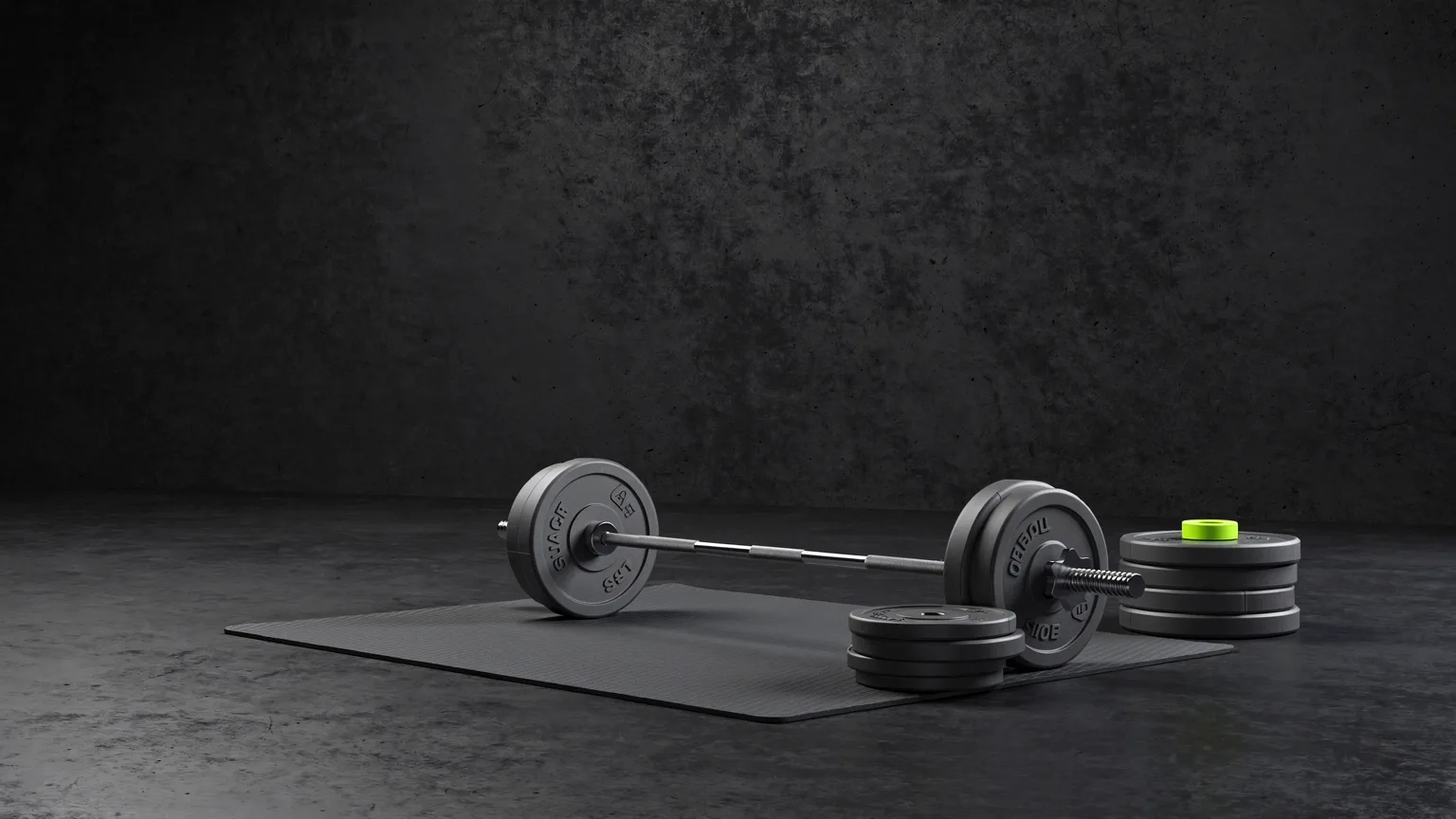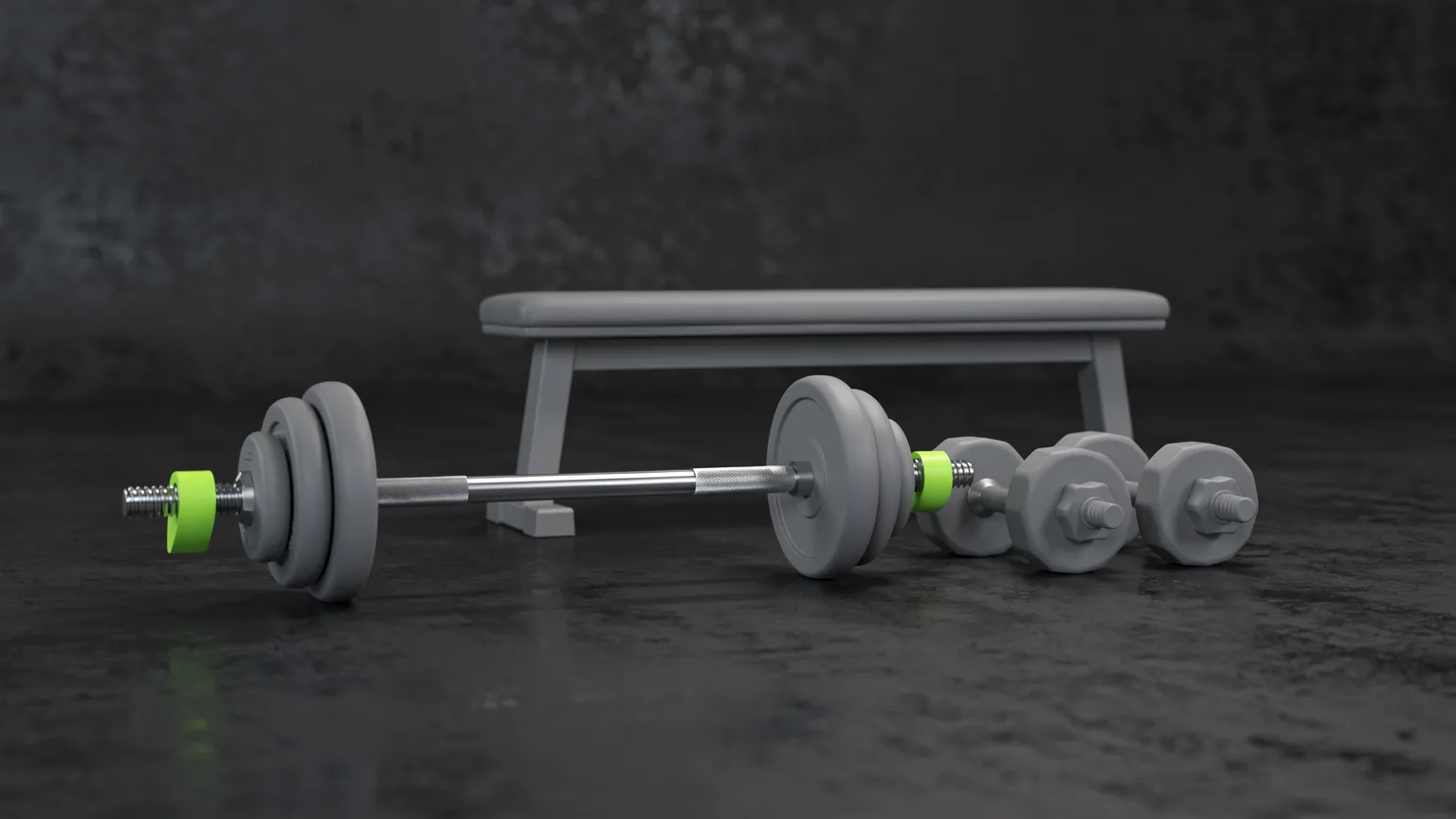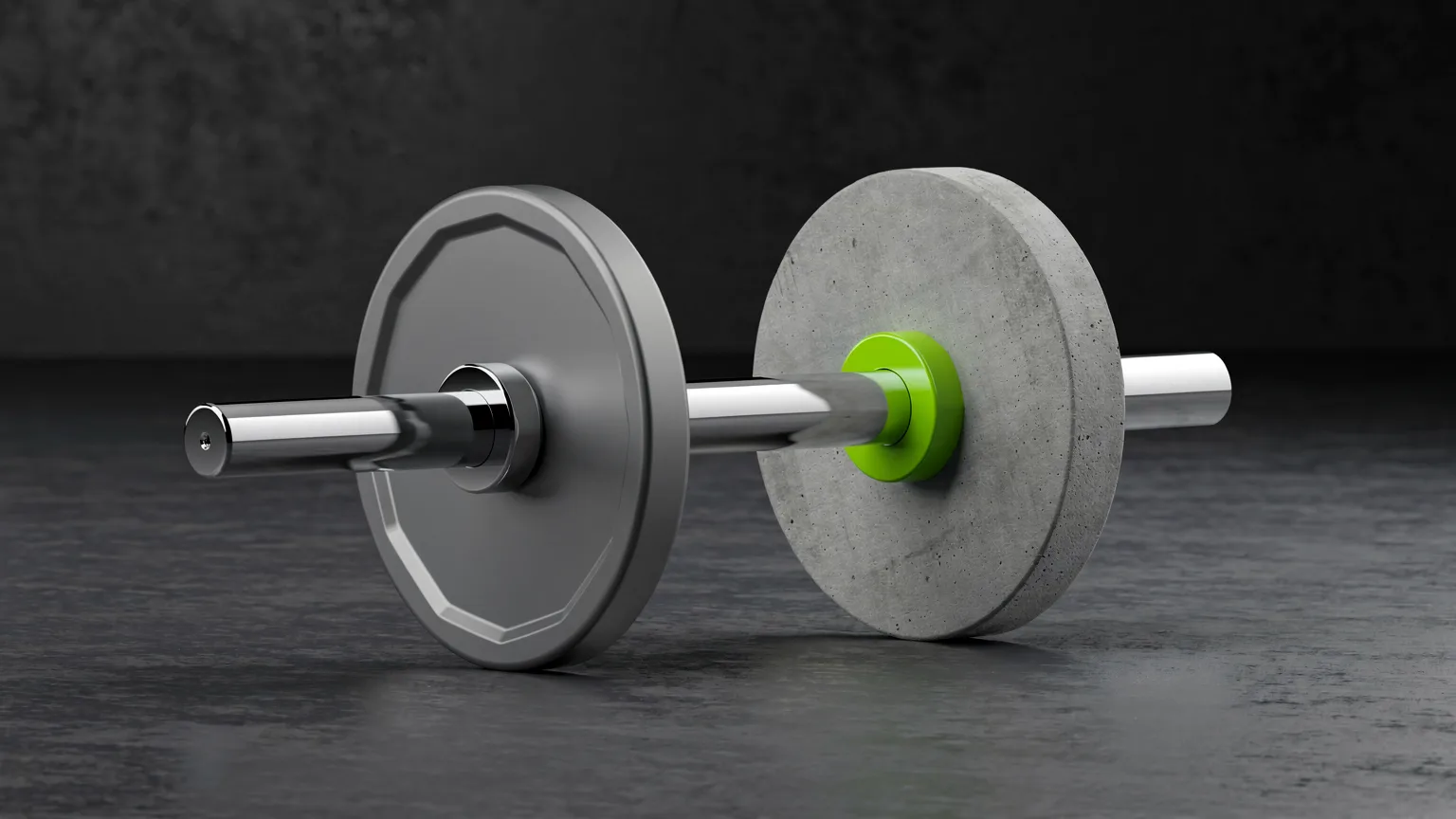
Buy Olympic if you can: the bar has 50 mm sleeves, a thicker shaft and a higher listed load, and most racks are built around it. Standard (1 inch) bars suit a small budget or a bench-only setup. The two do not share plates without adapters.
This guide compares maker specifications from GYM MASTER, Eleiko, York Fitness and BodyPower. Nothing was tested, and where a maker does not publish a figure it is left out.
What is the difference between Olympic and standard barbells?
The difference is the size of the sleeve, the part of the bar that holds the plates. A standard bar takes plates with a 1 inch hole; an Olympic bar takes plates with a 2 inch (50 mm) hole. Everything else follows from that: shaft thickness, bar weight, load rating and which racks and benches fit.
GYM MASTER sells both types, so its listings make a clean like-for-like comparison. The maker states the following for its 7 ft versions:
| Maker-listed spec | GYM MASTER Olympic bar (7 ft) | GYM MASTER 1 inch standard bar (7 ft) |
|---|---|---|
| Sleeve / plate size | 2 inch (5 cm) sleeve | 1 inch plates |
| Middle bar diameter | 2.8 cm | 2.5 cm |
| Overall length | 219 cm | 220 cm |
| Sleeve length | 40 cm | 40 cm |
| Bar weight | 17 kg | 9.3 kg |
| Load capacity | 300 kg | 150 kg |
| Collars | Not stated on the page | Spin lock collars included |
GYM MASTER also states that its Olympic bar sleeves rotate, and that the bar fits all standard 2 inch Olympic plates, sold separately. Its standard bar page says it fits standard 1 inch plates and does not mention Olympic plates at all. The standard bar page also says it is not suitable for commercial use.
Is a 20 kg Olympic bar the same as any Olympic bar?
No. "Olympic" describes the 50 mm sleeve, not a single bar. The 7 ft GYM MASTER bar above weighs 17 kg, while Eleiko lists its IWF competition bar for men at 20 kg with a 28 mm bar diameter and a 415 mm loadable sleeve. Eleiko's weightlifting bar guide also lists a 15 kg bar with a 25 mm diameter in its competition and training ranges.
So the shaft sizes in the two systems overlap: a 25 mm shaft appears on a standard bar and on Eleiko's 15 kg bar. What separates standard from Olympic is the plate fit and the build, not the shaft alone. Always read the listed weight before you add up a total, because a bar that is lighter than 20 kg changes the arithmetic of your plates.
Which plates fit which bar?
Plates must match the sleeve. The 1 inch hole of a standard plate is too small for a 50 mm sleeve, so standard plates will not slide onto an Olympic bar. Larger Olympic plates can go on a standard bar only with an adapter, and only if the bar and adapter are rated for it.
GYM MASTER's listings show the plate side of this. Its bumper plates are listed with a 50 mm (2 inch) centre hole and described as suitable for all 2 inch / 50 mm Olympic diameter bars, in 5, 10, 15, 20 and 25 kg sizes. Its cast iron tri-grip plates list a 51 mm hole. If you already own 1 inch plates, check the maker's wording before assuming an adapter is safe.
- Own standard plates already: a standard bar uses them directly.
- Plan to add weight over years: Olympic plates and bars are a wider market, and a 300 kg listed capacity leaves more room than 150 kg.
- Want bumper plates for dropping: GYM MASTER's bumpers are listed with a 50 mm hole, so they need an Olympic bar. Check flooring too; see how thick gym flooring should be.
Do racks and benches take both bar types?
Often, but not always, and the maker's page is where to check. A rack holds the bar by the shaft, so the sleeves matter less to the rack than to the plates you load, though length matters a lot.
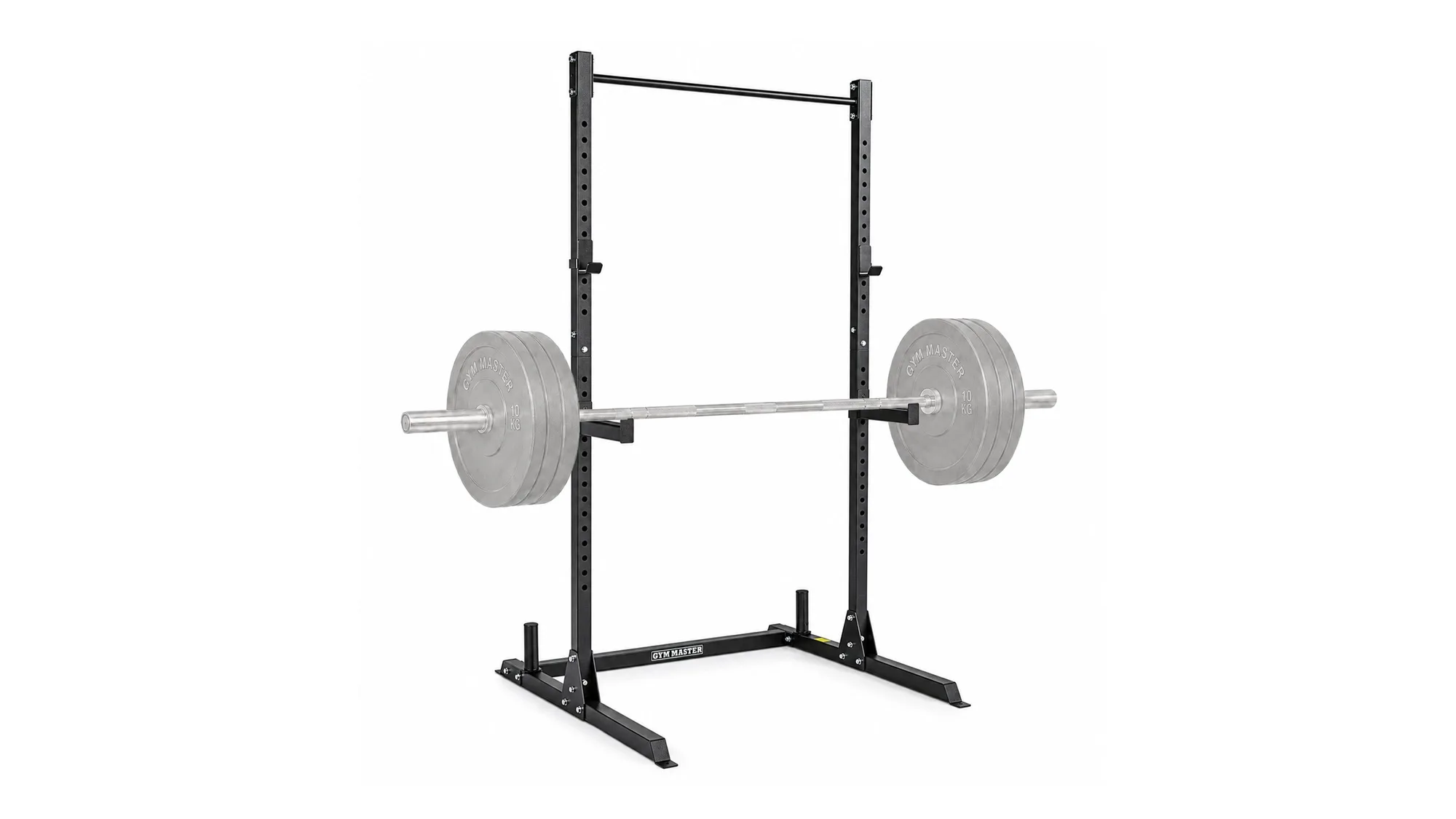
GYM MASTER says its adjustable squat rack cage suits 6 ft International or 7 ft bars and fits both standard and Olympic bars. Its corner plate storage poles have an adapter for both standard and Olympic plates, and it lists J-cups and spotters with a 200 kg max load. Our GYM MASTER power rack review covers the rest of that listing.
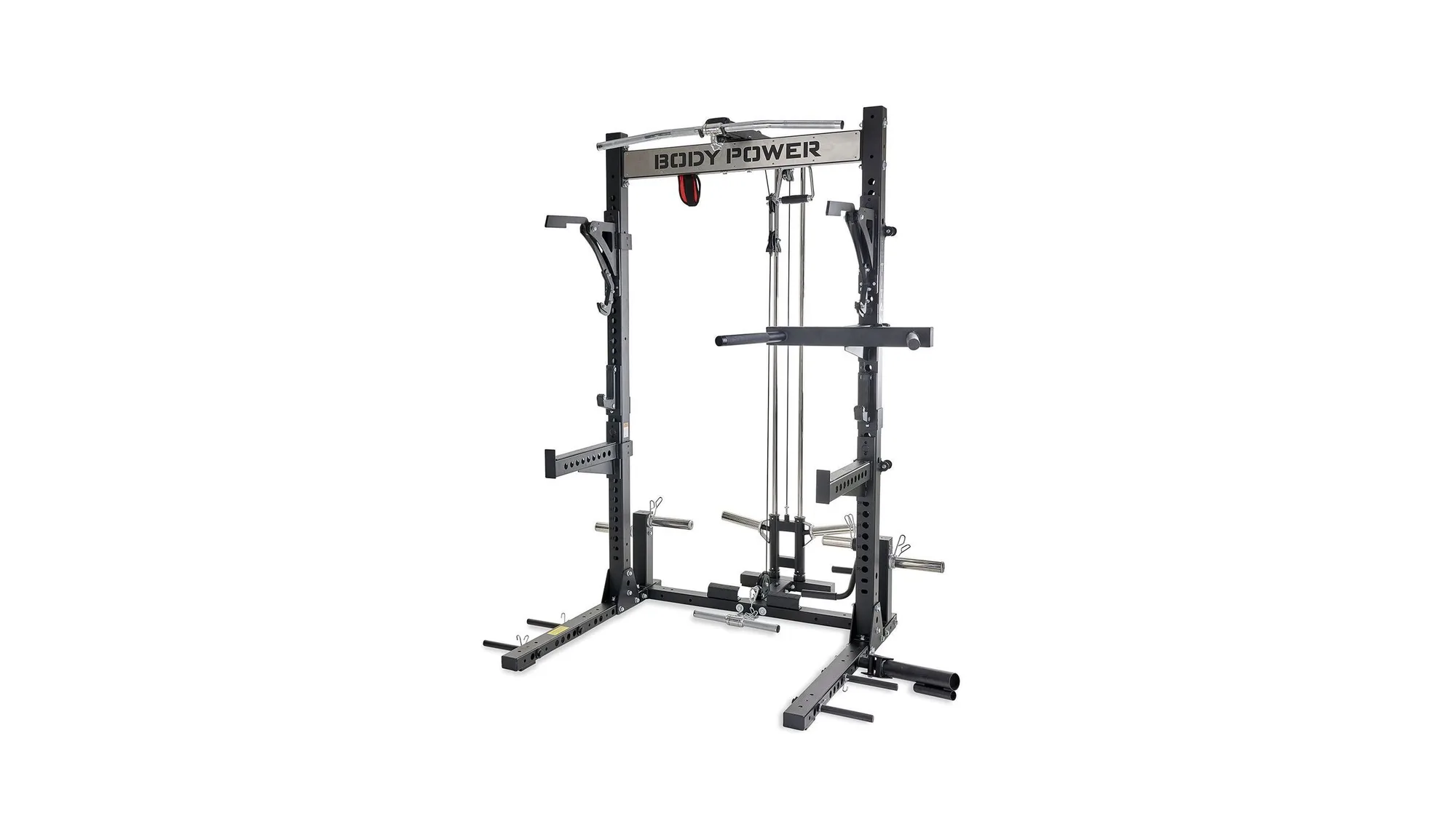
BodyPower says its TITAN half rack has a landmine attachment compatible with both Olympic and standard barbells, and that its lat tower takes both Olympic and standard plates. The page gives the rack's barbell fit as a shaft length of 51.5 in (131 cm), such as 7 ft barbells. See the BodyPower TITAN half rack review and our guide to power racks versus half racks.
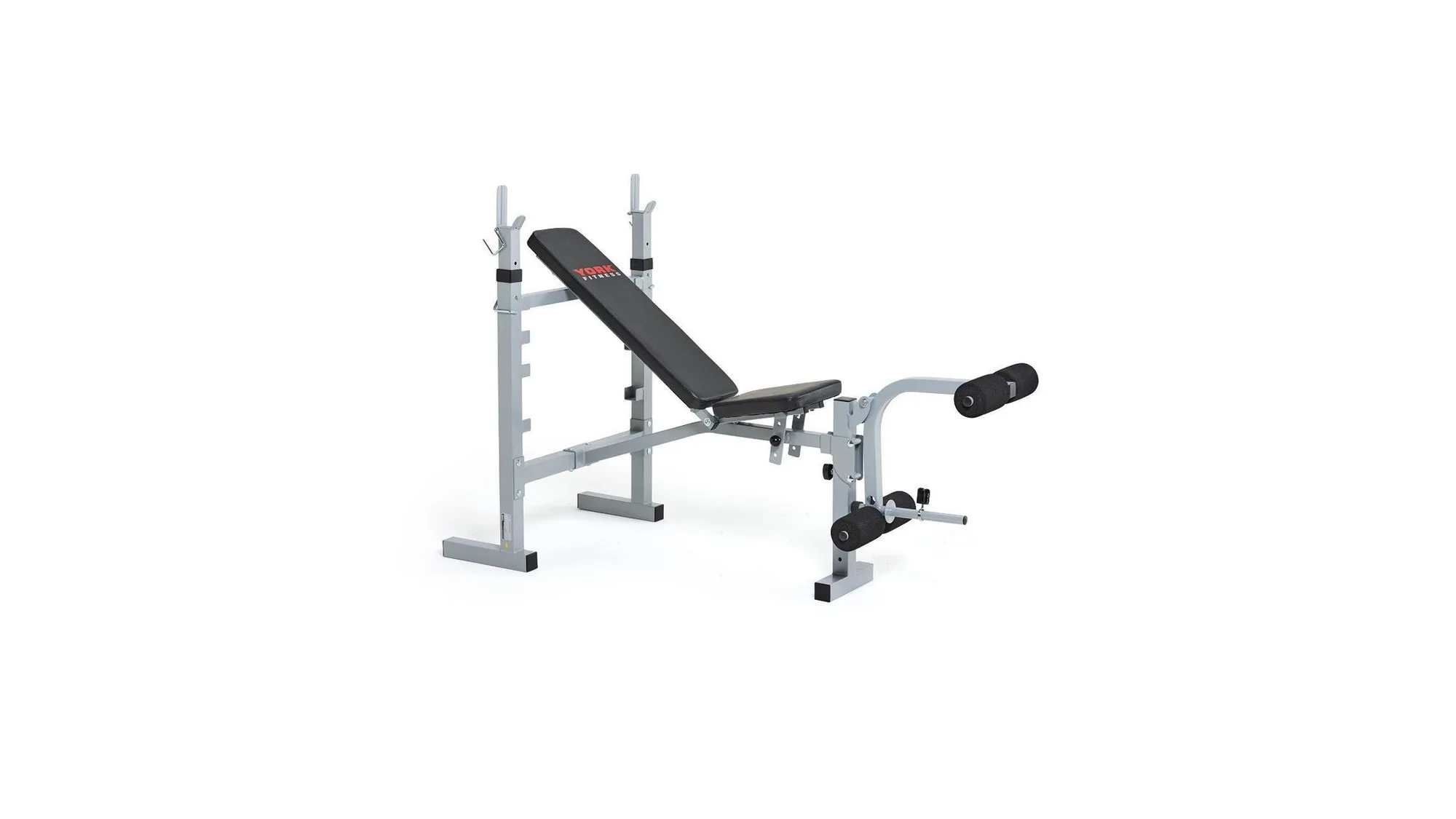
Benches are the awkward case. York Fitness lists its 530 multi-function bench with an adjustable heavy duty 2 inch barbell rack at three height levels, but its leg curl is loaded with standard 1 inch cast weights, with a spring collar included. One bench can therefore use both sizes for different jobs. The York page gives a 200 kg max user weight including the user, and it does not state a safety standard. Read our York 530 review before you pair it with a bar.
Which should you buy for a home gym?
Choose by what you will load and how far you expect to go.
- Buy Olympic if you want a rack, bumper plates, heavier lifts or room to grow. The maker figures above show a thicker shaft and double the listed load capacity.
- Buy standard if you only want a light bar for curls or a bench, already have 1 inch plates, or are working to the lowest budget. GYM MASTER lists its standard 7 ft bar at 150 kg capacity, so it is a light-use tool.
- Do not mix without checking: adapters, collars and rack hooks each have their own ratings, and many makers publish none.
If you are still building the budget, see how to build a home gym on a budget, and how to choose a power rack for fit and size.
How heavy can a bar go before it matters?
The listed capacity is the maker's ceiling for the bar, not a target. The NHS strength exercise guidance says to start with light weights and build up slowly, which applies to what you put on either bar type. For loading, safety catches and any health condition, follow the maker's instructions and ask a qualified professional.